Utah Stories

Utah Healing Center Uses Horses and Dogs to Aid in Trauma Therapy

Utah Healing Center works with individuals of all ages suffering from physical disabilities, chronic or terminal illnesses, and have experienced traumatic life events. They also work with depression, anxiety, mood disorders, grief, addictions, parenting and family issues.

|

Utah Healing Center works with individuals of all ages suffering from physical disabilities, chronic or terminal illnesses, and mental health issues

Utah Healing Center- equine therapy
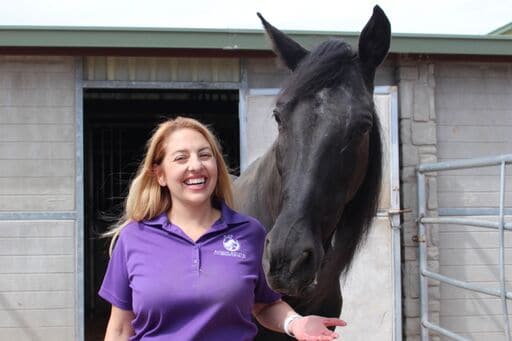
Dr. Janelle Nimer and Majestic

Utah Healing Center works with individuals of all ages suffering from physical disabilities, chronic or terminal illnesses, and have experienced traumatic life events. They also work with depression, anxiety, mood disorders, grief, addictions, parenting and family issues.

Animals Are Healers

Dr. Janelle Nimer has always believed in the healing powers of animals. 

“Animals were the reason I went into social work. I wanted to incorporate animals into healing,” says Nimer. “I’ve always known that’s what’s helped me heal.”

She earned her masters and doctorate in social work and completed a three-year doctoral fellowship in veterinary social work. Utah beckoned her home in 2011 and she opened Utah Healing Center with her mother Janet Nimer Wilson, a licensed clinical social worker who’s been working in private practice for over 25 years. 

Experiential and Animal Therapy

Utah Healing Center has since grown to include 10 practitioners using evidence-based practices to treat children and adults who’ve experienced trauma. The center also has a trained service dog, Flowerwho was trained by Canine Companions for Independence and was donated to the office without charge, along with two other soon-to-be-certified therapy dogs who participate in therapy sessions. 
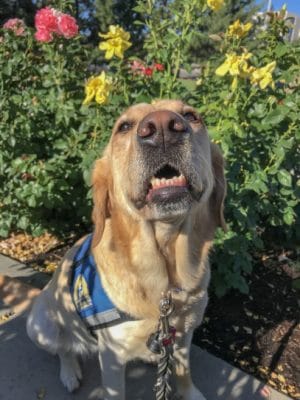
Utah Healing Center  therapy dog Flower
Flower is specifically trained to work with children, adolescents, and adults navigating mental health challenges. You can even follow Flower on Instagram @flowerfacilitydog

Flower attends court hearings with children, engages in play therapy and acts as a source of comfort during sessions. 

“The animals that we work with, we describe them either as absorbent or reactive. They will absorb the emotion. If we have someone who is really tearful, and needs that shoulder to lean on, the animals can be that shoulder,” explains Nimer. “The reactive animals will act as a mirror to show the clients what they aren’t seeing in themselves.”

But Nimer wanted to continue pushing the boundaries on experiential and animal therapy while also making it more accessible for all income levels. 

Last year Utah Healing Center launched its nonprofit arm, Animals 4 Healing. 

“That is our division where we incorporate more of the experiential — gardening, therapeutic horseback riding, music and movement,” she explains. “We’ve got yoga therapists and music therapists.” 

Animals 4 Healing leases land and horses from Sunset Equestrian Center in Kaysville. They incorporate horses into traditional psychotherapy techniques, such as Eye Movement Desensitization and Reprocessing (EMDR), which is a clinically-proven method for retraining negative experiences and feelings into positive ones. 

“I’ve had kids who are shy and withdrawn and they get bullied. When they get in the arena and start running with the horses, it gives them this sense of power,” says Nimer.
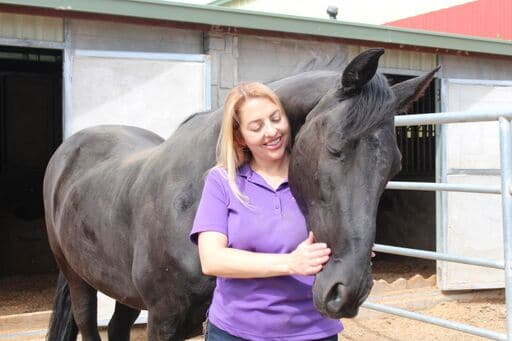
Utah Healing Center works with individuals of all ages suffering from physical disabilities, chronic or terminal illnesses, and mental health issues
Equine-therapy helps kids struggling with mental health disorders, especially attachment issues.  

Meet Therapy Horse Majestic!

One of the top therapy horses, Majestic, who was also donated, is known for nuzzling the kids, especially those dealing with attachment issues.

Animals 4 Healing is in the process of forming a board, writing grants and seeking other sources of funding. The nonprofit is searching for its own land where they can keep horses and offer more animal-assisted therapy.

“Our hope is to really roll everything over to the nonprofit. We want to help bridge the experiential therapies with the evidence-based,” Nimer said. She hopes to offer the therapy for free or on a sliding scale for low-income individuals.

“We want to be able to help more people who are dealing with trauma, no matter their income.”

“Our hope is to really roll everything over to the nonprofit. We want to help bridge the experiential therapies with the evidence based,” says Nimer. She hopes to offer the therapy for free or on a sliding scale for low-income individuals. 

“We want to be able to help more people who are dealing with trauma, no matter their income.” 

The nonprofit Utah Healing Center is searching for its own land and facility where they can bridge all animals (dogs, horses, goats, fish, etc.), nature (gardening, orchard, labyrinth, etc.), music (drumming, piano, etc.), and movement (yoga, dance, Pilates, fitness, etc.) therapy with evidence-based practices at one facility for all individuals who have experienced a traumatic event. 
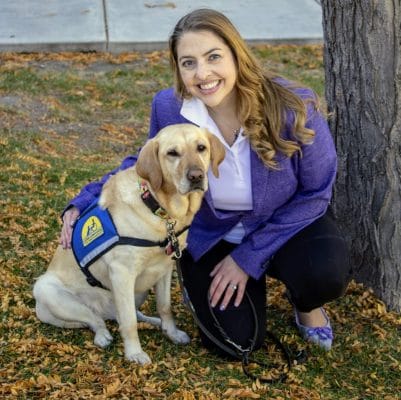
Utah Healing Center Dr. Janelle Nimer and Flower the therapy dog
Dr. Janelle Nimer and Flower
, , , ,

Join our newsletter.
Stay informed.


  • A Salt Lake City Gym Uses Fitness and Community to Support Addiction Recovery

    “What I think is really special about that place is that doing hard things is a way that we can become proud of ourselves,” said nursing student Vince Minutello, who has started exercising at the gym in Salt Lake City as a requirement for one of his courses.


  • Has Utah’s Soft-on-Crime Justice Reform Made Communities Safer?

    Has this “soft-on-crime” approach resulted in safer streets?

    SALT LAKE CITY — A decade has passed since former Utah Governor Gary Herbert signed a massive justice reform bill into law in hopes that the state could reduce its prison population and manage low-level offenders through rehabilitation programs instead of incarceration. Has this reinvestment resulted in lower crime and recidivism rates?

    According to the Utah Department of Corrections, that landmark Justice Reinvestment Initiative aimed to “continue holding offenders accountable and securing our communities, but in a way that considers individual risks and treatment needs.”

    Are communities really safer when mental health and substance use needs are addressed through programs administered outside prison walls? The idea was to treat criminals differently based on their mental health needs and backgrounds. But at least one retired Adult Probation and Parole Officer, believes this “soft-on-crime” approach hasn’t resulted in safer streets.

    LOOKING BACK

    State Senator Todd Weiler, in that legislative role since 2012, helped drive the passage of the Justice Reinvestment Initiative (JRI), a massive bill that enjoyed broad-based approval among state officials and the Legislature as a whole.

    In November 2014, Weiler attended the national summit on the issue in San Diego, an event hosted by Pew Charitable Trusts. 

    “I was very involved in it. We had a lot of high hopes,” Weiler, a Woods Cross Republican, said in a recent interview. “That was about the time we were finalizing plans for the new prison. And we actually said that because of JRI we don’t need as many beds because we’ll be incarcerating fewer people. So that new prison was designed with this idea.”

    A key part of JRI dealt with adjusting sentencing for crimes related to addiction, dividing offenders into two basic groups: dangerous criminals who are a threat to society (that group goes to prison), and low-level offenders who get help kicking addictions through state-sponsored programs or private-sector rehabilitation.

    “The ultimate goal was if we have an otherwise good person who got caught up in an addiction, and as a result committed crimes, they need to be punished for their crimes,” Weiler said. “It’s not that we’re going to overlook what they did, but we wanted to focus primarily on helping them overcome their addiction and [that means] getting them back to their job and their family.” 

    Before JRI, low-level drug offenders with felonies would spend years in prison, which wreaked havoc with their lives and future prospects. Addressing the root cause of their theft and property crimes through supervision and treatment made sense. 

    “We’re all imperfect people,” Weiler said. “So we want people working their jobs, paying their bills and raising their kids rather than sitting in jail and watching TV or playing cards.”

    To access this post, you must purchase Utah Stories (Digital + Print) or 3 month free trial (Digital).


  • Salt Lake City Newcomers Club: Finding Friendship and Belonging Since 1948

    Moving away from your hometown can come with many blessings. But for some, it also comes with just as many bouts of loneliness. That ache of not knowing where to meet people, or grieving the friends you left behind, comes in waves. Workplaces and churches can sometimes provide ready-made communities, but what happens when they don’t? Where do you go to find true belonging?


  • How I Lost 120 Pounds and Changed My Relationship With Food

    Throughout most of my life, I used food to cope with chaos, depression, and pain I did not yet understand. By my early twenties, I weighed over 320 pounds and felt trapped in a body that limited every part of my life. This is the story of how learning about food, mental health, and habit-building helped me lose 120 pounds and rebuild stability.