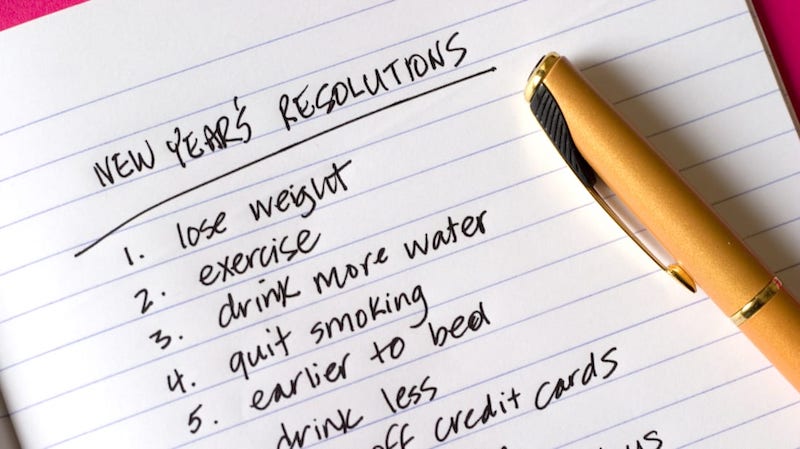
With the new year upon us, many of us have probably made a few resolutions by now and perhaps even broken them already. According to research by Utah’s own Franklin Covey Co., a third of us won’t be able to keep our resolutions through the end of January, and our odds of sticking to our resolutions only get worse from there.
According to the same study, resolutions often fail because we’re not setting the right kinds of resolutions for ourselves. Our resolution may have been based on someone else’s opinion, such as our spouse hinting that we need to lose a little weight, or maybe our resolution was too vague and we had no concrete way to obtain it. So how can we make 2022 different and set a resolution this year that we can actually keep?
Start by Assessing 2021 & Set a Goal That Matters To You
Before setting a New Year’s resolution, it’s important to pause and reflect on what went well and what didn’t go so well in the past 12 months. Ask yourself what things went right, what moments were good, and how you could have done things differently this past year. By taking stock of the past year, we may identify areas we want to and know we can do better. Set a resolution that is important to you rather than what someone else is telling you to change.
Make Your Resolution Specific and Measurable
Instead of setting an ambiguous goal such as “eat better” or “live life to the fullest,” set your sights on something much more concrete. Your chances of success are much greater if you make a resolution that is clear and measurable. If your goal is to “read more books,” consider setting a specific number of books you’d like to read in a particular time frame such as one book a month or just 10 minutes of reading a day.
Make a Detailed Plan and Start Small
Creating a detailed plan can help you stick to your resolution. Identify the steps you’ll take to reach your coal and brainstorms ways you’ll handle any setbacks. James Clear in his best-selling book Atomic Habits, says that “Habits are the compound interest of self-improvement. Getting one percent better every day counts for a lot in the long run.”
He advocates making small changes and being patient. If we haven’t run in years, setting a goal to run five days a week is simply unrealistic. Consider starting with a few minutes of running a couple of times a week and work from there.
Consider a More Altruistic Resolution
Sure, exercising more, losing weight, and saving money are among the most popular resolutions, but they’re not exactly original nor do they often benefit anyone else. Not that there’s anything wrong with self-improvement, but if you’ve found it difficult to stick to these types of resolutions in the past, perhaps it’s time to change your strategy. Resolving to help others may be an easier resolution to keep, plus they have the added benefit of enhancing your own happiness and health. This year, why not set a goal to volunteer once a month or donate a certain percent of your income?
Keep Trying
Who says that if you break your New Year’s resolution you need to wait until next year to try again? January 1st is just an arbitrary date, and oftentimes we’re tired from New Year’s Eve celebrations or burnt out from the holidays by then, so it’s not exactly an ideal time to start a new habit. You can choose any day you want to start a new habit ― the first day of any month, birthdays, and for some reason, Thursdays ― are all great days to begin again. If you’re serious about setting a resolution, start with something small and gradually build up from there.