What could be a better way of wrapping up the ski season than a ski awards extravaganza?
The veritable Academy Awards of ski history was held from March 20-23 at the annual joint gathering of the US Ski & Snowboard Hall of Fame and the International Skiing History Association (ISHA). The event, parts of which took place at Park City’s Blackrock Mountain Resort, the Alf Engen Ski Museum, and various ski areas, featured parties, on-snow tours, a ski fashion show, and the awards ceremonies themselves.
Those honored were Hall of Fame inductees and winners of the ISHA awards for ski history. Five Utahns and one Vermonter who had a significant effect on Utah ski culture were included among the winners.
Rick Moulton, Chairman of the Board at ISHA, was present at the ISHA Awards Gala on Friday night. He says his organization solicits new works from around the world in consideration for their skiing history awards.
“It has to break new ground. In other words, create a new understanding of skiing history,” he says.
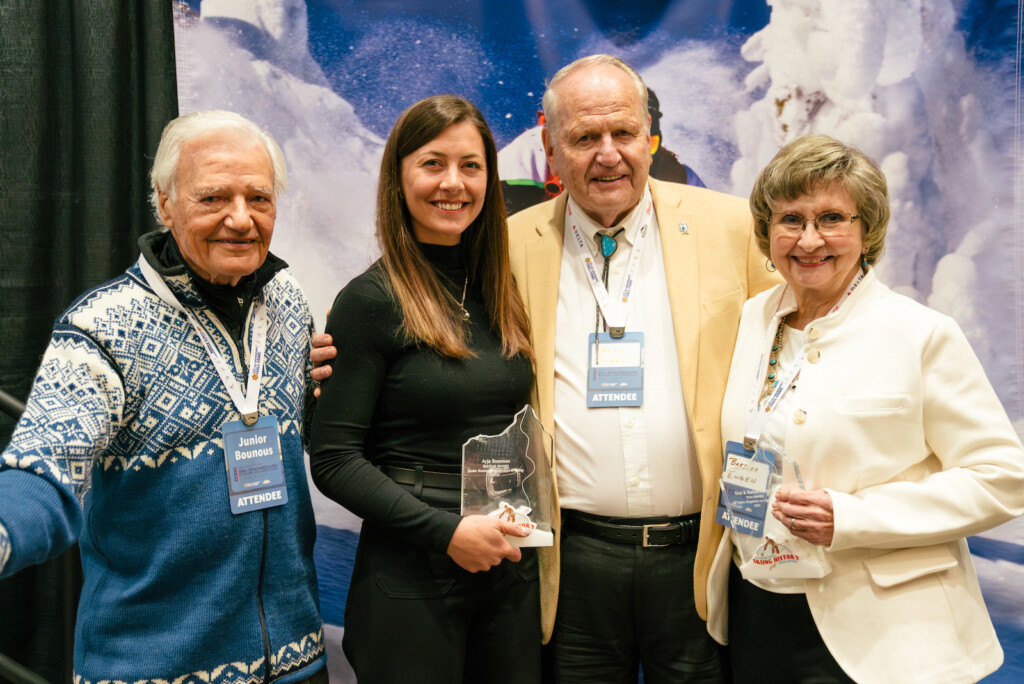
Among the winners were a powerhouse team of ski historians, Alan and Barbara Engen. They won the ISHA Film Award for Alf Engen: Snapshots of a Sports Icon.
After an entire lifetime of documenting the Engen effect on skiing in the Intermountain West, Alan and Barbara found never-before-seen material as they prepared the last of their private collection for donation to the Ski & Snow Sports Archives at the U of U’s J. Willard Marriott Library. That material was the basis of their film.
“It’s our last one,” Barbara says. “It’s our swan song.”
The film includes a song by local singer-songwriter Doug Wintch: Ode to Alf Engen, which plays in the final shot while Alf skis down an Alta slope. The video will be available for public viewing on the Alf Engen Museum website and will be shown at Alf’s restaurant at Alta.
“It comes through in Alan’s voice what these pictures really mean to him,” says Moulton. “So in that sense, he’s sharing this love and respect he has for Alf and his life.”
Alan Engen is a Hall of Famer (2004), as are his father, Alf, and his uncles, Sverre and Corey.
A total of three films and ten books received awards. The Baldur Award for advancing or conveying skiing culture went to Ayja Bounous, granddaughter of famed ski instructor Junior Bounous, for her biography, Junior Bounous and the Joys of Skiing.
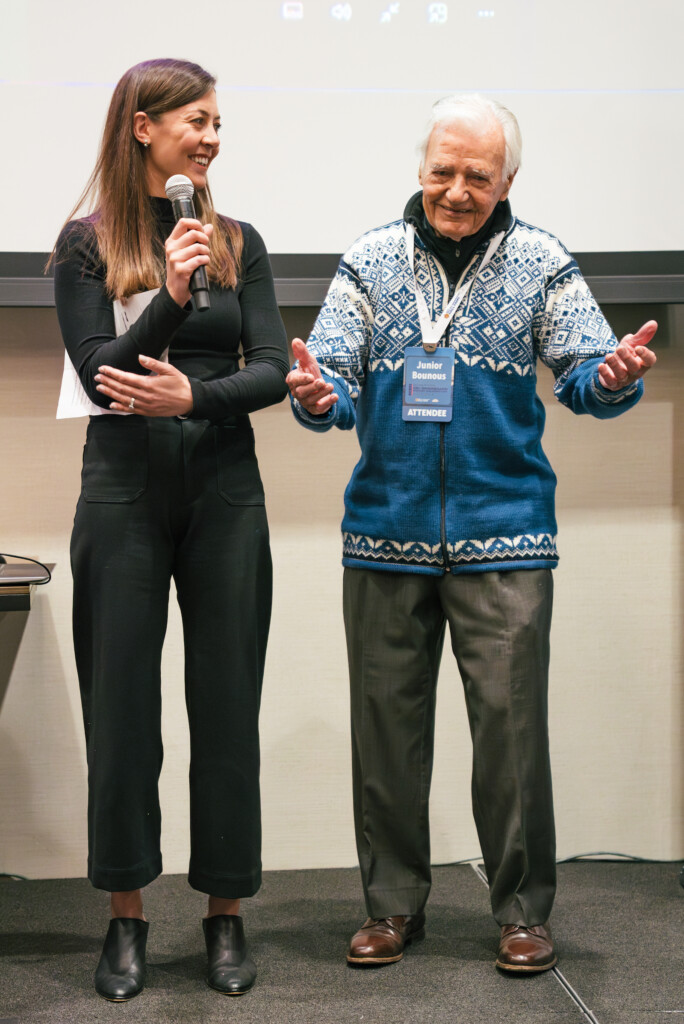
Ayja grew up at the foot of Little Cottonwood Canyon, where her family was deeply involved at Alta and Snowbird. She first realized her grandpa was famous when he was inducted into the Hall of Fame in 1996. “I remember my parents framing newspaper articles and putting them up around the house,” she says.
In Moulton’s opinion, Ayja’s book on her grandfather is “a sensational portrait that conveys so much about the culture of the sport because it spans about 70 years,” he says. “Through understanding Junior’s life, you get this incredible portrait of the sport and its growth and development.”
Junior was born in Provo in 1925 and was of the generation that started skiing on barrel staves. He is renowned in almost every aspect of ski culture and still skis at 98 years old.
The Hall of Fame Induction Ceremony was held on Saturday night. Its Class of 2023 welcomed Olympians Shannon Bahrke Happe, Billy Demong, and Canyons Ski Area developer Les Otten, among others.
Bahrke is a women’s champion in moguls. This is a freestyle event combining aerial maneuvers and fast-paced mogul racing. Bahrke skied in four Olympic Games, winning silver in Salt Lake City (2002) and bronze in Vancouver (2010). She was a World Cup Champion, a US National Champion, and a winner of silver and bronze medals in the FIS Freestyle World Ski Championships.
Also combining flight and speed, Billy Demong is an Olympic gold medalist for Nordic combined, in which the athlete has to have the highest score in both ski jumping and cross country ski racing. Demong is a five-time Olympian, a multiple World Cup champion, and an FIS champion. He was also the first American to win an Olympic gold medal in a Nordic event in Vancouver. For this win, he was honored as flag bearer at the closing ceremonies.
Both Bahrke and Demong live in Park City. Bahrke is a ski champion at Deer Valley Resort and owns Team Empower Hour, a leadership development business. Demong is Executive Director emeritus of Park City-based USA Nordic Sport, which he served through two Olympic Games and three world championships.
“Like anyone selected, these are people that dedicated their entire lives and careers and continue to do so for the sport of ski and snowboard,” says Hall of Fame Executive Director, Justin Koski.
Another kind of ski mogul, Les Otten, was inducted into the Hall of Fame as a ‘sport builder.’ While not currently a Utah resident, Otten built and led the largest ski resort company in the United States, which developed The Canyons Resort ahead of Salt Lake’s 2002 Olympics.
“Les is the epitome of a sports builder,” Koski says, noting that he also shaped skiing by developing the concept of the mega pass.
When the Hall of Fame ceremony ended, the weekend closed with an “afterburner” party that lasted well into the night.
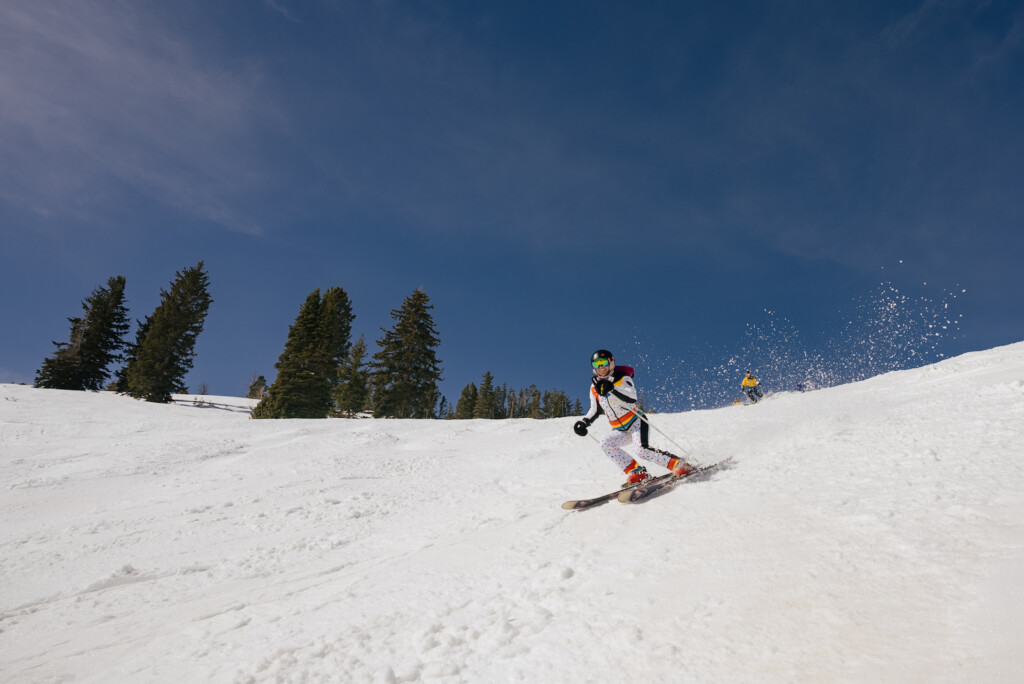
Feature Image: Shannon Bahrke Happe skiing at Solitude. Photo by Alexander Mager.