Community Events

Street Tai Chi Helping Homeless in Salt Lake City

Three times a week, a group of about 40 houseless people gather in the plaza of the Salt Lake City library. Houseless perhaps, but not homeless, because this tai chi community has been their home for the past three years. Men and women socialize and then set aside their backpacks to concentrate on the graceful…

|


street tai chi helping homeless in salt lake city
Photos by Braden Latimer.

First comes the coffee. Next comes the quiet. Then comes the tai chi. It is a combination that could change the world.

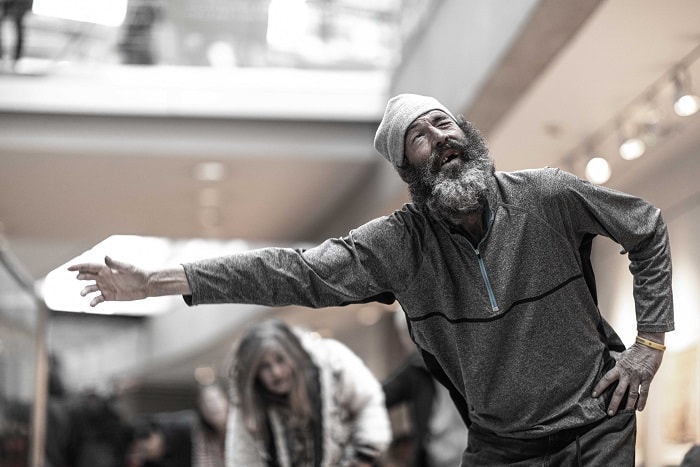
Three times a week, a group of about 40 houseless people gather in the plaza of the Salt Lake City library. Houseless perhaps, but not homeless, because this tai chi community has been their home for the past three years. Men and women socialize and then set aside their backpacks to concentrate on the graceful moves that define this discipline.

“You have people who never showed up to work that call and say they can’t make it, like they’re missing a job,” says Chris, who with his dog Eleanor, has been practicing since the beginning.

“It is my preferred martial art form,” says Ben. “By focusing, you feel every muscle as it moves. The turning motions allow you to absorb all your surroundings and open yourself to the elements.”
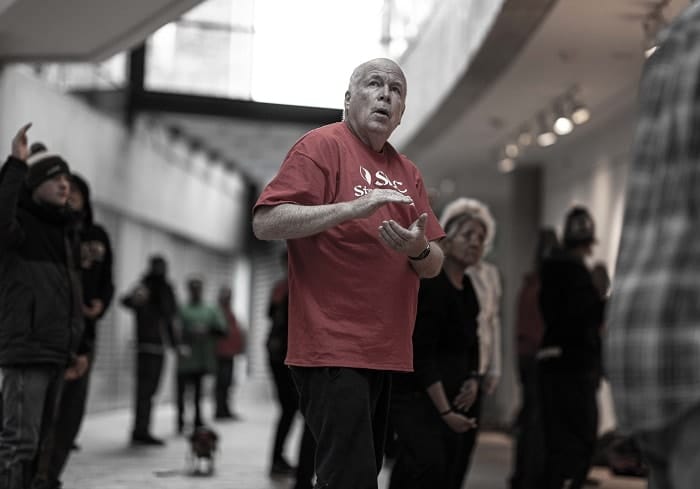
Allan Sacharov joining homeless practicing street tai chi
Allan Sacharov joined homeless practicing street tai chi

“I want to be here,” says Mitch, a veteran with a gimp leg. “You realize that everyone has their challenges. It’s a therapy that allows me to center myself since these moves have been around for 4,000 years.”

Indeed, this ancient form may be a solution to modern societal problems. Seeking these solutions is what motivated Marita and Bernie Hart to create the program. The two were ski instructors over a decade ago when they observed the ties between motion, emotion, balance and learning. Bernie realized that how a child interacts with gravity, via crawling or rolling, is one of the crucial early lessons that one absorbs.

“A child’s early perceived tasks of movement affects their thoughts and emotions. It creates patterns,” he says. After taking tai chi classes at a senior center, they felt this venerable form could be utilized to help people evolve their adult thought mechanisms.
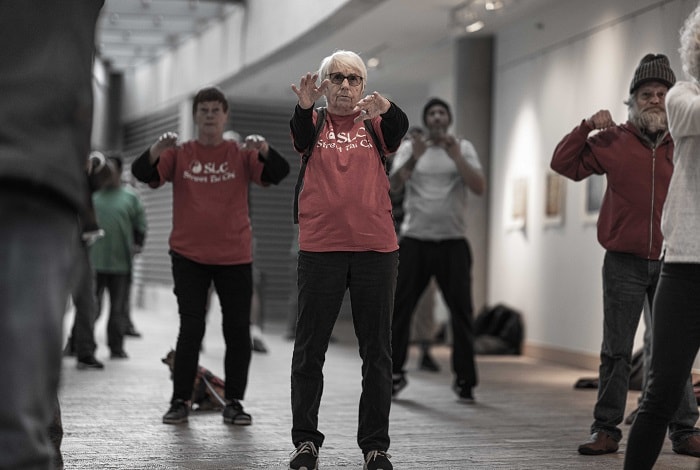
street tai chi

“Tai chi is a vehicle,” says Bernie. “It’s really about using motion to develop a different way for people to interact with the world and create a new story for themselves.”

Street tai chi passes no judgement on form correctness. A person’s feeling of accomplishment helps open them to interacting with the group, which provides an accepting sense of family. “We never tell people what to do or ask them why they are here,” says Marita.

Shelter is one aspect of homelessness. But just as important is dealing with how PTSD affects people on the streets. Government agencies are at a loss for coping with this question, and Bernie wants to prove that the motion and emotional link can lead to a solution. “I woke up one morning and said to Marita, ‘Bet me that I can change the world.’”

Street tai chi may be a horse that is a longshot, but it certainly is gaining ground.
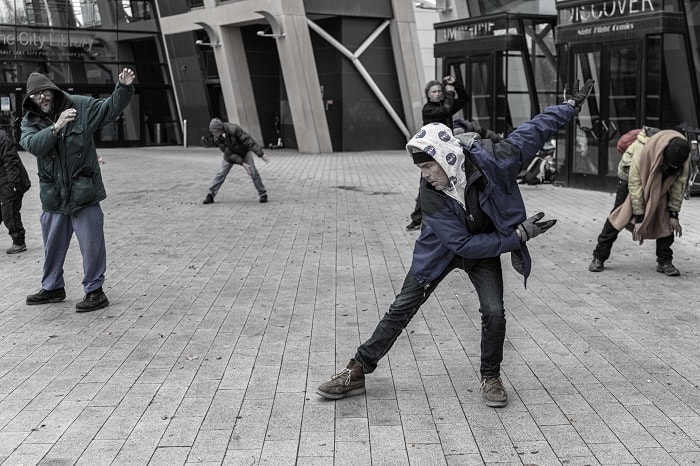
street tai chi in Salt Lake City

RELATED STORIES:
Homeless Millennials—Weighing In On Big Changes to City Programs
Homeless in Sugar House: The Problem Does Not Go Away, Only Moves Around
How Drug Addiction and Homelessness are Intertwined
Tackling Homelessness in the Suburbs
Operation Rio Grande And the impact on Utah’s Homeless
Did A Daily Show Story Flood Salt Lake City with Homeless?
Portraits and Profiles: Homeless Street Sweeper
Sugar House Residents and Council Members on The Proposed Homeless Shelter
Inside Heroin Addiction and Homelessness in Salt Lake City


, ,


Join our newsletter.
Stay informed.


  • Ritual Chocolate Tasting Class in Heber City: Inside Utah’s Bean-to-Bar Factory

    Inside Ritual Chocolate’s Heber City factory, guests learn how to taste chocolate like professionals during weekly bean-to-bar classes. From Madagascar’s bright citrus notes to savory pairings with olive oil and smoked salt, the experience blends science, craftsmanship, and Utah creativity into one unforgettable night.


  • Chronic Disease in America: Treating Too Late, Prescribing Too Much

    Every January, Americans reflect on the year behind them and draft a familiar list of resolutions. Eat better. Lose weight. Exercise more. Reduce stress. These intentions recur not because people lack discipline, but because the underlying health conditions driving them persist.

    Despite unprecedented medical spending and pharmaceutical access, the United States remains chronically unhealthy. According to the Centers for Disease Control and Prevention, more than 76 percent of US adults live with at least one chronic condition, and over 51 percent live with two or more. The most prevalent conditions are well documented. Heart disease remains the leading cause of death, accounting for 680,981 deaths in 2023, while obesity affects more than 40 percent of US adults. Diabetes impacts 38.4 million Americans, and nearly half of adults have hypertension, a major contributor to stroke, kidney failure, and heart disease.

    Treatment typically begins once disease is clinically apparent, and often relies on pharmaceuticals. Over time, this approach can lead to polypharmacy, the use of five or more medications. Patients with chronic illness frequently average two to four comorbidities, each managed independently, increasing the likelihood that side effects from one medication require another.

    To access this post, you must purchase Utah Stories (Digital + Print) or 3 month free trial (Digital).


  • Why We’re Less Healthy Than Our Parents and What Happened

    Something has gone wrong with our health. Each generation appears sicker than the one before, despite spending more on medicine than any society in history. At the same time, trust in once-authoritative sources of health guidance has eroded as pharmaceutical advertising increasingly blurs the line between reporting and recommendation. This piece examines how lifestyle, food, and institutional incentives reshaped our understanding of health—and why reclaiming it may require more courage than another prescription.

    To access this post, you must purchase Utah Stories (Digital + Print) or 3 month free trial (Digital).


  • From Water Bottles to “Brain Rot”: Classroom Trends Shaping Student Culture in 2026

    What may sound like noise or nonsense to adults often carries meaning inside today’s classrooms. From oversized, sticker-covered water bottles to repeated phrases borrowed from online videos, small habits have become shared language among students. This is what student culture looks like heading into 2026.