Salt Lake City mayor Jackie Biskupski announced in December that a 150-bed homeless shelter will be built near Sugar House’s Fairmont Park. Biskupski and Salt Lake City Council made the decision without public involvement. Biskupski says it’s “Not up for debate. The decision of the location is final”. Three other shelters were announced—also to be built in suburban areas. Salt Lake Valley residents, needless to say, flooded the Mayor’s office with emails and letters. They voiced their concern and, in some cases, outrage.
As a Sugar House resident, I share the concern of my fellow citizens. My home has been burglarized four times in recent years. My neighbors have been the victims of similar crimes. Sugar House Police say they have more case files than they can get to, and now a new homeless shelter is to be built? How will this affect crime in the area? Fairmont Park already has issues with drug trafficking and homeless loitering.
We asked Sugar House Community Council members what they think of Biskupski and the City Council’s decision. Here is what they said.
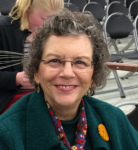 Judi Short: “We can work to try to make sure that we get a population of women or families with children, instead of the general (homeless) population. And we can work to make sure that certain conditions are in place. Not knowing much about the “model” that will be used, we can only speculate, but would like to have security, no people loitering, perhaps a locked facility, etc. We don’t want this to increase the homeless population we already have in Fairmont Park. We will work with the city to ensure that this facility provides a low impact to the neighborhood surrounding it, as well as the greater Sugar House area.”
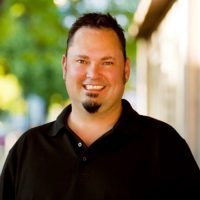
Topher Horman: “I can hardly imagine the painful choices made in overhauling the strategy for combating homelessness in 21st Century Salt Lake City. We’ve completely outgrown our 1970’s model, and we truly have a tent city crisis downtown that brought massive problems that I honestly do not believe will fully translate over to the new shelters.
“I am encouraged that the community panel has worked with the Council, City Mayor, County Mayor, and others. This is a necessary, bold, frightening move for Salt Lake, and I do feel that many key perspectives have been included in these difficult decisions.
“As much as I hate the lack of full transparency in the finality of the selection process, I can also see, and begrudgingly accept, their desire to place the full burden on themselves as elected officials to prevent the nasty rancor that would have come from a public whittling of 11 sites down to 4.
“I have also seen many smaller homeless facilities around the country that are simply not invasive to their surroundings. The YWCA on 300 S is an excellent example of what might end up on Simpson.
“If Simpson truly becomes the women and children’s center, I have huge concerns what this does to our children’s school, Nibley Park K-8. Nibley is award-winning and brimming with diversity, and could easily tip to being a Title 1 school. The kids at our school would be welcome at the already diverse Nibley, but there should be City help and recourse to prevent any change in school classification from this decision.
“I have had friends go homeless over the years and transition successfully back with a hand up, not a hand out. I strongly believe that if we offer distinct treatment plans for the temporarily homeless, the chronically homeless, the mentally ill, the addicted, and send the dealers to jail that are preying on the above, these smaller shelters are the right way to go.
“The responsibility now fully rests on the Council and Mayor to successfully support, fund, and protect the neighborhoods around these sites. I was happy to see Lisa Adams going door to door immediately following this announcement. That responsiveness to her constituents meant a lot to me.
“Simply put, Salt Lake can’t screw this up, and needs to step up in a huge way to make this model successful. Let’s start with the ridiculous 40 minute SLCPD response times and rampant crime we have in the Sugar Hood. Solve that NOW, and I am hopeful this shelter will be able to fit in with, and not harm, the surrounding neighborhoods.”
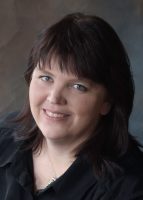 Amy Barry: “The city needs to build trust with the residents who feel blindsided, as they have such a vested interest in their community.”