For decades, Salt Lake City’s Rio Grande district carried the reputation of a scary and blighted area, rife with drugs and crime. Once a bustling transit hub during America’s train era, the district slowly disintegrated into a derelict haven for prostitution and criminal activity, as a highly concentrated and dangerous transient population threatened the well-being of the area, spilling over into Pioneer Park and surrounding neighborhoods. This was due, in part, to only having a single, inadequate homeless shelter in the vicinity.
In recent years, businesses like the Rio Grande Cafe suffered a loss of customers. Drug trafficking and panhandling became rampant, requiring the legislature to pass more restrictive laws to control the homeless for the sake of public health and safety. Frequent raids by the police had no lasting effect.
Last year, a multi-jurisdictional partnership was formed that included the Department of Public Safety (DPS) and the DPS Criminal Interdiction team, Salt Lake City, Salt Lake County, and combined law enforcement agencies, with backing from the legislature, the Office of the Attorney General, the County District Attorney, and other government entities. The goal was to overcome homelessness and reduce criminal activity.
Known as Operation Rio Grande, the expurgation of homeless from the area began on August 14, 2017 as a three-phase plan, with tracking and rehabilitation of affected individuals as its primary goals.
But despite law enforcement’s attempts to track and arrest known criminals, while reintegrating others through drug rehabilitation and job training, the displacement of so many homeless caused an overflow effect that poured hundreds of criminals and mentally ill individuals into other parts of the valley, and although the Rio Grande problem has been diluted, it now affects a much larger area.
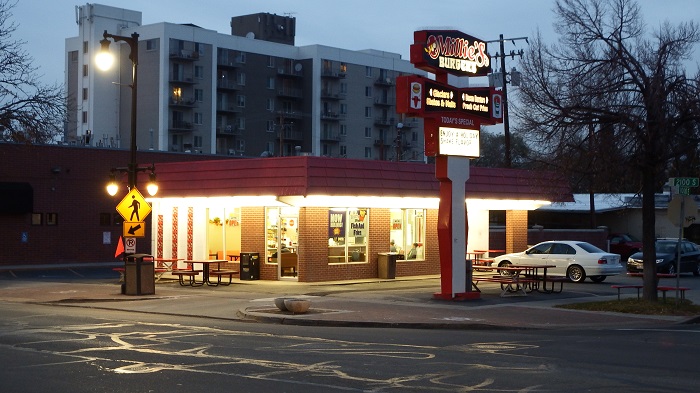
Dan Nielsen is the owner of Millie’s Burgers in Sugar House. As an iconic landmark for more than 40 years, Millie’s is known for its good food and a family-friendly, “Happy Days” retro ambiance.
Since the Rio Grande purge, Dan has seen a steady rise in transient activity in Sugar House.
“My biggest concern for the area,” Dan says, “including my business, is the homeless and transient population. They have been pushed out of downtown, thanks to our elected officials, and are now prominent in our area. I’ve seen drug deals take place, people stumbling around high on something, or passed out on grass strips. Sometimes there are people sleeping on the patio of my business when I get to work in the morning. On numerous occasions they have pulled trash bags out of my dumpster and dumped the contents the ground looking for food. They have even defecated in my dumpster area — not a pleasant way to start your day. I have had addicts in my store and on the premises. They harass both customers and employees, which is not good for residents or business.”
Natalie is a business owner in South Salt Lake who asked that I not use her last name or identify her business, but she echoes Dan’s concerns. “I have people sleeping in my parking lot all the time,” she says. “Ever since the brilliant people in office tried to move [the homeless] out of downtown, it simply pushed them into our area. Don’t get me wrong, I’d love to help them, but my parking lot does not have the resources they need.”
Like South Salt Lake, Sugar House is a gentrification area that has morphed over the past several years from an outdated cluster of 19th and 20th-Century shops and furniture stores into a modern retail mecca. A thriving local economy has lured businesses large and small to locate in both areas, transforming them into dynamic and desirable places to live and work.
It’s no wonder then that business owners like Dan and Natalie don’t want either area to become synonymous with the old Rio Grande district. Customers won’t shop where they don’t feel safe, and the threat of a criminal element living and lurking in the shadows is enough to keep at least some prospective customers away.
Natalie isn’t sure if she has lost business, but she hopes not. “It is more of a matter of my customers feeling uncomfortable,” she explains. “We have walked up to men sleeping on our porch (using our power), trying to come in to use our restroom, and following employees into the building when they are opening for the day. This can be scary for younger women.”
Dan agrees. “There is no way to know for sure if I’ve lost business because of them,” he tells me. The minute we become aware of them, we tell them to leave, and most of the time they do, but it’s usually with an expression of anger and profanity. I personally don’t know how to get them out of the area, and 24/7 security is definitely not affordable.”
Natalie has not contacted government officials in South Salt Lake, but she did take her concerns to law enforcement. “I have talked to the South Salt Lake Police about several situations we have had in our parking lot,” she tells me, “but they are not able to do much. However, if there are homeless people sleeping in our parking lot, the police will come and ask them to leave. We have people sleeping in our parking lot at least 2-3 times a week. It is very sad.”
Dan says that the only times police will respond is if a trespasser refuses to leave the property, someone exhibits threatening behavior, or the person is unresponsive. Still, it can take an hour for them to arrive. “I’ve had people pass out in my parking lot on several occasions,” he says, “which generally gets a quicker response.”
Thousands of business owners and homeowners hope that municipal plans to build additional homeless shelters throughout the valley will help to alleviate the problem. When asked if he had expressed his concerns to the city, Dan said, “I have not contacted the city, but I’m sure they know about the problem they have created. I think shelters are necessary for the people seeking help. That being said, I also believe the vast majority of these people do not want help and avoid it even when it is offered, so I don’t think more shelters will have a significant effect.”