Utah Stories

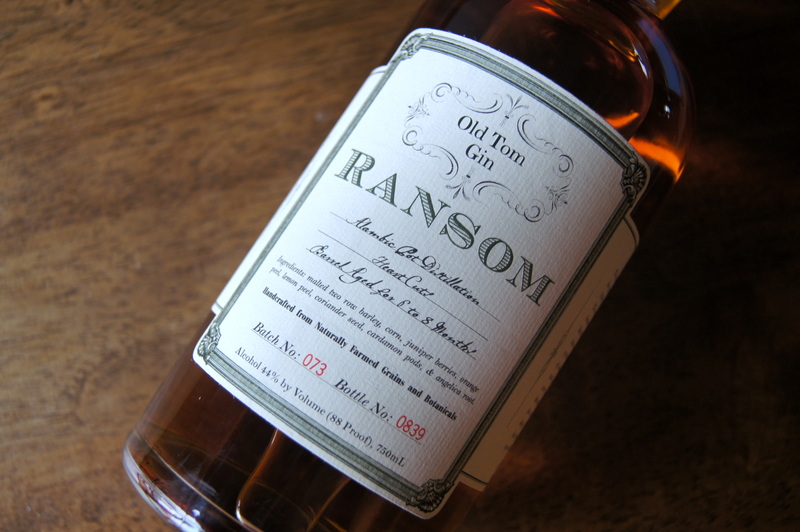
Ransom Old Tom Gin

This is an interesting gin insofar as it doesn’t look like standard gin; it’s not clear. It’s amber colored, a “historically accurate revival of the predominant Gin in fashion during the mid 1800’s and the golden age of American cocktails.”

|


Photo by Ted Scheffler

Tad Seestedt started Ransom Wine Co. & Distillery as a labor of love in 1997, initially producing small batches of eau de vie, brandy and grappa. In 2007, he added gin, whiskey and vodka to the Ransom portfolio. While the Willamette Valley is known for its excellent wines, Seestedt is making Oregon a major name in distilled products, including his top-notch gins.

If you’re looking for a holiday gift to impress your favorite gin lover, look no further than Ransom Old Tom Gin ($31.99), which has garnered numerous competition awards including Gold Medals at the Seattle International Spirits Awards, American Craft Spirits Association, San Francisco World Spirits Competition, San Diego Spirits Festival and others.

This is an interesting gin insofar as it doesn’t look like standard gin; it’s not clear. It’s amber colored, a “historically accurate revival of the predominant Gin in fashion during the mid 1800’s and the golden age of American cocktails.”

According to Ransom, The Old Tom Gin recipe “was developed in collaboration with historian, author, and mixologist extraordinaire David Wondrich. Old Tom is the Gin for mixing classic cocktails dating from the days before prohibition. Its subtle maltiness is the result of using a base wort of malted barley, combined with an infusion of botanicals in high proof corn spirits. The final distillation is run through an alambic pot still in order to preserve the maximum amount of aromatics, flavor and body. Only the ‘heart of the hearts’ (the very best portion of distillate) is retained for this special bottling.”

Use 2 ½ oz Old Tom stirred with 1 oz blood orange, 4 drops Angostura bitters, and a splash of simple syrup to make a Custom Old Tom cocktail. Cheers!

FOR MORE BEER, WINE AND SPIRITS RECOMMENDATIONS GO HERE

THIS CONTENT IS FROM UTAH BITES NEWSLETTER.

GET OUR WEEKLY RESTAURANT REVIEWS, TED’S FAVORITE RECIPE AND DRINK OF THE WEEK DIRECTLY TO YOUR INBOX . TO SIGN UP FOR FREE GO HERE.

Originally trained as an anthropologist, Ted Scheffler is a seasoned food, wine & travel writer based in Utah. He loves cooking, skiing, and spends an inordinate amount of time tending to his ever-growing herd of guitars and amplifiers.

SUPPORT OUR SPONSORS: click on their logos to visit their website

[envira-gallery id=”30879″]

,


Join our newsletter.
Stay informed.


  • Highway 6 and the Midland Trail: Utah’s Transcontinental Highway History

    From Price Canyon to Delta’s desert stretch, Utah played a central role in building the Midland Trail, one of America’s earliest transcontinental highways and the foundation of today’s Highway 6.


  • Utah Acquires US Magnesium Assets in $30M Deal to Protect the Great Salt Lake

    Utah leaders announced the state has successfully won the bid to acquire key assets of the defunct US Magnesium facility on the Great Salt Lake, including its associated water rights and property.


  • Whiskey, Bullets & a Buried Town: Archaeologists Reveal Alta’s Wild Past

    Before Alta was known for powder days and lift lines, it was a silver mining town clinging to the side of a narrow canyon. In the late 1800s, men lived at 8,000 feet, went underground each day, and endured winters that regularly buried buildings in snow. This past summer, that mining town resurfaced — literally — during construction at the Alta Ski Area.

    To understand what Alta really looked like, you don’t begin with legend. You begin with its trash — and this time, that happened almost by accident.

    Alta Ski Area was installing underground water reservoirs to support snowmaking. Because the project sits on Uinta-Wasatch-Cache National Forest land, an archaeologist was required to monitor the excavation. No one expected the trench to produce much.

    But, It did.

    Artifacts began surfacing almost immediately. Enough that the Forest Service contacted the Utah State Historic Preservation Office for help. Lexi Little, who coordinates the Utah Cultural Site Stewardship Program, helped mobilize nearly 30 volunteers to assist with what quickly became a focused two-week excavation.

    Winter deadlines were approaching. The pipes for the reservoirs had to go in the ground. There wasn’t time for a slow, extended dig.

    “It was two weeks of digging in the dirt and helping figure out exactly what we were looking at,” Little said.

    Most of the people screening soil weren’t professional archaeologists. They were trained stewards from around Utah — part of a statewide volunteer network that now approaches 500 people. They poured dirt through shaker screens, scanning for fragments that could piece together a town long buried.

    “Archaeology is human trash,” Little explained. “Archaeologists are very into trash.”

    Alta had left plenty behind.

    https://youtu.be/hzIHzx3OGoo?si=dKcl2CEz-t6FZzYw

    Victorian-style ceramics appeared first — the kind typically used in hotels. Medicine bottles followed. Ink bottles. Hand-blown glass. A porcelain doll’s foot surfaced from the soil, a small detail that shifted the mental image of the town. Families were here. Children were here. This wasn’t only a camp of miners.

    The bottles helped establish time. Manufacturing details — whether glass was hand-blown or mold-made, whether a maker’s mark appeared on the base — allowed archaeologists to date many of the artifacts to the 1870s through the 1890s, when Alta was booming as a silver mining town.

    “That gives you that range of dates for when Alta was really booming,” Little said.

    One reusable soda bottle clearly stamped “Salt Lake City” connected the canyon to the valley economy below.

    Then something unusual rolled out of a dirt pile.

    A corked bottle. Intact. Liquid still inside.

    To access this post, you must purchase Utah Stories (Digital + Print) or 3 month free trial (Digital).


  • The Only Full Bottle of Alcohol Ever Found in Utah Was Unearthed in Alta

    When a backhoe rolled a corked bottle out of the dirt at Alta this summer, no one immediately grasped what they were holding. It wasn’t empty. It wasn’t shattered. It was full. “The bottle that was discovered up at Alta is the only bottle of alcohol ever discovered in an archaeological excavation in the state…