They may be called food influencers, but Utah’s food creators tend to flinch at the title. “Foodie” feels closer to what they are doing — walking into neighborhood restaurants, talking with owners, tasting what someone has spent years perfecting, and deciding what is worth sharing with thousands of people who may show up because of one post. Their platforms are not just galleries of restaurant recommendations or carefully staged plates; they are also filters built on trust, restraint, and the uncomfortable knowledge that a careless opinion can hurt a small business.
Across Utah, foodies are nudging diners beyond familiar chains and toward the people behind the meals: the chef stretching dough before sunrise; the family running a tiny counter-service spot; the owner hoping one good weekend can make the next one possible.
But the work is not as simple as celebrating every plate. Utah’s food scene is more varied and ambitious than many diners realize, but it is also uneven, competitive and still fighting old assumptions about what the state has to offer. For these creators, the subject is not just food — it is the fragile relationship between attention, criticism, and the businesses trying to survive both.
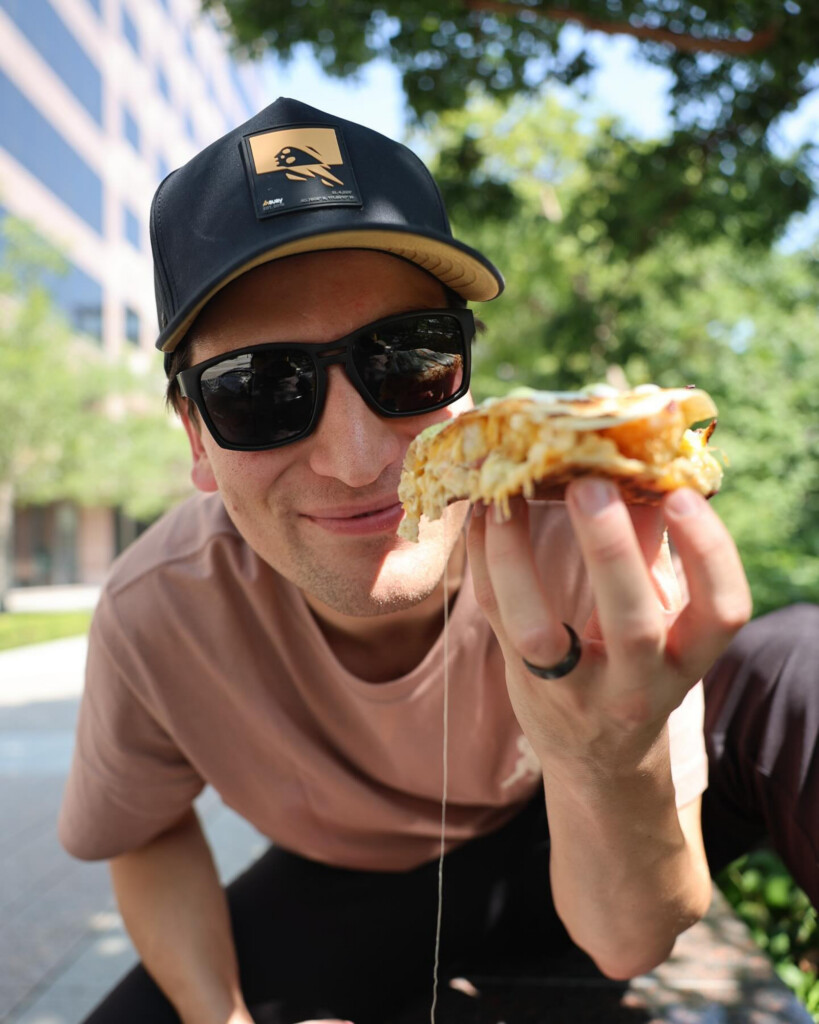
Michael Wolf: Utah Food Finds
For Michael Wolf, the creator behind Utah Food Finds, food has never been just fuel. It has always carried a story.
Wolf grew up in Alaska, in a military family where money was often tight but food was never treated casually. His mother baked bread, his family harvested and preserved what they could, and he learned early that good food was something to value rather than waste. Later, while living in Germany during high school, he traveled through Europe and discovered a wider world of food traditions. Still, one of his most meaningful meals remains close to home — beer-battered halibut, caught by his father, brother, and him during family fishing trips in Alaska.
Wolf came to Utah in 2017, initially for skiing, with school being, as he jokes, a secondary priority. He studied business ownership, started a business while in college, fell in love, and decided to stay. Today, he works in freelance marketing and has built Utah Food Finds into a platform with a particular focus on the people behind local restaurants.
After working with restaurant clients and other local foodies, he saw an opportunity to make something distinct. He then created a video about Firebird Gourmet Market in Draper, which unexpectedly changed everything for him. He woke up the next day to thousands of new followers, and the response showed him, in real time, how much a recommendation could matter.
That impact remains his motivation, though it also comes with pressure. A post about a local pizza restaurant once created a line out the door for a month. “That makes my heart super happy,” Wolf says. “That’s the goal of every single video I do.” But a line out the door also shows how much power a creator can have, and how quickly an online recommendation can become a real-world consequence for a restaurant that may or may not be ready for the rush.
He rejects the influencer label and prefers “foodie.” His work is also more labor-intensive than viewers may realize. “It’s a lot of work,” he says. “I put hours into every video that I make because I care that that video conveys how I actually feel about the food.” The finished post can look effortless, but behind it are edits, captions, timing, relationship management, and the quiet calculation of whether a place should be amplified at all.
For Wolf, quality content is not about chasing attention, though attention is always part of the job. It is about helping people discover local places worth supporting and helping those businesses bring more people through the door without turning someone else’s livelihood into disposable content.

Jennifer Burns: JB Cooking
For Jennifer Burns, food begins with memory: the sound of chopping, the comfort of a familiar kitchen, and the kind of meal that can pull a person fully into the present.
She remembers cooking with her mother and grandmother, the warmth of being in the kitchen, and the way a meal can hold a person’s attention so completely that the rest of life quiets down. “When I put my head down and chop, I wouldn’t think about my to-do list,” Burns says. “I wouldn’t think about problems or issues. It was my escape.”
Burns moved to Utah from Southern California more than a decade ago after falling in love with the state’s outdoor life. At the time, she was working in sports marketing, but Utah became the place where she transformed her lifelong love of cooking into a career. While traveling in Costa Rica, she began writing a cookbook inspired by a simple challenge — using every fresh ingredient she could find.
Her cookbook, Cooking Delight, led to a television show of the same name on KJZZ. Burns produced and hosted the weekly program before moving into cooking and entertainment segments for local television stations, where she has hosted thousands of appearances with restaurants, brands, and food businesses.
She began creating social-media content in earnest around 2021, bringing an established television audience into a more direct conversation. Her approach remains deeply personal, but personal does not mean easy. Burns manages her own account, responds to followers herself, and says the friendships she has built through Utah’s food community have been one of the most meaningful surprises of her work. It also means there is less distance between the post, the audience reaction, and the business owner affected by both.
She also believes food creators have a responsibility to the businesses they feature, especially when public criticism can flatten a complicated restaurant experience into a one-star verdict. In a widely shared article written during the pandemic, Burns encouraged diners to communicate directly with restaurant owners before leaving a negative review. “They want to fix it,” she says of restaurant operators. “They want to know what the issues are so they can fix them.” Her frustration is not with honest disappointment, but with the kind of review that punishes first and asks no questions later.
For Burns, food is not merely content. It is an artistic outlet, a keeper of memories and a way to bring people together. “Food brings people together,” she says. “That’s my heart.” Still, her protectiveness toward restaurants gives that warmth an edge: if food can bring people together, careless criticism can pull hard in the other direction.
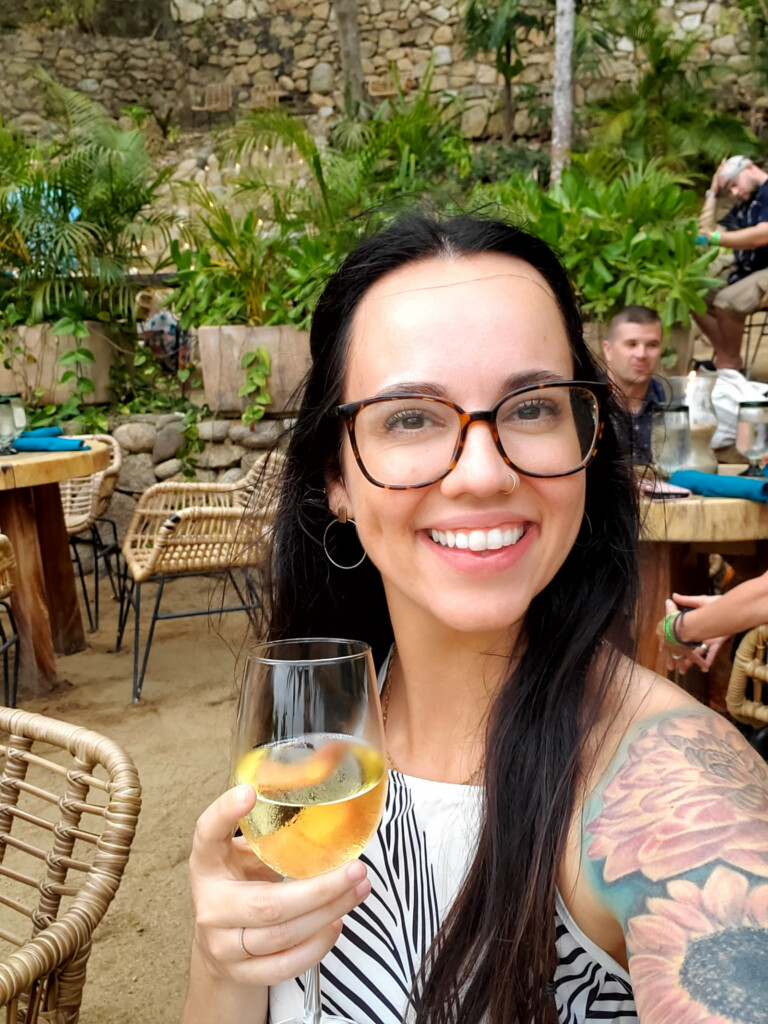
Misty Solis: Utah’s Best Kept Secrets
For Misty Solis, the creator behind Utah’s Best Kept Secrets, food is not an afterthought in a good day out. It is often the main event.
“Where I spend money is food,” Solis says with a laugh. “I’m a foodie at heart.” While some people save for clothes or other purchases, Solis saves for experiences — the kind that begin with a memorable meal and often include a conversation with the chef, a glimpse into an owner’s story, or a discovery that changes the way someone sees their own hometown.
Born and raised in Provo and now living in Springville, Solis began her work with local businesses in 2019 when she bought Hobble Creek Barn Boutique, an indoor market that brought together 80 to 100 Utah makers and small businesses at seasonal events. When COVID-19 shut down those gatherings, she watched many of the vendors struggle to keep their businesses alive.
Wanting to help, Solis started a newsletter, then called The Artisanal Ave., to introduce customers to vendors and products they could still support. Eventually, the project became Utah’s Best Kept Secrets. Over the last three years, it has grown from a small-business spotlight into a guide for restaurants, festivals, workshops, date nights, grand openings, and experiences throughout the state. The growth widened her reach, but it also widened the expectation that she knows what is happening everywhere.
Solis says the account became meaningful when followers began telling her they had tried a restaurant because of one of her posts. Seeing those recommendations bring customers through a business’s doors made the work feel more real. So she loves to emphasize that a positive post can help fill a room.
Her enthusiasm is unmistakable, but it is not only about finding the next viral meal. Solis sees Utah as more diverse and more exciting than people often give it credit for, while also knowing that many restaurants still must fight for attention against chains, algorithm trends, and diners who arrive with narrow expectations. She points to independent restaurants, family-run businesses and flavors that challenge the assumption that Utah dining begins and ends with hamburgers and fries.
She also knows food creators are often misunderstood. “A lot of people think that we make tons of money,” she says, noting that many creators still work full-time jobs while producing content on the side. She also pushes back against the idea that foodies are snobbish or self-important. “We are just normal people,” she says, “just trying to showcase the amazing things that are close to you.”
That desire to showcase rather than tear down helps explain why harsh reviews bothered the creators so much in interviews. To them, a restaurant is rarely just a meal that missed the mark. It is rent, payroll, family labor and years of risk sitting behind the counter.

Chase Thomason: SLC Foodie
For Chase Thomason, the creator behind SLC Foodie, Utah’s restaurant scene is not just a place to find the next great meal. It is a web of people, risks, recipes, long shifts, and small businesses trying to make something last.
A third-generation Utahn, Thomason has loved food since childhood. Growing up with limited means meant that an occasional meal out felt like an event, the kind of treat that stayed with him. When he got his first job at 15, he spent much of what he earned exploring local restaurants. Fourteen years ago, he began documenting those experiences online, not with the goal of becoming an influencer, but as a personal visual map of dishes and restaurants he wanted to remember.
At first, his posts were simple photographs tagged with locations. He wanted to be able to scroll through his phone, see a dish he had enjoyed, and navigate back to the restaurant. But people began finding the account and asking for more information. Slowly, the personal archive became a community resource. Today, SLC Foodie reaches roughly 415,000 followers across three social platforms, most of them in Utah.
Even with that reach, Thomason does not see himself as an influencer. He calls himself a foodie, someone sharing favorite places the same way he would with friends, family and neighbors. His approach is deliberately positive. “I wanted it to be more of a place of love for food versus what I dislike,” he says. If a restaurant is not for him, he simply does not post about it. That choice keeps the account generous, but it also means his feed is not a complete map of Utah dining. It is a curated one, shaped as much by what he leaves out as what he praises.
That philosophy has helped him become a witness to Utah’s changing food culture, though he is careful not to pretend the change is finished. He remembers a time when the state’s dining options felt dominated by chains and a few familiar independent restaurants. Now, he sees an expansion of what is available in Utah. “I feel like we, in the past decade, have been in this renaissance of sorts for the food scene in Utah,” he says.
He is especially drawn to independent restaurants and the stories behind them. For the chef who brings classical training to an approachable sandwich shop, the family that opens a diner, or the owner who has sacrificed long hours to share a recipe with the community. “I want to know the story when I go to spots,” Thomason says.
For SLC Foodie, the work has always remained centered on that connection. “It’s about the restaurants,” he says. “It’s not about us.” The statement sounds simple, but it carries an implicit critique of a review culture that can make the critic the main character and the restaurant the backdrop for a verdict.
Utah’s food scene is still changing, and these four foodies are helping people keep up with it one recommendation, recipe and local discovery at a time. Their work can make the state feel smaller and more connected, but it also raises harder questions about influence, responsibility and who gets to shape a restaurant’s reputation.
Behind every recommendation is a person who took a risk, opened a door, developed a recipe or put a dream on a plate. The foodies interviewed here share a desire to connect diners with local businesses, but they also share a clear impatience with criticism that forgets the people on the other side of the counter. Their optimism brings light into a space that was once for critics but now emphasizes their love for food and love for people.
Feature image by Nahima Aparicio