MOUNTAIN GREEN, Utah — Jessie Drage had been horseback riding for more than a decade when she decided to buy two horses for her and her husband on a whim. She didn’t even own a horse trailer to transport them, and these weren’t ordinary horses people usually buy.
In 2014, in the town of Hooper, Jesse rescued them from amongst a few dozen horses packed into a small corral. It was a kill pen. The horses—sick, lame, old and malnourished — jostled and whinnied, as if they sensed the danger that awaited. A semi truck would soon transport them to Mexico to be slaughtered.
Days later, back home, Jessie realized why the black mare, a 6-year-old American Bashkir Curly whom she named Athena, looked healthier than the others. She was aggressive, prone to kicking, and in one frightening instance, lunged and bit Jessie’s head and face and chucked her in the dirt.
Nearly everyone Jessie sought advice from said to put both horses down. But Jessie’s husband, Shaun Drage, unexpectedly latched onto the challenge of breaking them. Although his experience with horses included nothing more than once petting some over a fence, Jessie said he surpassed her horse knowhow within 30 days. Shaun — then grappling with addiction spurred by a childhood spent shuffling through foster care — and the two horses helped heal each other.
Jessie’s whim decision transformed their lives. They started Drage Second Chance Ranch to rescue horses with severe behavioral problems, retrain and rehome them and give riding lessons. But Shaun’s journey into horsemanship compelled them to do something else.
They became a nonprofit in December 2017, and launched programs to share equine experiences with others — riding lessons for kids whose families can’t afford to pay, and riding lessons for adults recovering from addiction who commit to ranch work in exchange.
“It’s about giving back and helping other people,” Jessie said.
She and Shaun run the business out of their home in Mountain Green on a shoestring budget with a few staff and many more volunteers. Jessie does payroll, accounting and schedules lessons. She also works as a property manager and realtor to make ends meet.
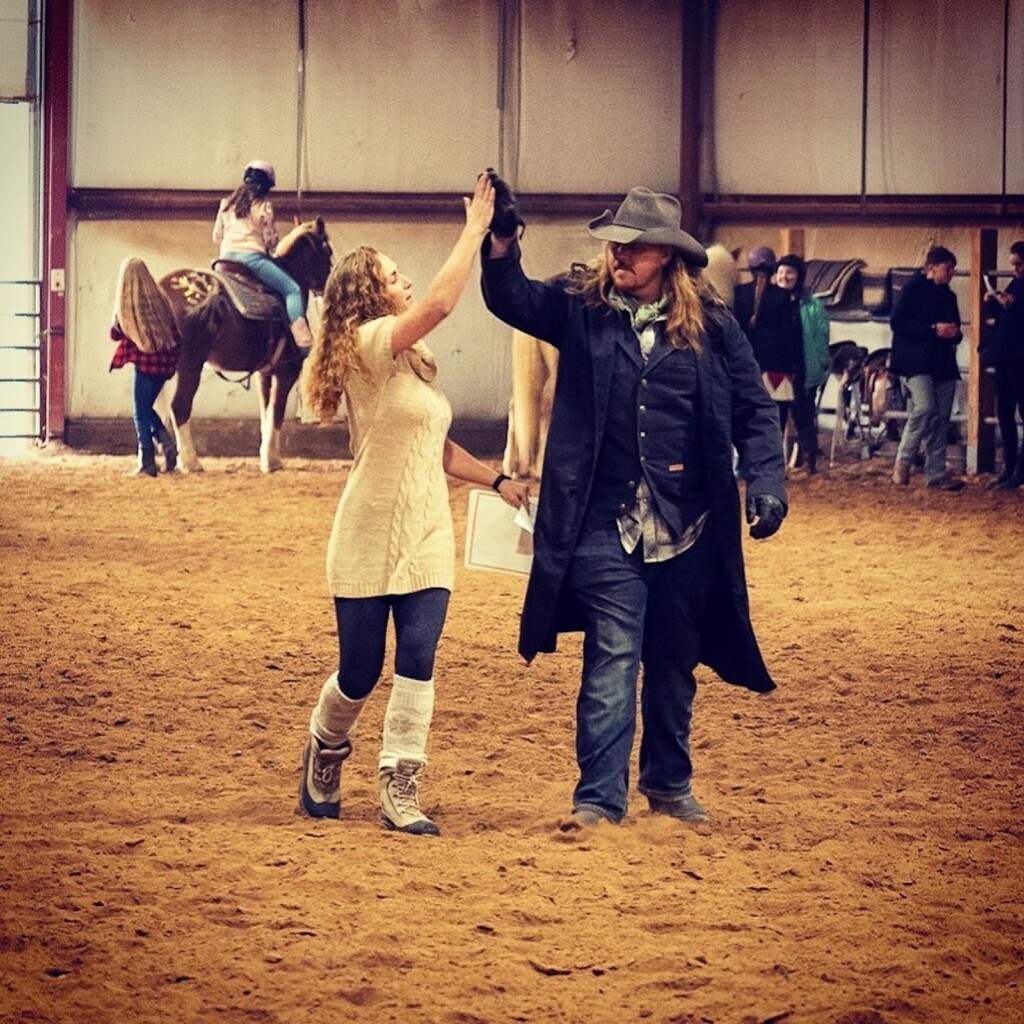
Shaun trains the horses, instructs riders and manages the rotating crew of 20 ranch hands and volunteers, which he’s done full-time since 2018 when they realized they had a lesson waitlist. Today, Shaun and four other instructors give about 90 lessons a week during the summer.
It’s a lot to coordinate. A former student, Holli Streck, helps. Five years ago, she was 50 when she took her first riding lesson at Drage Second Chance Ranch.
“After that lesson, I was in love,” she said about the experience. She took more lessons and began arriving early to help get the horses ready. Today, she coordinates events and helps manage the ranch, which includes any job that needs doing, manure-shoveling included.
Her goal as a full-time volunteer is to help things run smoothly, but more importantly to foster the same uplifting experience she felt when she took her first lesson with Shaun. “We want [the students] to feel that this is so much fun,” Streck said. “It doesn’t matter what their goal is.”
Streck sees riders young and old progress through lessons and gain confidence. That confidence trickles into other parts of life. Kym Vesper, 20, is one example. Bullying at school had left her timid and shy, but Shaun and Jessie coached her in a way that gave her confidence. Over seven years, she took lessons, became a ranch hand and now works as an instructor.
“I’m a fairly outgoing person now because of it,” she said. “They just made me better as a person.”
Everyone who works at Drage Second Chance Ranch embodies that philosophy — that lessons are as much about learning to ride a horse as they are about self-improvement.
Shaun also knows this first-hand. It took him more than a year to train the first two rescue horses, but the process taught him to control his emotions, he said. He learned to recognize his anger and transition to being assertive. He took feedback and kept an open mind to decipher what the horses needed.
“You can’t punch your way through,” he said. “These animals were too big for me to do that.”
Initially, Shaun was driven by innate stubbornness. What emerged was a deep sense of purpose and the chance to give the horses a new life. Eventually, the black mare, Athena, who had bitten Jessie’s face and who routinely chucked Shaun off her back, became safe to ride. Two dozen rescue horses later, Shaun calls Athena the most challenging and dangerous horse he ever retrained. Today, she is a staple in the kids’ lesson program and often greets students, and especially Shaun, with an affectionate nuzzle. Shaun and Jessie’s dream is to serve more people and rescue more horses. Lack of funds means they sometimes have to say no. “It’s heartbreaking,” Jessie said. She hopes with the help of grants that one day “we can just say, ‘Yes,’ whenever there’s a need.”
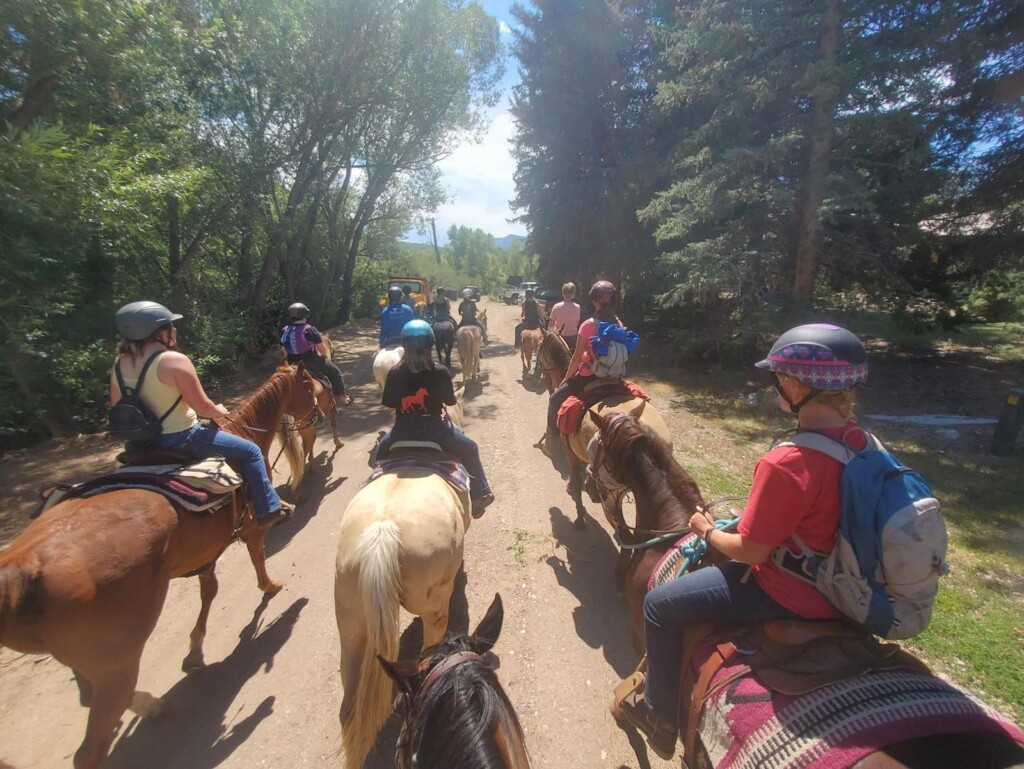
Feature Image: A group heads out for the Work 2 Ride Kids Campout.
Photos courtesy of Drage Second Chance Ranch.