If Salt Lake City leaders were merely judged by their words, they would all grade themselves with A’s. But if we evaluate them using numbers, logic and reality, their performance is abysmal.
Salt Lake’s Unsheltered Population Left in Cold Last Winter
Few would doubt that Salt Lake City’s mayor wants to see homeless people out of the cold. Nobody would doubt our State Homeless Coordinator does not want homeless seniors and people with disabilities out of the cold this winter. But the simple fact is that they are failing, and they don’t want to or cannot make available enough warm space to save lives this winter — and learn from their mistakes from last winter — when at least 12 people froze to death.
Sanctioned Campground
A month ago, Mayor Mendenhall and our State Homeless Coordinator, Wayne Neiderhauser, organized a press conference for a huge announcement; it was the culmination of three years of discussion, debate, planning and coordination: “Salt Lake City will have a sanctioned homeless campground!” said Mayor Mendenhall. “A campground where couples, people with pets, and those in the most need will be able to get out of the cold and remain with their loved ones.”
They had funding for fifty $10,000 “pods” — tiny houses equipped to keep the homeless warm in the winter and cool in the summer. Finally! They offered a grant to operate the campground. They only needed to fulfill an RFP (request for proposal) to find an operator for the campground.
Nobody Qualified to Operate Sanctioned Campground
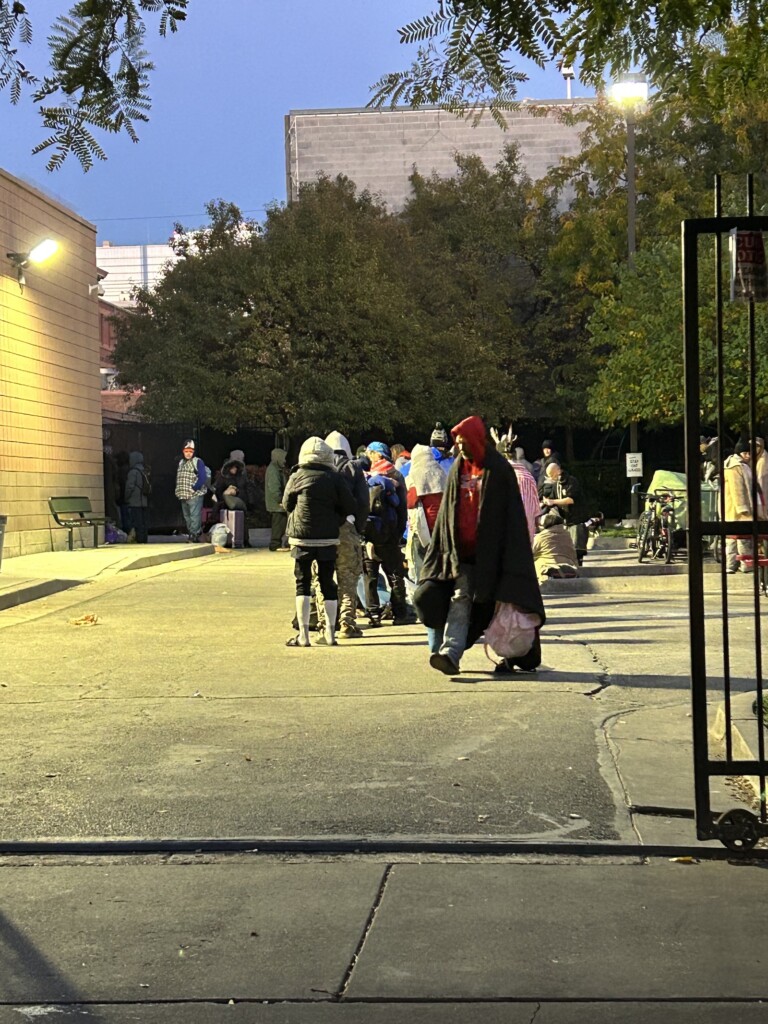
Today, they claim that they did not find any non-profit entity qualified to operate the campground. Those who claim to care that at least twelve people died last winter don’t quite care enough to make viable policies that align with their words.
The problem now is that while the city, county, and state are funding 600 more beds for “winter overflow”, according to Wendy Garvin of Unsheltered Utah, this is four hundred beds short of what is required. Instead, these unsheltered people will need to find a way to get a one-way bus ticket elsewhere.
If we examine city policy and the increasing frequency of homeless abatements, certainly the city hopes the unsheltered get the clear message that this is not the place. The Homeless Information Management System currently reports that all beds are being used in all homeless resource centers, but there are a few people who won’t be standing by watching hundreds of unsheltered homeless freeze in the cold.
Unsheltered Utah
Last winter, a few non-profits, who received little to no taxpayer support operating with volunteers and little money, accomplished what the city, county and state leaders could not — they saved lives by getting unsheltered people out of the cold.
Wendy Garvin, who operates Unsheltered Utah, was one of the main organizers of an effort called Movie Night. Garvin partnered with “Our Unsheltered Relatives — Dave John, and Pandos — Carl Moore along with the First United Methodist Church. The Church agreed to provide the building, while the other non-profits provided donations and support services.
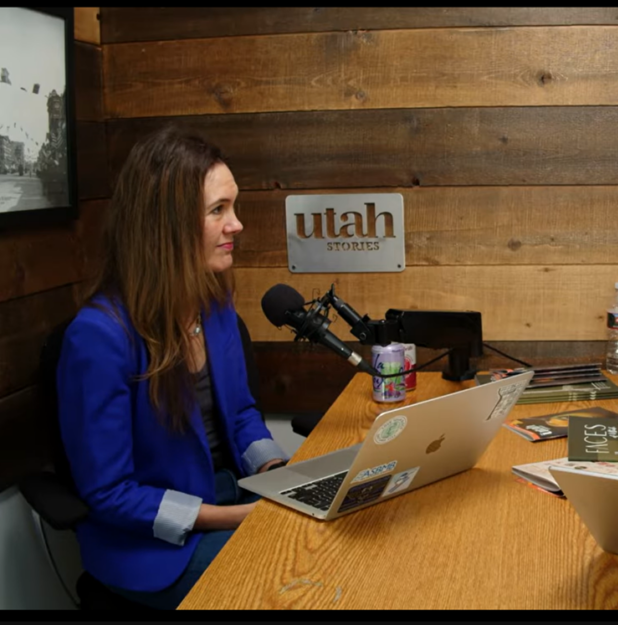
“They deserve all of the credit,” Garvin said on the Utah Stories Podcast. “They deserve all of the credit because they spent all of the late nights and all of the early mornings there taking care of the homeless.” To fully understand this story, we must back up to 2021.

Winter 2020
As winter was approaching in 2020, Mayor Mendenhall, along with the Salt Lake City Council, began feeling overburdened that there were far more unsheltered homeless people than beds. The Council and the Mayor had a session and collectively decided that they were unhappy about the reality of the homeless situation being tossed in their lap.
In their pity party, they decided to pass a “ … moratorium on building or allowing any more homeless shelters in Salt Lake City.”
Their decision was to attempt to force other counties and state agencies to step up and build more shelters county-wide. This measure ignored the plight of the unsheltered who gathered in Salt Lake City because that is where most homeless services are offered.
Movie Night Saving Lives
While Garvin doesn’t accept much of the credit, she takes credit for doing something that the city had put a moratorium on allowing — she provided a shelter and prevented people from freezing to death by calling what they were doing a “Movie Night”, ignoring the moratorium, and willfully breaking the law.
An unsheltered man who goes by “Crash” made it clear how Movie Night saved his life: “I received my tent and sleeping bag, thanks to Ty [Bellamy] (who operates another non-profit called Black Lives for Humanity), but someone stole my blanket and sleeping bag,” Crash told Utah Stories. Without Movie Night, Crash says he would have frozen to death.
Nomad Alliance
Another non-profit called Nomad Alliance provided basic survival gear to the homeless such as food, provisions and hand sanitizer. The alliance even purchased a bus with a wood-burning stove inside that helped the homeless remain warm. Kseniya Kniazeva is receiving national and international headlines because she went so far as to create a homeless calendar of men without shirts to raise funds for her organization.
Mismanagement of Ramada Inn
As winter approaches, another blight on the homeless mismanagement is the Ramada Inn — a facility for which developer Keith Warburton was awarded a $2 million grant and a $1.8 million loan for renovation. This facility was supposed to provide more than 400 people with permanent, supportive housing. This task was never accomplished, and Mayor Mendenhall claims she only learned this when the Salt Lake Tribune reported on it at the end of September.
In their words, they are not to blame, nor is the Utah homeless Coordinator. Money and words aren’t solving the problem. The mismanagement of homeless services is largely neglected by our leaders. State Homeless Coordinator Wayne Neiderhauser receives a salary of more than $258,000 per year. How is he even qualified for this position?
Neiderhauser won’t answer our questions or call us back. He is an unelected leader not held accountable to the people. Road Home CEO, Michelle Flynn, receives a $150,000 annual salary. She will not answer any questions either because she isn’t elected by voters.
$89 Million Spent on 10,000 Individuals in 2021
According to Scott Howell of Solutions Utah, $89 million in taxpayer money was spent last year to provide homeless services to around 10,000 individuals. Where did this $89 million go? Who did it benefit? How many homeless lives were improved due to these funds? Neither Neiderhauser nor the Road Home Organization will answer any accountability questions.
Switchpoint
Currently, the only non-profit that is willing to be held accountable for receiving government funding is Switchpoint, led by Carol Hollowell. Switchpoint maintains numbers and key performance indicators regarding their stats. They are, in fact, improving lives through building community, helping those under their care find work, and offering peer-to-peer support.
Featured Image of the Salt Lake City skyline that now includes the tallest building in Utah, the 41-story luxury high-rise Astra Tower, from KIC Utah. The building will soon be offering 377 high-end apartments.