Community Relations

An Alternative Salt Lake Homeless Solution: Switchpoint May Be the Answer

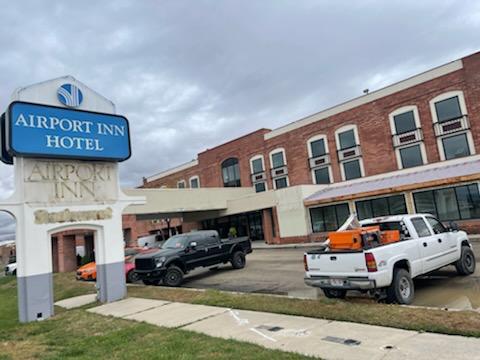
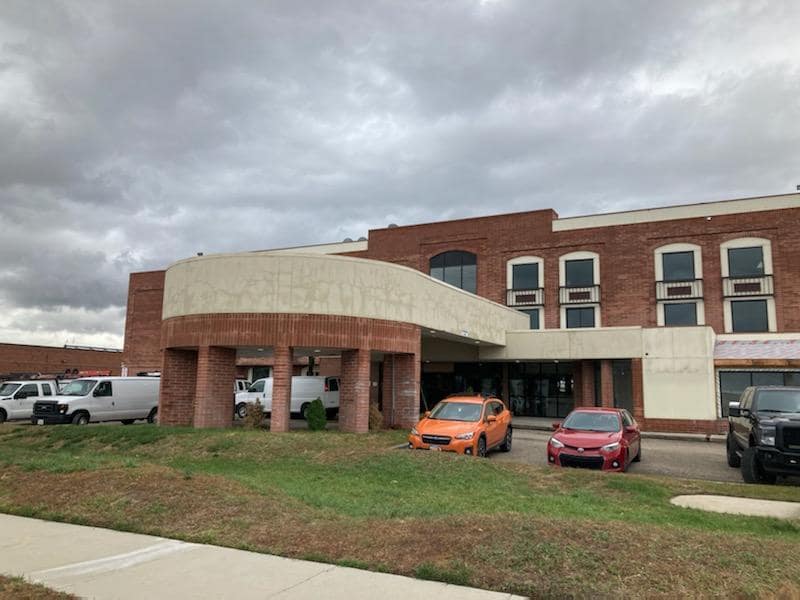
Airport Inn is being converted to affordable housing for those currently homeless by non-profit Switchpoint.

|


Airport Inn is being converted to affordable housing for those currently homeless by non-profit Switchpoint.

The ongoing homeless problem in Salt Lake is a tough one to solve. Homeless shelters are running at capacity and the Tiny Home Village is still in the planning stages. So Carol Hollowell came up with an alternative solution that could get people out of the cold and off the streets. 

Hollowell says her original background had nothing to do with homlessness. Born and raised in Bend, Oregon, she came from an entrepreneurial background, and she credits that with why her model is different from most homeless shelter providers. 

She asked herself how her non-profit, Switchpoint, could do things differently by providing shelter while creating independence. “My business background sets it apart,” she says. “Seventy percent of the funding comes from micro enterprises and donations.” 

Hollowell moved to Utah in 2009 as the volunteer director for the Five County Association of Government. Her duties included finding volunteers for events and helping those with court-ordered service to find opportunities. Many of them needed to do restitution hours for tickets, and when she started delving into why they got tickets, in a lot of cases it was because they were homeless. She thought maybe she could fix that. 

She didn’t want Switchpoint to be the band-aid approach that other local homeless shelters use. “They get a meal and a bed and then they are kicked out,” she says. Hollowell wanted to find a more permanent solution to low-income housing. 

Last year, while working with the Homeless Coalition running two of their winter overflow centers, she discovered that most people coming into the shelters were over 55. They were people who had money, just not enough for rent in Salt Lake’s overpriced real estate market, and they became homeless as a result.  

One of the overflow facilities used last year by the Salt Lake Valley Coalition to End Homelessness was the Airport Inn. The owner was looking to sell. He agreed to let Switchpoint purchase it, and Hollowell began the process of raising funds to remodel it into The Point a permanent residence facility for those 55 and older who are currently homeless.

So far they’ve replaced the flooring and added countertops and sinks to each room to turn them into studio apartments. They’ve filled in the pool and turned that into a community area. They’ve had to replace all the windows, redo the roof, and do serious upgrades to the plumbing. They anticipate opening in mid-November. 

The cost so far is 2.5 million dollars. The money raised has come from private, city, county, and state funds. According to Hollowell, “The local Hansen Family Foundation was a generous sponsor that enabled us to get off the ground. The foundation really cares about low income seniors and making sure the project is viable.”  

Ongoing funds come from their micro enterprises, including a doggie daycare business, thrift stores, and substance abuse care, that according to Hollowell, are businesses that generate money and profit to provide for the operating costs for shelters and for those operations that don’t turn a profit, such as their domestic violence shelters. 
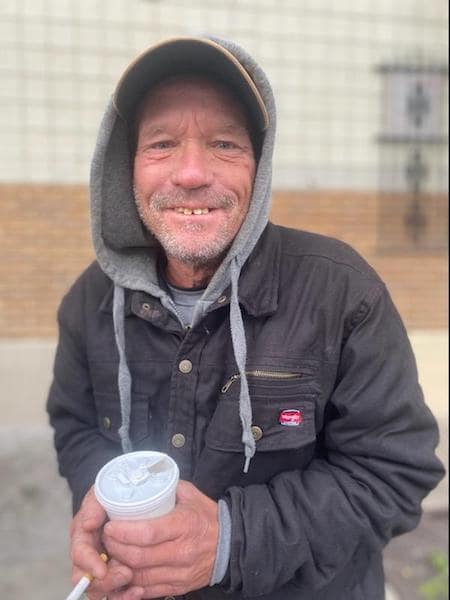
The Point will provide affordable housing for those 55 and over. Many of whom are veterans.

The difference between The Point and other shelters is that the residents will be paying rent they can afford. And being in a permanent situation provides a sense of community. Hollowell found that people become isolated on the street, and she wants The Point to feel like home. 

If a resident finds that their income is inadequate, they can work onsite as 1099 employees, cleaning the kitchen, driving the shuttle, or get help finding a job off campus. The idea is to help them feel valued and know they make a difference. “Not a number or entitled nothing for free not even deodorant or a coat. Their facility will be clean because they will take care of it,” Hollowell says.  

Switchpoint already opened a facility in St. George Riverwalk Village a converted hotel with 55 units of 1, 2, 3, and 4 bedrooms. Another converted hotel will be opening there soon. They look for opportunities to buy older places cheaper than building from scratch.  

The motivation for Hollowell is clear: “I feel strongly that my 70-year-old-neighbors shouldn’t live on the street just because they live on social security, or we’re not doing a good job as a community.”

Utah Stories is offering a series of podcasts and a documentary regarding the homeless situation in downtown Salt Lake City. For updates and news, subscribe to Utah Stories’ digital newsletter at UtahStories.com.


Subscribe to Utah Stories weekly newsletter and get our stories directly to your inbox

* indicates required


, ,


Join our newsletter.
Stay informed.


  • The Reality of Meth Psychosis on Utah’s Streets

    On the streets of downtown Salt Lake City, psychosis has become part of the landscape.

    People scream at invisible enemies. Some believe they are prophets. Others wander through traffic carrying conversations with voices nobody else can hear. To passersby, it can look theatrical, bizarre, and absurd. But behind many of those episodes is a darker reality few people want to confront directly: methamphetamine-induced psychosis, prolonged sleep deprivation, trauma, addiction, and the slow destruction of a person’s ability to distinguish reality from delusion.


  • The End of an Era? FanX and the Salt Palace Closure

    For more than a decade, FanX has called the Salt Palace home. With the convention center set to close for a massive renovation, founder Dan Farr is preparing for a new chapter while planning one final celebration in its longtime venue.


  • The Stratos Project and Corporate Power: Who Controls Utah’s Future?

    If we were all just consumers, Governor Cox, Mike Lee, Speaker Schultz, and Kevin O’Leary would have it easy. If we were just more concerned about money, jobs, and tech, and less concerned about raising our kids in communities (not in front of screens), culture, the environment, and water, those smart dudes would get exactly what they want — Stratos: a city of the future, buzzing with processors and transistors, making all of our AI dreams come true! 

    The world we could live in would be a dazzling, Mr. Wonderful kind of place. We would beat those pesky Chinese in the AI war; our AI robots could do all of our farming and ostensibly harvest the water we need for the Great Salt Lake out of thin air. But apparently, we just don’t get it. We haven’t yet reached the point predicted by Aldous Huxley’s vision in Brave New World, where we are completely distracted, dopamine-driven consumers who only need sex, drugs, and stuff to remain happy.

    Maybe Stratos will be an amazing marvel, and somehow, as Governor Cox claims, “. . . add more water to the Great Salt Lake.” But we aren’t sold. While this Stratos project has received considerable attention, it’s worth taking a step back to attempt to understand how corporate power appears to have usurped civic power.

    Civics is the practice of shaping our society through our collective voices and community involvement. Ask the residents in Tremonton, Utah how well that is working out for them. Can we still shape our world through our elected leaders? Does it matter who we vote for at the ballot box if organizations like UDOT, UTA, and MIDA can supersede our local government authority and citizen backlash? 

    The corporatization of our communities and the interests that impact our political leaders’ decision making processes are seen as far more of a concern than the average Utah resident’s concerns. Special interests and corporate power are shaping Utah’s future more than ever. 

    It’s worth asking: ‘How can we regain control over shaping Utah’s future in light of the growing power and billions that the technocrats now wield in shaping our world today?’ Amazon’s market cap exceeds the GDP of Canada. The “Magnificent Seven” tech stocks now have a greater market cap than the entire GDP of Europe ($23.6 trillion. EU countries have $19.3 trillion GDP). Will tech companies become their own nation-states and dominate their own chunks of various states? Will we become their subjects?

    There are two sides to this coin: We love Utah not just because we have the most outdoor wilderness playgrounds, but also because of Utah’s prosperity and job market. This is because Utah has become a tech hub. Our tech leadership has minted several billionaires and billion-dollar businesses. Utah offers a market and an educated workforce that more businesses and giant corporations want to be a part of. This is a benefit for even non-tech Utahns.

    The problem with this success is that as we dole out more money to attract more tech businesses, data centers, fulfillment centers, and big corporate retailers, it becomes more difficult to carve out our “sense of community.” As corporate sovereignty replaces local business sovereignty, we see that our voices and our votes matter less.

    Ask who our politicians work for, and nearly every Utahn believes they work far more for their corporate donors than they work for the average Utah citizen. So how do we best regain control over our communities?

    Continue reading and support independent Utah journalism with a purchase of Utah Stories (Digital + Print) or 3 month free trial (Digital).


  • KUER Goes After The Other Side Academy

    A recent KUER article critically examines The Other Side Academy (TOSA), focusing primarily on former participants who describe the program negatively and questioning the philosophy behind therapeutic communities. Every institution should be subject to scrutiny, and TOSA is no exception. But after reading the article, I was left asking a different question: Why is this level of scrutiny almost never applied to the homelessness industry itself?