Community Relations

Moab Locals Open Climbing Gym

Moab, known for its outdoor climbing opportunities, now offers and indoor community climbing gym opened by local climbers.

|


Moab is known for its outdoor rock climbing: sandstone spires, right-off-the-road cragging on Wall Street, and splitter cracks at nearby Indian Creek. Some people move to Moab primarily for the climbing, and many devoted climbers have home training set-ups: hangboards, campus boards, or full-on bouldering walls in their garages. 

But there hasn’t been an indoor community climbing gym in Moab until this winter. Climb Moab Gym, launched by two local climbers and their Las Vegas-based investment partner, opened in January of this year. 

The idea of launching a climbing gym—where climbers could purchase day passes or memberships and enjoy continually updated routes with other climbers—had been floating around town for years. Local climber Britt Zale took it up and created a business plan in 2021, and she was joined by another Moab climber, Kaya Lindsay, in 2022. Soon after they partnered, they serendipitously met with an interested investor. 

Justin Beitler was BASE jumping with friends in Moab when one of his companions got stranded on a wall and he recruited a bystanding climber to help with a rescue. Beitler became friends with the impromptu rescuer, and the two BASE jumped together with a local Moab guide, who happens to be Zale’s partner. Through that chain of acquaintances, Beitler learned about the planned climbing gym. Beitler has experience in entrepreneurship and business development as well as a passion for outdoor sports. He offered to invest in the gym, and just in time: a suitable space became available for sale around the same time, on Highway 191 on the south end of Moab. 

From that point on, Zale and Lindsay devoted months to research and design. They joined the Climbing Wall Association, a professional trade organization, and took classes; they spoke with other gym owners, business professionals, and climbers; Zale shadowed at a climbing gym in another town. The two received local support as well, including a $13,000 grant from the economic development department of San Juan County, where the gym is located. 

“It’s been a whirlwind,” Lindsay said. 

They were building on their existing skills: Zale has experience in small business management, and Lindsay has a background in marketing and event coordination, and they’re both passionate about rock climbing. 

They deliberated carefully in designing the space, which is smaller than many gyms found in large cities. They blocked out areas for bouldering, top-roping, and conventional workouts, as well as for climbing-specific training equipment like a Kilter board (on which a set pattern of holds can be used to create thousands of routes at varying levels of steepness) and a treadwall (which is like a treadmill, but for climbing). 

In sketching their vision for the gym they would open, they agreed that they wanted it to be more than a place for climbers to physically train or a welcoming place for newcomers to try out the sport. They wanted it to be a place where climbers could hang out and develop relationships, and foster the local climbing culture.

“People aren’t just craving a workout,” Zale said. “People come to the gym for community.” 

As Linsday said, they wanted to “create a container for the climbing community to flourish.” 

To that end, Zale and Lindsay have plans to host movie nights and bouldering parties; they’ll also  partner with local organizations like the BEACON Afterschool Club to serve local kids and the county’s Department of Active Transportation and Trails to promote outdoor recreation ethics. 

Community response so far has been positive, the two said: turnout has exceeded their expectations and they’ve been delighted to see friendships blossom on the bouldering mats. Groups of climbers will take turns trying out problems, meet new acquaintances, and make plans to meet again at the gym or to climb outside. To Zale and Lindsay, that’s part of the point of climbing. 

“Climbing is addictive because it’s a community thing,” Lindsay said. 

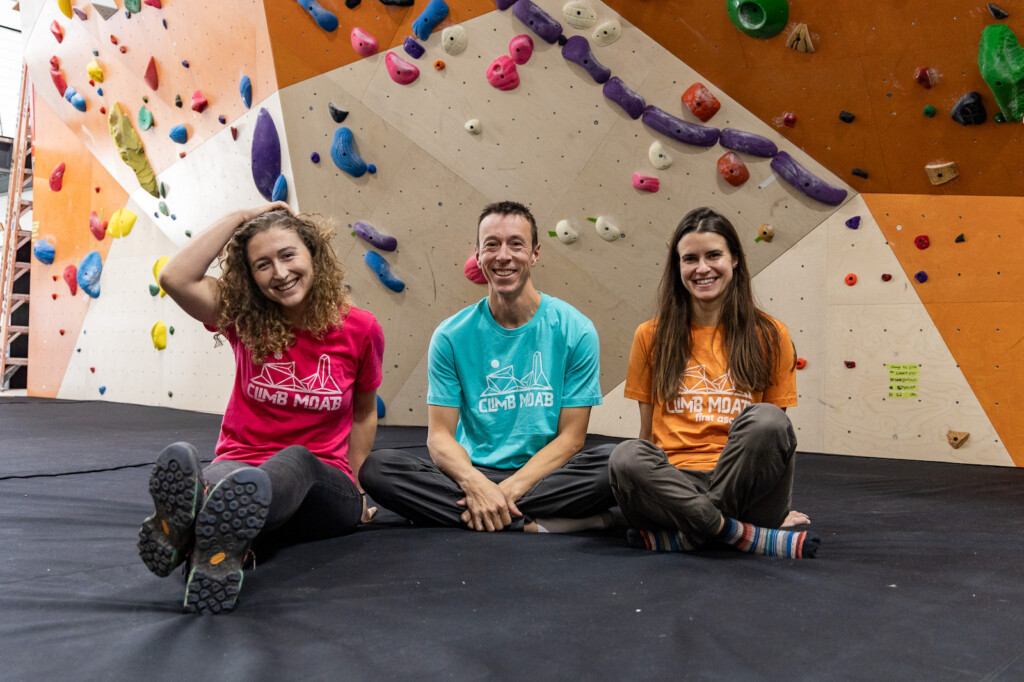
Feature Image: Climb Moab Gym founders Kaya Lindsay (left), Justin Beitler (center) and Britt Zale in the recently opened gym. Photo courtesy of Climb Moab.

, ,


Join our newsletter.
Stay informed.


  • Ogden Valley City Incorporates as Voters Deliver a Surprising Mayoral Outcome

    Ogden Valley City has officially incorporated at a pivotal moment for northern Utah, just as growth pressures tied to the 2034 Winter Olympics begin to accelerate. Voters also delivered an unexpected mayoral outcome, setting the tone for how the new city will approach land use, local control, and the work of building a government from the ground up.

    To access this post, you must purchase Utah Stories (Digital + Print) or 3 month free trial (Digital).


  • Salt Lake County Approves 14% Property Tax Increase, Shifting the Burden to Taxpayers

    After hours of public testimony, Salt Lake County approved a 14% property tax increase, despite mounting concerns over spending growth, compensation, and the impact on seniors and fixed-income residents. This analysis examines where the money is going, what could be cut, and why residents are pushing back


  • From Water Bottles to “Brain Rot”: Classroom Trends Shaping Student Culture in 2026

    What may sound like noise or nonsense to adults often carries meaning inside today’s classrooms. From oversized, sticker-covered water bottles to repeated phrases borrowed from online videos, small habits have become shared language among students. This is what student culture looks like heading into 2026.


  • Has Utah’s Soft-on-Crime Justice Reform Made Communities Safer?

    Has this “soft-on-crime” approach resulted in safer streets?

    SALT LAKE CITY — A decade has passed since former Utah Governor Gary Herbert signed a massive justice reform bill into law in hopes that the state could reduce its prison population and manage low-level offenders through rehabilitation programs instead of incarceration. Has this reinvestment resulted in lower crime and recidivism rates?

    According to the Utah Department of Corrections, that landmark Justice Reinvestment Initiative aimed to “continue holding offenders accountable and securing our communities, but in a way that considers individual risks and treatment needs.”

    Are communities really safer when mental health and substance use needs are addressed through programs administered outside prison walls? The idea was to treat criminals differently based on their mental health needs and backgrounds. But at least one retired Adult Probation and Parole Officer, believes this “soft-on-crime” approach hasn’t resulted in safer streets.

    LOOKING BACK

    State Senator Todd Weiler, in that legislative role since 2012, helped drive the passage of the Justice Reinvestment Initiative (JRI), a massive bill that enjoyed broad-based approval among state officials and the Legislature as a whole.

    In November 2014, Weiler attended the national summit on the issue in San Diego, an event hosted by Pew Charitable Trusts. 

    “I was very involved in it. We had a lot of high hopes,” Weiler, a Woods Cross Republican, said in a recent interview. “That was about the time we were finalizing plans for the new prison. And we actually said that because of JRI we don’t need as many beds because we’ll be incarcerating fewer people. So that new prison was designed with this idea.”

    A key part of JRI dealt with adjusting sentencing for crimes related to addiction, dividing offenders into two basic groups: dangerous criminals who are a threat to society (that group goes to prison), and low-level offenders who get help kicking addictions through state-sponsored programs or private-sector rehabilitation.

    “The ultimate goal was if we have an otherwise good person who got caught up in an addiction, and as a result committed crimes, they need to be punished for their crimes,” Weiler said. “It’s not that we’re going to overlook what they did, but we wanted to focus primarily on helping them overcome their addiction and [that means] getting them back to their job and their family.” 

    Before JRI, low-level drug offenders with felonies would spend years in prison, which wreaked havoc with their lives and future prospects. Addressing the root cause of their theft and property crimes through supervision and treatment made sense. 

    “We’re all imperfect people,” Weiler said. “So we want people working their jobs, paying their bills and raising their kids rather than sitting in jail and watching TV or playing cards.”

    To access this post, you must purchase Utah Stories (Digital + Print) or 3 month free trial (Digital).