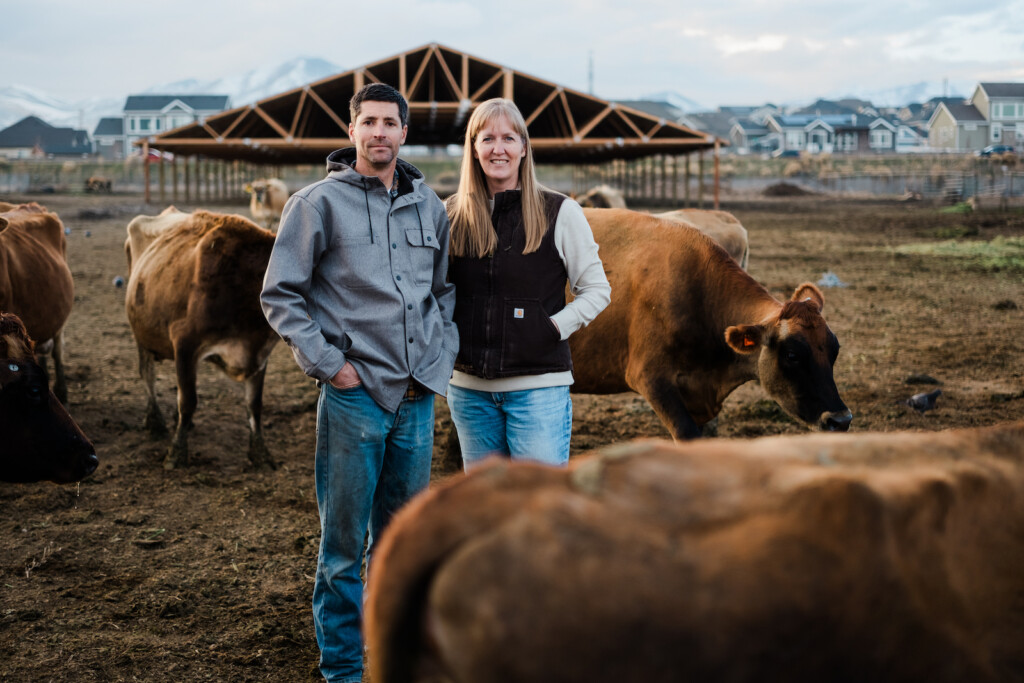
For weeks at Utah Natural Meat, raw milk gushed into the dirt. Normally, the raw, unpasteurized milk from the last dairy farm in Salt Lake County would be bottled and sold to customers so eager to buy it that they’d line up an hour before the store opened. Customers continued to ask for it, owner Shayn Bowler said, but he had to tell them no. His state permit to sell raw milk had been suspended.
Three weeks passed, until mid-October, when the Utah Department of Agriculture and Food notified Bowler that they found campylobacter in his milk. The bacterium had sickened 12 people, one of whom was hospitalized, according to the Salt Lake County Health Department.
“Obviously,” said Bowler, a fifth-generation farmer, “if there is something unsafe about it, we want to address that immediately.”
But working with the Utah Department of Agriculture and Food, Bowler said, was a cumbersome process that nearly put him out of business.
Some of his customers, who tout raw milk’s nutritional benefits, were so frustrated by what they said was the department’s lack of transparency that they complained to their state representative. State Rep. Cheryl Acton (R-Salt Lake County) now plans to introduce legislation that would make the permit suspension process clearer for not only farmers, but the public as well.
Striking the right balance, she says, is key. “We need to find a way to provide safety as much as we can while also allowing businesses to provide this product that is in high demand.”
The legislation, Acton says, would establish a protocol and timeline to follow when an outbreak occurs, as well as ensure that farmers have immediate access to the full test results, something Bowler said was hard to get.
By law, the Department of Agriculture and Food is responsible for tracing an outbreak to its source. But because campylobacter is so rare, regulatory services division director Travis Waller said, and because the testing kits needed to detect it are so expensive, they’re not kept in stock. That meant two weeks passed before the state’s lab could test for it.
“We are reevaluating these lab policies so we don’t have these issues in the future,” Waller wrote in an email. The department controls its budget, Waller said, but testing and other requirements for raw milk have been written into state code.
Raw milk laws differ by state. In Utah, the legislature legalized it in 2007 with the proviso that it may be sold only at the farm where it is produced or at a store owned by the producer. Today, Utah has 10 permitted suppliers. To buy raw milk, customers must sign a waiver acknowledging the risks.
From January 2019 through November 2023, raw milk products in Utah were linked to illnesses in 130 people, representing about 2% of all reported foodborne illnesses, and 15 hospitalizations, according to preliminary data from Utah Department of Health & Human Services. University of Utah public health professor Scott Benson, a physician specializing in infectious diseases, says the actual number of cases is likely much higher.
“For every single illness, we speculate that there are probably somewhere on the order of 50 to 100 individuals who didn’t seek care because they just powered through it.”
Despite the risks, most states have legalized raw milk, including Iowa last July. But the US Food and Drug Administration still bans the interstate sale of raw milk.
Kristin Whitaker, a board-certified nutrition therapist who lives in West Jordan, is so confident of the benefits that for six years she milked her own goats. She believes raw milk gives her children an “immune edge.” Now, she buys it from Utah Natural Meat, and she often recommends it to her clients.
Benson attributes the surge in interest in raw milk to people looking for less processed foods, which he said is “generally a good thing.” But some processing, such as pasteurization, he said, “is necessary for safe and healthy food. It’s not that a single glass of raw milk is going to do you in, but some people — infants, people over 65, pregnant women and individuals with immune-compromising conditions — are at significant risk for hospitalization and death.”
Pasteurization — heating raw milk — kills disease-causing microorganisms. Benson estimates that the process diminishes milk’s vitamin and mineral content by less than 5%. “The change in nutritional value is minuscule,” he said, and far outweighs the risks. Bacteria, including campylobacter, E. Coli and salmonella, can cause nausea, vomiting and diarrhea that can become life threatening.
“The potential consequences are so severe that the public health side of me says, you know, we probably shouldn’t sell raw milk.”
Whitaker disagrees. Pasteurization, she says, zaps the nutrients.
Bowler, who runs the farm with his wife Kristen, grew up drinking raw milk from his grandfather’s dairy. Their four kids drink it, too. “I believe raw milk is a healthy product when done right,” Bowler said.
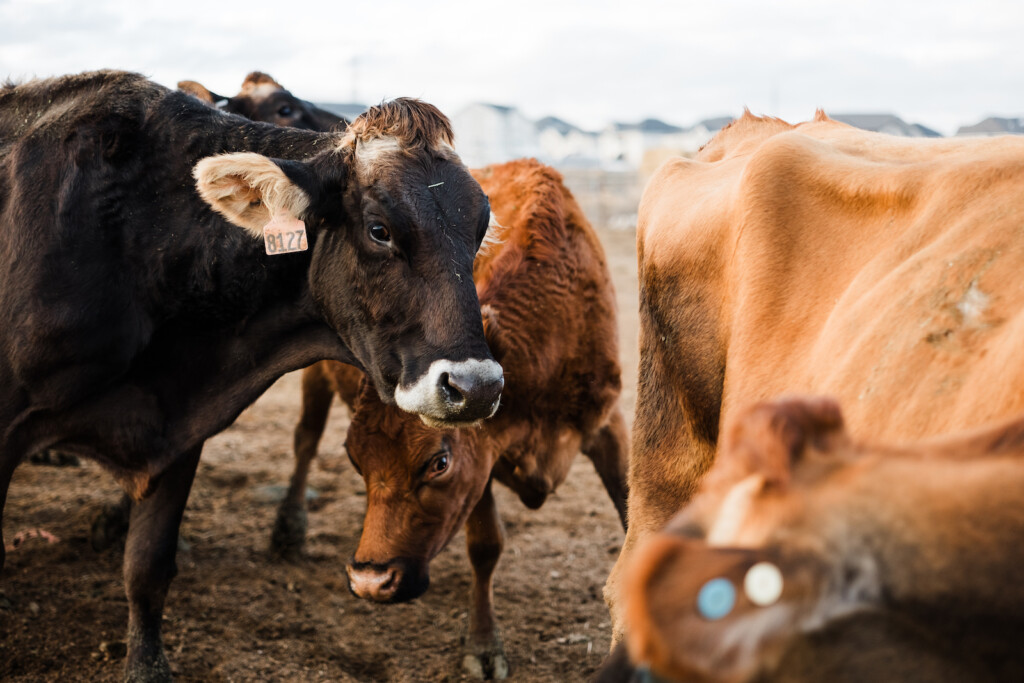
Bowler spent nearly $300,000 in 2016 to build a milking facility that complied with state requirements to sell raw milk to the public. He gradually increased his herd of Jersey cows from 15 to 73 to meet what he says was growing demand. But even producing around 1,000 gallons of raw milk every week, Bowler said, they almost always sold out.
The permit suspension forced him to rethink his business. When the Department of Agriculture didn’t offer any guidance, Bowler turned to the Weston A. Price Foundation, a national raw milk advocacy group who offered to pay for private testing and connected him to their attorney. He said it felt as if the Department of Agriculture “seemed satisfied to just have us out of the market.” Uncertain when his permit would be reinstated, and with employees to pay and cows to milk, Bowler sold more than half his herd to keep financially afloat.
Following three consecutive tests that showed no sign of bacteria (the legal requirement), and after more than eight weeks, Bowler’s permit was reinstated in November. Nearly 550 people signed up to get raw milk, although 300 had to be waitlisted.
The permit suspension left Bowler “trepidatious,” he said, but not about selling raw milk. He worries that the Department of Agriculture can shut him down indefinitely at any time.
His customers, he said, “have been nothing but wonderful,” calling to check in, offering to help, and emailing stories about how raw milk has improved their health.
“That’s probably the reason that I would still consider doing raw milk out of respect and loyalty to my customers,” he said. “There certainly are better ways of making an income.”
—Since 2007, nine dairies have gone out of business, according to the Utah Department of Agriculture and Food. Four had their permits suspended due to illness outbreaks, and never reopened.
—Utah Natural Meat is the first raw milk dairy to have their permit reinstated after a campylobacter outbreak.
Feature image: Shayn and Kristen Bowler of Utah Natural Meat. Photo by Dung Hoang.