
With timed-entry tickets mandatory at Arches National Park, and permits required for hiking Angels Landing in Zion National Park, there’s no better time to start exploring Utah’s lesser-known mountain ranges and desert landscapes.
Here are five hidden Utah outdoor adventures to get you thinking beyond Utah’s popular and overcrowded trailheads and national parks.
Wander Through an Ancient Lakebed Filled With Creepy Rocks
Goblin Valley seems to get all the attention in Utah when it comes to weird and ghoulish rock formations, but near Vernal, you’ll find a lesser-visited collection of equally creepy sandstone rocks. Some of the intricately-carved formations in Fantasy Canyon resemble piles of bones, like vertebrae stacked haphazardly on top of each other. Others have been eroded into squiggly spires and towers, and there’s even one rock in the shape of Mickey Mouse. Although not necessarily a destination in itself, Fantasy Canyon makes a great side trip on the way to Dinosaur National Monument or Flaming Gorge.
Gaze Down One of the Largest Vertical Cliffs in the U.S.
Located in the House Range, just west of Delta, Utah, Notch Peak’s northwest face is a massive carbonite cliff with one of the largest vertical drops in North America.
Depending on how you define a cliff, some say Notch Peak is the second highest in the U.S. after Yosemite’s El Capitan. It’s about 7-miles round trip to the summit from the trailhead, and once on top, you can literally peer over the edge of the cliff and straight down thousands of feet; a remarkable yet frightening sight even if you have zero fear of heights.
Explore a Lonely Mountain Range in the Middle of the West Desert
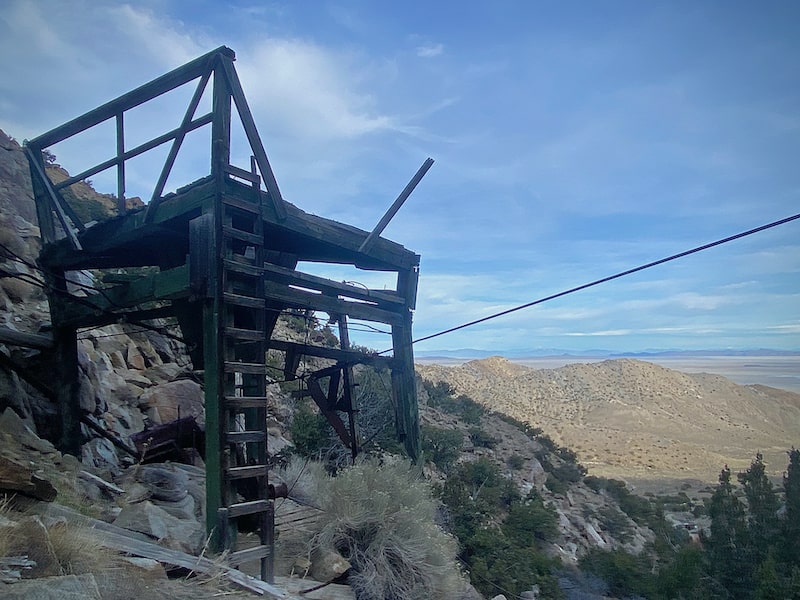
Although the Newfoundland Mountains can be seen from Interstate-80 and a handful of spots around Salt Lake City, reaching this “island range” requires perfect weather, a good set of tires, and quite a bit of patience. The Newfoundlands are completely surrounded by salt flats and the southern end lies in the Utah Test and Training Range which is inaccessible to the public.
Desert Peak is the highest point of the range, and the highlight, with spectacular views of the West Desert from its summit. If you’re lucky, you’ll spot one of the many bighorn sheep that have made this range their home. The Newfoundlands also saw intensive mining activity in the late 1800s, and many relics of its heyday can still be seen.
View an Accidental Geyser Near Green River
If you’ve got some time to kill on your way back to the Wasatch Front from Moab, stop by the Crystal Geyser ten miles south of Green River, Utah for the chance to watch it erupt. This partially man made geyser was created in 1935 when an oil exploration well hit a groundwater system filled with carbon dioxide gas. When enough carbon dioxide fills the aquifer, water shoots out of the drill hole similar to the way soda shoots out of a shaken can.
Eruption times are unpredictable and range anywhere from 7 to 24 hours. Even if you don’t catch an eruption, it’s still an intriguing place to visit. Colorful travertine terraces run from the springs down to the Green River.
When John Wesley Powell passed by this spot in 1869 on the first cartographic expedition of the Green and Colorado rivers, he noticed “some curious rocks, deposited by mineral springs that at one time must have existed here, but are no longer flowing.”

Observe a Herd of Bison in Their Semi-Natural Habitat
Southeastern Utah’s Henry Mountains are so isolated that they were the last mountain range in the contiguous United States to be mapped. Early European explorers often referred to them as the “Unknowns” which seems fitting since they remain unknown to many Utahns today.
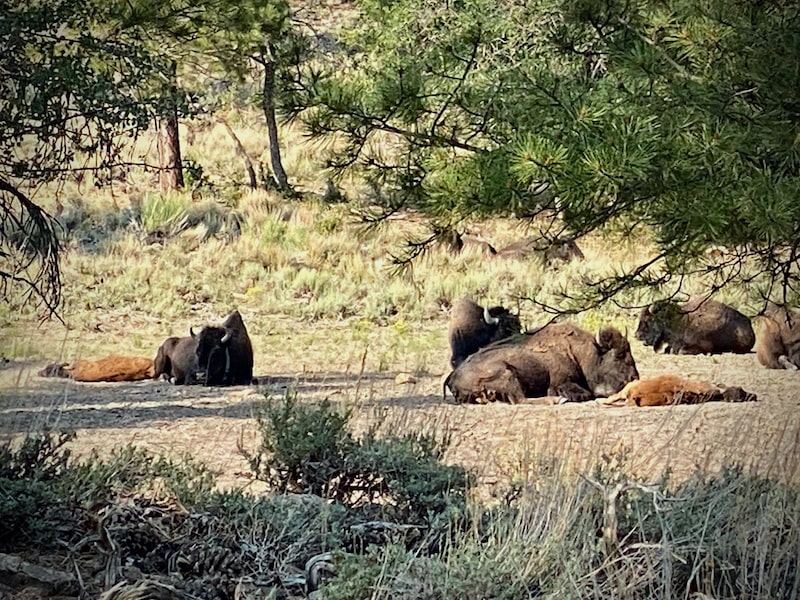
Many are also unaware that the Henry Mountains are home to one of the few remaining free-roaming bison herds left on public lands today. This herd isn’t exactly native; rather, they are descendants of the Yellowstone herd that were plopped down near the Dirty Devil River in the early 1940s and somehow found their way into the Henry’s where they live relatively undisturbed today.
The Henry Mountain bison herd can often be seen around the McMillan Spring Campground during the summer months, and which also serves as an excellent (and free) basecamp for adventures into this wild and remote range.
RELATED CONTENT:
Five Best Hikes in Utah: Exploring the Majesty of Utah Through Hiking
Utah was Land of Dinosaurs: Utah’s Natural History is Older Than Dirt
Fun Things to Do in Morgan County, Utah
Four Must-Do Weber County Hikes
SUPPORT LOCAL JOURNALISM AND SUBSCRIBE TO PRINT MAGAZINE
Subscribe to Utah Stories weekly newsletter and get our stories directly to your inbox