Utah Stories

Vision Quest, a Simple Cure for Depression

Trading comfort and pleasure for discomfort, and living for a few days outside closer to nature, we become better acquainted with our true spiritual essence and gain greater insight into our more meaningful purpose for living here on earth, in this particularly strange era. 

|


Goblin Valley by Adam Hynes Photography

Utah Wilderness Retreats and Wilderness Therapy

Utah Wilderness retreats offer delinquent teens access to wilderness as a possible solution for behavioral problems. The concept of reconnecting people with nature by spending several days in the wilderness is nothing new.

Examining the website of RedCliff Ascent, it’s clear that they offer families assistance with teens who are disconnected from school, family and life. Wilderness therapy has slowly gained acceptance even among main-stream clinical psychological organizations. While other organizations and media outlets argue that these programs “lack in scientific evidence”  RedCliff boasts that they are accredited by the Joint Commission, which certifies public health organizations.

Wilderness therapy organizations, previously plagued by scandal, have become very big business here in Utah. Over twenty wilderness therapy organizations exist in Utah to treat 5-6 thousand “troubled teens” every year. But in the years of hearing the news about these organizations (for better and for worse), I’ve always wondered why do parents wait until their children are troubled? Why not connect kids with nature as a part of preventative medicine? Why don’t public schools offer more nature immersion programs? Why not connect kids with nature in Utah for a couple of hundred dollars, rather than pay sometimes over ten thousand for one of these programs?

Further, why do we as adults wait to treat ourselves to nature until life becomes overwhelming, consuming and we find ourselves depressed? Why wait until we want to jump off a cliff? Wouldn’t it be better to stand at the edge of a cliff in the wilderness to wonder at the magnificence and grandeur?
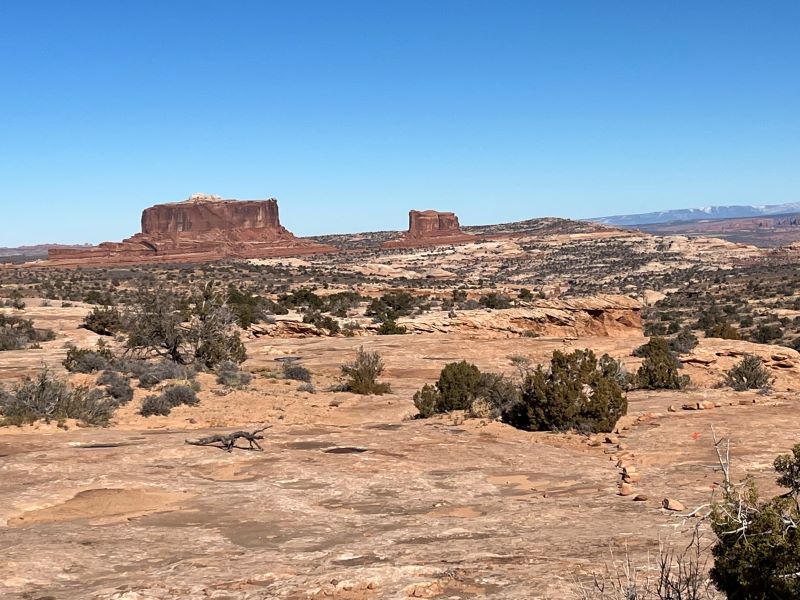
Moab Utah by Utah Stories.

The Ancient Practice of  Vision Quest

It turns out this tactic of returning a person to their essential nature is not new. The Native Americans called a similar practice a Vision Quest. The basis upon which a Vision Quest works to treat all sorts of disorders originates from the power we can harness by tapping into our own psyche and brain chemistry. A traditional Vision Quest might require a spiritual guide, but these parameters aren’t required to obtain a great result. Mostly it requires the courage to engage with nature to a degree which is outside of our comfort zone: leave home cell phones, pack just enough water and food. Eat and drink very sparingly or attempt to fast and witness the changes that occur in your mind.

The reason this works is because when we are persistently motivated by our deeply-biologically-seated instincts and desires: hunger, thirst, stimulation, sex and sleep, we are merely acting out our most basic internal brain mechanisms, which always believe more of everything is the answer. Satisfying our ego 100% of the time will result in depression 100% of the time.

This mode of being ignores our souls and consciousness. “Man cannot live on bread alone,” said Jesus. Even my dogs get depressed when we don’t visit the mountains. Depression and anxiety are running rampant in our society today. Why? Because most of us are completely out of contact with our true nature and our souls.

When we deny our carnal desires and engage instead in fasting, devotional prayer and renunciation, a simple exchange occurs: by sacrificing some comfort such as food and stimulation, we receive in return a greater sense of spiritual well being and an elevated consciousness. The idea of sacrifice was integral in all ancient cultures. Sacrifice is something fundamentally lost in our modern culture today. Some Christian still practice Lent. And Muslims practice Ramadan. But a few days backpacking in the wilderness takes this a step further.

Trading comfort and pleasure for discomfort, and living for a few days outside closer to nature, we become better acquainted with our true spiritual essence and gain greater insight into our more meaningful purpose for living here on earth, in this particularly strange era.

It might seem counterintuitive, especially with how we have been programmed to always believe that greater comfort is always better. But indeed, through discomfort of our flesh, the temporal nature of our being moves to the forefront, and we feel better connected with our souls, God, fellow man, and the earth. Why is it that anyone who has suffered from long-term illness always feels a renewed appreciation for life? Because only through discomfort do we gain this appreciation.

Certainly, chemicals (especially natural chemicals and ancient remedies) can also offer and achieve similar results in providing an ego-diminishing spiritual awakening, but our brains are indeed chemical factories. And our brains can produce all of the same effects found in the most popular chemical agents. Cannabis, psychedelics, and psilocybin mushrooms can induce epiphanies and provide insight into our own pain and depression, but so can fasting and long walks in the desert or in the forest, preferably alone for extended stretches.

The Great Salt Lake, a perfect place to get in touch with nature. Photo by Utah Stories.

This most ancient of all wisdom might sound too basic, too simple, and too difficult for our complex world and our modern era, but you will never know until you attempt your first Vision Quest. Try backpacking for even just a day or two or three in the San Rafael Swell, or Goblin Valley. Eat and drink sparingly and witness your depressed mind awaken in bliss and a state of awe over your surroundings. The inhospitable desert contours, sun-and-wind polished rocks, and prickly cacti find few takers, and this is to our great benefit. The rattlesnakes, scorpions and lizards have been dramatized and characterized into being our enemies, but they want nothing to do with us. This is the place where truth and meaning are born. Where did Jesus, Moses and Buddha find their sanctuaries? It was in the inhospitable regions in the desert, we have plenty of this in Utah.

Depression is disconnection. We are disconnected from our origins. The ancients are calling us. It’s time we answer the call of the billions of humans who came before us by spending some time among them in the sand, dust and wind from whence we came, and where we will ultimately end up. “Finding yourself” is a trite phrase. Find unity, purpose, meaning and connection in the wilderness.

Adam Hynes is an Oregon-based nature photographer with a real passion for the natural world. Adam tries to capture places in moments so unique, they feel like another planet. Photography connects him with the earth and the people on it. He loves photography, life, and people. Bringing them together is beautiful

adamhynesphoto.com

RELATED CONTENT

Big Pharma Preventing the Shift in Medicine and Wellbeing?

Acupuncture in Utah: Why You Should Consider It

The Cameron Wellness Center: an alternative to big-pharma solutions

Let food be thy medicine … Using food as medicine

A Look at Acupuncture

Five Pillars of Optimal Health

Is Ketamine a “Miracle Cure” for Depression?

Bee Sting Therapy

Subscribe to Utah Stories weekly newsletter and get our stories directly to your inbox

* indicates required


Join our newsletter.
Stay informed.


  • Artist Kate Kilpatrick Brings Utah’s History to Life Through Murals

    “I think we’re all interconnected; as individuals as well as societies,” Kilpatrick notes. Her work showcases those connections exuberantly, and whatever scale she’s working on, you can bet that in terms of energy and spirit, she’s painting large.


  • Why Most People Stay Stuck in Business and What It Takes to Move Forward

    Every so often, you meet an immigrant who came here with almost nothing and managed to build something exceptional.

    Prakash Shah is the kind of man who has spent enough time around risk that he no longer treats it like an interruption.

    Today, he works in business brokerage and advisory, helping owners sell companies, helping buyers decide whether they should step in, and, when the fit is right, helping connect those buyers with private equity. He works in a world of valuations, leverage, due diligence, and hard questions that most people would rather postpone. He also operates in Utah real estate and has built a career around seeing value before it is obvious to everyone else. That is who he is now. What makes him interesting is how early that instinct started to form, and how little his life resembles the way most Americans are raised to think about comfort, career, and security.

    He grew up in Nepal in a boarding school system that would feel severe to many Americans. He was an only child, yet he saw his parents only twice a year for twelve straight years, until high school graduation. He lived inside routine. He shared space with boys from different social classes and different family circumstances. The school was structured enough that money did not buy you any special standing once you were inside. Everyone followed the same rules. Everyone was subject to the same discipline. In his case, it was an army school. Everything was measured. Everything was scheduled. In that kind of environment, you do not build your life around preference. You build it around adaptation.

    That contrast matters.

    A lot of American children are raised to search for what fits them. What are you passionate about? What do you enjoy? What feels right? Those are not bad questions, but they can create a habit of waiting for life to align itself before action begins. Prakash learned something else much earlier. He learned that life often does not align itself first. You enter the room as it is, you deal with the people in it, and you figure out how to function without making your comfort the center of every decision. He said that one of the biggest lessons from those years was tolerance, the ability to live with people from all walks of life and genuinely learn to get along with them. That is not a soft value. In business, it turns into resilience. In negotiation, it turns into patience. In career terms, it turns into range.

    When he came to the United States over 25 years ago, he did not arrive with the kind of runway that allows for a prolonged identity search. He came with two suitcases and enough money for one semester. He went to Hunter College in New York City, then to NYIT near Central Park, studying media and then media and technology management. He also studied psychology. Those details matter because they show something about his mind. He was interested in people before he built a career around deals. Even then, what attracted him was not technical prestige. It was understanding motives, behavior, and how people reveal themselves.

    But New York is merciless toward vague ambition. It demands payment in rent, transit, food, and time.

    Prakash worked constantly. He took multiple jobs. He paid tuition, paid rent, and skipped most of what Americans imagine as college life. There were no romantic years of drifting from café to concert to self-discovery. He talked about not having the luxury of dates, travel, or finding himself. He was working. Even laundry was not a small detail. In New York, he pointed out, you do not just throw clothes in a machine at home. You haul them to the laundromat, count quarters, and measure what is necessary. He also described distraction in a way that most native-born Americans probably do not think about. For immigrants, distraction is not always pleasure. Sometimes distraction is the constant pressure of competing needs. Tuition or rent. Food or savings. A better coat or another month of making do. He was not romanticizing the struggle. He was describing the arithmetic of it.

    That arithmetic did not make him cautious. If anything, it did the opposite.

    While in college, he had the option of safer analytical work. Instead, he took a sales job with Time Warner Cable that sent him into the South Bronx from 6 p.m. to 10 p.m. to knock on doors. He is not a physically imposing man. He knew exactly what kind of neighborhoods he was walking into. He described apartment buildings where people kept pit bulls, where tension was normal, where one mistake in tone or timing could end a conversation immediately. For most people, that kind of job would have been something to survive and forget. For him, it became a school in human behavior. “It’s not about talking… it’s about listening,” he said.

    One story from that period says almost everything about how he operates. He knocked on a door one night around 8:45 and found himself facing a huge man with a gun on the table, pit bulls nearby, and a half-eaten pizza in front of him. It had all the ingredients of a very bad scene.

    Continue reading and support independent Utah journalism with a purchase of Utah Stories (Digital + Print) or 3 month free trial (Digital).


  • Ancient Pyramid Discovered in Sugar House Park, Salt Lake City

    A Salt Lake City resident says he may have uncovered what he believes to be a buried structure beneath a well-known hill in Sugar House Park, raising questions that have drawn both curiosity and skepticism.


  • Utah Fits All Scholarship Applications Open Through April 30 for K–12 Students

    Utah families have more learning paths than ever and, increasingly, more ways to make those paths affordable. This spring, the Utah Fits All Scholarship opened  for new family applications on April 1, and the application window stays open for one month. The program is a public K–12 scholarship that provides $4,000 to $8,000 per student,…