For many people, eating wheat products has become a thing of the past. Celiac and autoimmune disorders seem to be on the rise, denying many the joy of staple foods such as bread.
The good news is that gluten-free products can help people enjoy baked goods that typically contain gluten. The bad news is that for many, the alternatives pale in comparison to the real thing.
“I had to cut out so much food from my life, there was more I could not eat than what I could,” says Nathan Hessing, who is one of the three million people nationally who suffer from fibromyalgia, a condition that causes widespread musculoskeletal pain and digestive issues that can be aggravated by gluten.
“I began feeling better after I excluded things from my diet, but I started suffering from nutrient deficiencies. I explored how to get foods back in my life and that’s when I discovered fermentation,” he says.
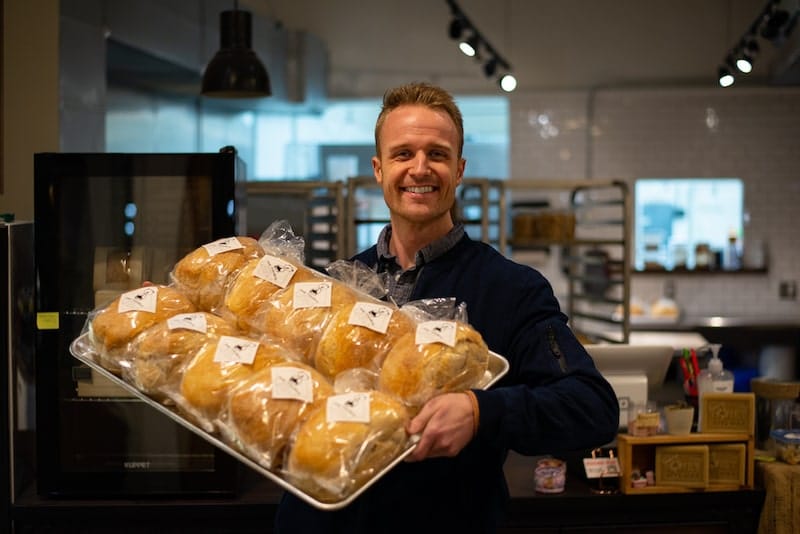
Nathan applied the fermentation process to bread making, and as a result, he was able to reintroduce bread back into his diet. Nathan and his wife, Cristin, realized this could help other people get a staple food back in their diet, so they began making the bread at a commissary kitchen and selling it at farmers markets in Utah County.
The result? “Amazing,” Nathan says. “So many people with gluten sensitivity have told us that our products have helped them reintroduce wheat products into their diet.”
Nathan explains that “Fermentation is the way bread was raised for thousands of years. We use these old-time methods to get rid of modern health issues. That is why we call ourselves Time Traveler’s Bakery.”
He continues, “There are records of clean wheat and fermented baked goods in ancient Egypt, the New Testament, and from Colonial and Pioneer times. With the introduction of lab-produced yeast and heavy wheat cross-breeding in the 1940’s, things started to shift to where now modern bread is way harder to digest and way less delicious.”
The bread they produce contains no yeast. “We prefer the old-time methods for better health and better flavor,” Nathan explains.
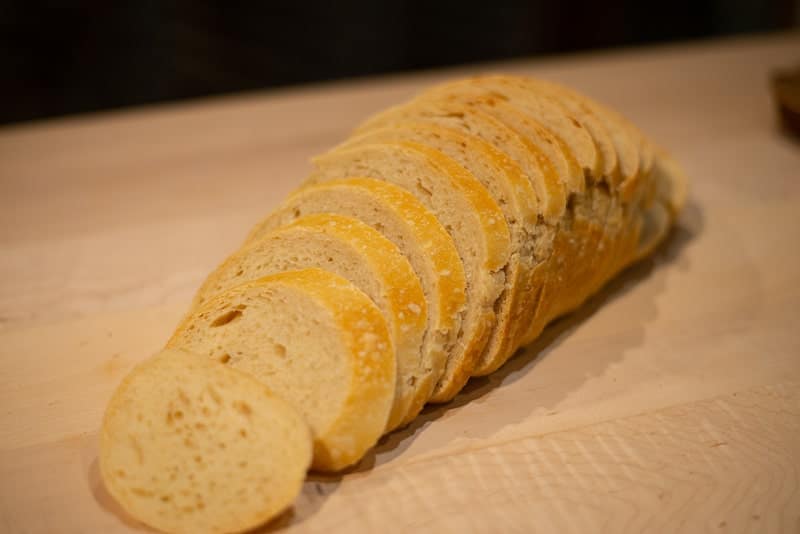
One customer, Bethanie, had this to say: “Before I found Time Traveler’s Bread, I HADN’T HAD BREAD IN YEARS due to the side effects of a high carb food. But with Time Traveler’s sourdough, I don’t have the headaches, nausea, or fatigue that I felt with other foods.”
Time Traveler’s bread uses a unique double-heavy fermentation process which they developed. “The fermentation process breaks down the gluten and carbohydrate structure, so it won’t spike your blood sugar,” Nathan says.
Basically, the gluten is pre-digested by the fermentation process so the bread is suitable for those with gluten sensitivities. After great success at the farmers markets, Nathan and his wife saw a need for the product and realized that a storefront would help get the product to more people.
In addition to the double fermentation process, they use a flour that is free from common chemicals found in most wheat.
“Our special double fermentation process, as well as our clean wheat, means that our bread and pie crust are suitable for many types of conditions that can cause gluten sensitivity.”
Is there anyone that the bread is not good for? “Some people with celiac [disease] have found that it isn’t quite good for them, and it doesn’t work for every type of gluten sensitivity, but the majority of people we have encountered have said that our product has helped them get wheat back in their lives.”
Customers can visit them and taste the difference for themselves at Time Traveler’s Bakery ,42 W Center St, Provo. It is open Tuesday – Saturday 1 PM – 8 PM
RELATED ARTICLES
Gluten-Free Drink Options in Park City
10 Sweet and Salty Bakeries in Salt Lake You Must Visit
Where to Find Vegan Replicas of Your Favorite Candy Bars in Murray, Utah
Six Utah restaurant dishes you must try if you have dietary demands