Utah Stories

Why would anyone want to be a local journalist?

Claire McArthur is a local journalist in Salt Lake City who has worked for several newspapers, magazines and who says she has known since before she entered college that her dream was to be a local journalist and to write for magazines and newspapers.

|


One of the most difficult, competitive and ever shrinking professions is local journalism. With the rise of social media, blogs, fake news and YouTube— competing for viewer/reader interest is incredibly difficult. But there are a few courageous souls out there who still love local stories and news and want to share the greatness of their local community in print and online.

WATCH THE VIDEO:

LISTEN TO THE PODCAST:


Claire McArthur is a local journalist in Salt Lake City who has worked for several newspapers, magazines and who says she has known since before she entered college that her dream was to be a local journalist and to write for magazines and newspapers. For McArthur, all of the ancillary positions such as Public Relations, content marketer or blogger just don’t compare to going out and finding great stories to share; as well as being paid to satisfy her natural curiosity and questions about the world around her.
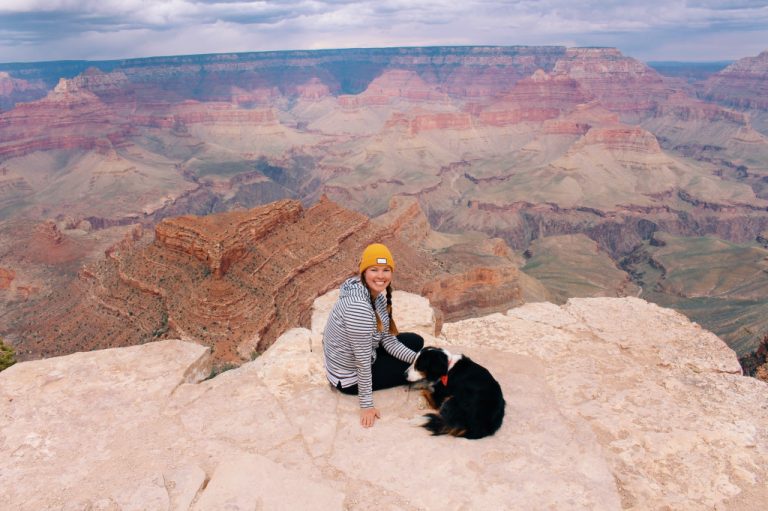
Claire McArthur local journalist Utah Stories Show
Claire McArthur

McArthur was on the Hidden Utah Podcast (AKA The Utah Stories Show) with Richard Markosian talking about her career path and how and why she believes she made the right move sticking to her passion for local journalism. She discusses the path she has taken and how she ended up in Utah.

Starting out working in a remote outpost in Alaska, then moving to a far more populated city in Lake Tahoe, Claire has traveled with her skillset always finding clever ways to approach editors to get assignments. Her skill is in not only finding stories but also articulating the color, quirks and details as well as finding the angle, treatment and hook to maintain reader interest.

If you are interested in how creative professionals maintain their career integrity and don’t settle for inferior jobs or professions this is a great podcast to check out. 

Also, read some of Claire’s stories that she has written for Utah Stories found below.

Whitewater Rafting in Cataract Canyon 
Best Pit Stops en route to Moab
Sculpture Memorializes a Man and His Mission in Sugar House
New Faces in Salt Lake Places
Graphic Designers Rebrands Salt Lake City’s Neighborhoods 

FOR MORE UTAH STORIES PODCASTS GO HERE.

,


Join our newsletter.
Stay informed.


  • The $7 Million Recruit: How NIL Changed College Athletics Forever

    In 2012, Jabari Parker, a top high school prospect and member of the Church of Jesus Christ of Latter-day Saints, was facing his biggest decision to that point in his life: where to play college basketball. 

    Fans of BYU athletics hoped and perhaps prayed that Parker would pick the school owned by the church he was raised in. BYU was listed as one of his final choices. But he ultimately chose to spend his college years at Duke before attempting a career in the NBA. BYU fans were disappointed, but no one was truly surprised. Duke over BYU was the best choice for a young prospect in 2012. 

    A.J. Dybantsa.

    What changed between 2012 and 2024 when A.J. Dybantsa, the number one high school prospect, chose BYU over every other school? The answer is roughly $7 million dollars. That is what Dybantsa is reportedly making to play basketball at BYU. 

    The deal was supported by Utah Jazz owner Ryan Smith, who met multiple times with the Dybantsa family in multiple attempts to bring the young player to Provo. 

    According to Smith, he had no financial role in bringing Dybantsa to BYU, but the influence of Utah’s most famous billionaire acting as a “booster” or unofficial recruiter certainly swayed the decision.

    Prior to 2021, boosters acting as recruiters was taboo to the NCAA governing body. It was called improper recruiting. But in 2021, California began the modern era of NIL, or the ability of a college athlete to benefit from their name, image, or likeness, when they passed the “Fair Pay to Play Act.” 

    This new law gave college athletes in California the ability to benefit from their NIL, something that was banned in the rest of the country to that point. The NCAA saw that this law would create an unfair advantage for California schools that could now give young athletes the chance to make money off their talent and image while still in college. 

    The NCAA knew they needed to do something quickly, so they rushed through a policy that opened up NIL to all college athletes in the country, and it has been expanding and evolving over the last four years. 

    Grant Duff, who has coached at the University of Utah, Weber State University, and is now the defensive coordinator for Idaho State University, says, “The best part of NIL is that athletes have an opportunity to make good money. The downside comes with the free-for-all that money causes.”

    Dybantsa confers with BYU Head coach, Kevin Young.

    One of the biggest current examples of what a school can do when the boosters are willing to pay for success is Texas Tech University. From 2020-2024, Texas Tech had 34 wins, which works out to 6.8 wins per year with a low of 4 wins and high of 8. Then Texas Tech’s boosters got involved, led by Cody Campbell, an oil industry businessman and Chairman of the Texas Tech board. The football program was given 28 million dollars for NIL with a simple message attached to the large pile of money: Win. And win now. And win they did. 

    By signing NIL deals with athletes in the transfer portal, Texas Tech went from a middle-of-the-pack school in their conference to one of the top 12 teams in the country. They didn’t just win games in 2025, they made many of their opponents look like they didn’t belong on the same field, including the University of Utah and BYU twice. That is what money can buy.

    Continue reading and support independent Utah journalism with a purchase of Utah Stories (Digital + Print) or 3 month free trial (Digital).


  • The Reality of Meth Psychosis on Utah’s Streets

    On the streets of downtown Salt Lake City, psychosis has become part of the landscape.

    People scream at invisible enemies. Some believe they are prophets. Others wander through traffic carrying conversations with voices nobody else can hear. To passersby, it can look theatrical, bizarre, and absurd. But behind many of those episodes is a darker reality few people want to confront directly: methamphetamine-induced psychosis, prolonged sleep deprivation, trauma, addiction, and the slow destruction of a person’s ability to distinguish reality from delusion.


  • Did Utah Leaders Already Sell Out Tremonton to Big Tech?

    When Kevin O’Leary appeared on Fox Business and casually announced that Utah would soon become home to what could be the largest AI data center project in the world, many Utahns had the same reaction:

    Wait… this was already approved?


  • Why Restaurants Like Mazza Are Disappearing

    Across Salt Lake City, luxury restaurants continue to open. High-end dining rooms remain packed. Investors continue buying buildings in formerly quirky neighborhood districts. Chains increasingly move into areas once dominated by independent businesses. Meanwhile, many middle-class restaurants, the kinds of places that helped shape Salt Lake’s local identity over the past two decades, are struggling to survive.