Hidden Utah

Best Pit Stops en route to Moab

If a trip to Moab is in your future, don’t beeline to your destination. Instead, make the most of your journey — and newfound freedom — by checking out one of these pit stops along the way. From delicious eats to natural wonders, there’s a little something for everyone on this road trip adventure. 

|


As Utah begins its slow post-COVID reopening, many of you may be having the same urge to be anywhere that isn’t the roof you’ve been quarantined under for the past several months. We hear you. 

If a trip to Moab is in your future, don’t beeline to your destination. Instead, make the most of your journey — and newfound freedom — by checking out one of these pit stops along the way. From delicious eats to natural wonders, there’s a little something for everyone on this road trip adventure. 

Young Living Lavender Farm and Distillery / Mona

Though not directly on the route to Moab, a pit stop at the Young Living Lavender Farm and Distillery is a must. 

June and July are the best months to check out the 1,400-acre farm with its vibrant purple flowers. For a fee, you can pick lavender yourself, take a self-guided paddleboat tour around the reservoir, or head to the visitor center to stock up on bath salts, oils and soaps. 

Strawberry Reservoir / Heber Valley

If you opt for the northern route along US 40, stop to stretch your legs, take a dip, or cast a line in Strawberry Reservoir, arguably Utah’s top trout fishery, known for producing record-setting fish. Sitting at 7,200 feet in the open mountain valley, the water is still chilly, but that may be just what you need to keep you sharp for the road ahead. 

Fifth Water Hot Springs / Spanish Fork

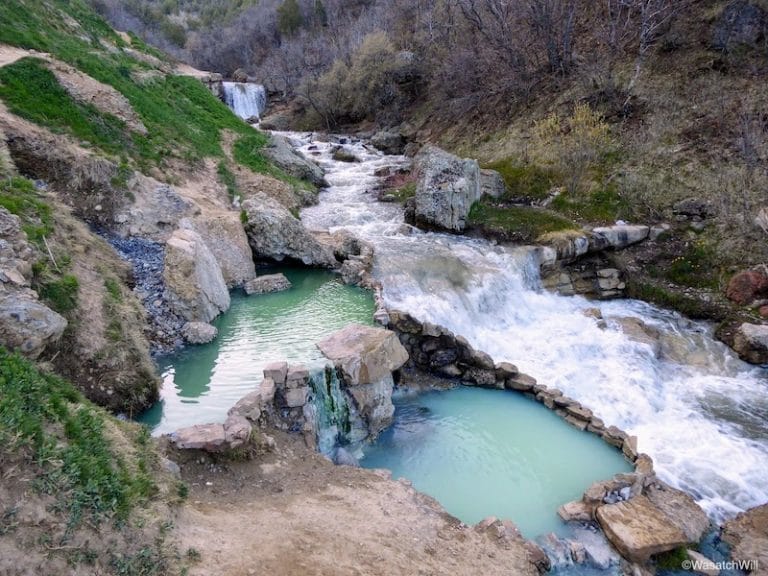
Hike to Fifth Water Hot Springs for scenic waterfalls and numerous hot-water pools. The 4.5-mile, out-and-back trail is moderately strenuous but pays off once you find the pool with just the right temperature to relax in while taking in the surrounding falls and lush trees. 

Utah State University Eastern Prehistoric Museum  / Price

Dive into Utah’s rich 3-billion-year history of geology, archaeology and paleontology at the Prehistoric Museum in downtown Price. With an impressive collection of dinosaur bones and other artifacts, it’s a unique destination that educates visitors on everything from the first humans in Utah to the fascinating natural forces that shaped Utah’s iconic landscapes. 
Ray's Tavern Green River

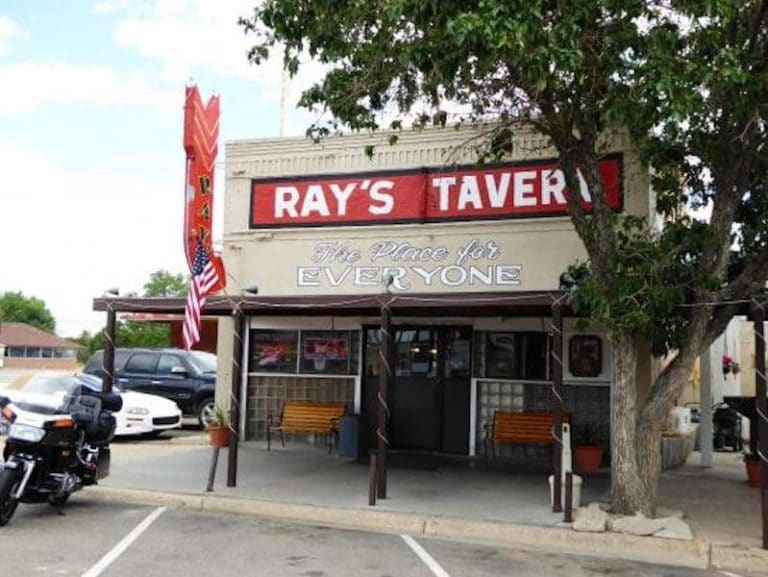
Ray’s Tavern / Green River

Ray’s Tavern is a hole-in-the-wall joint where the question of what to order is simple: the charbroiled burger. When phrases such as “best burger” are tossed around, you know you can’t miss it. Served alongside fresh-cut fries and ample fry sauce, then rounded out with a heaping slice of apple pie a la mode, it’s just the fuel you need to get back on the road. 

Crystal Geyser / Green River

On the east bank of the Green River lies a rare example of a cold-water, carbon dioxide-driven geyser that erupts without any geothermal activity. The geyser was created in 1935 during an oil drilling operation, and its spouts can reach upwards of 60 feet. The eruptions are erratic and hard to predict, but worth it if you happen to catch one!

 

, ,

Join our newsletter.
Stay informed.


  • Utah Youth Ice Climbers Win World Championships Thanks to Millcreek Common Wall

    Utah is home to two new World Champion youth ice climbers, and the ice climbing wall at Millcreek Common is getting credit for helping them win. 


  • Inside Moab’s Political Divide: Land, Tourism, and the Future of Grand County, Utah

    In the late 1950s, Edward Abbey took a job as a park ranger at Arches National Monument, just outside Moab. What he found there, and what he watched happen to it, would shape the rest of his life. Roads were being cut into the canyon country. Cars were replacing foot traffic. The National Park Service, in the name of accessibility, was engineering a kind of industrialization of the wilderness he’d come to love. Abbey wrote about it in Desert Solitaire, published in 1968, and the anger in that book wasn’t abstract. It came from watching something specific be changed by people who either didn’t understand what they had or didn’t care.

    Grand County has long been the most reliably left-leaning county in the state, a fact that puts it in sharp contrast to nearly everything around it. To understand how that happened, and where things stand now, I spoke with longtime residents and politicians who’ve watched it from the inside, people who’ve served in local government and lived through the shifts firsthand.

    Robert Greenberg.

    Bob Greenberg came from New York in 1976, took a job at the community mental health center, and never left. He went on to chair the Grand County Democratic Party and serve on the county council. When he arrived, he said, “the Democratic Party was said to be able to meet in a phone booth” — and even then, its members were a contradictory bunch. Yellow Dog Democrats from the oil patch were fiscally conservative but surprisingly open socially, allowing different demographics to feel safe moving to the county. 

    “The town fathers were desperate to have new people come to town,” Greenberg recalls. “They just didn’t want the people who actually showed up. They wanted some other people.”

    What followed was a demographic shift nobody planned. The people who filled the gap left by the bust were river guides, federal agency workers, artists, and eventually waves of outdoor recreationists discovering that southeastern Utah was among the most spectacular landscapes on earth. Tourism ended up being the only economic development avenue that actually worked. Manufacturing never had the labor force or market access, sewing factories came and went. The people the tourist economy attracted tended to be younger, more outdoor-oriented, and more liberal.

    Kevin Walker.

    Kevin Walker, a former Grand County commissioner who moved here in 1990 for the landscape, puts the county’s diversity in context. “Moab [is] a pretty diverse place since, I think, at least the 1950s with the uranium mining boom,” he says. “So it’s not a typical Southern Utah town.” 

    Part of what makes Grand County distinct is self-reinforcing. Federal agencies like the Park Service, the Forest Service, the BLM, have large presences here and pull in a different demographic than surrounding counties. People looking to live in Southern Utah with certain values gravitate toward the place where those values already have a foothold. Over time, that critical mass has made Grand County what it is politically, while neighboring counties went in very different directions.

    The defining conflict in Grand County has always been over land.

    In the 1970s and 80s, it was extraction versus preservation in the starkest terms. County commissioners floated toxic waste incinerators. A plan emerged to site a high-level nuclear waste repository at the entrance to Canyonlands National Park. 

    “It really, really galvanized environmentalists everywhere, but particularly in Grand County,” Greenberg says. Activists put up signs at the park entrance, watched them get chainsawed down, and came back with steel reinforcement. That stubborn, physical, unglamorous persistence became part of the local political character.

    Continue reading and support independent Utah journalism with a purchase of Utah Stories (Digital + Print) or 3 month free trial (Digital).


  • Utah Archaeology Month 2026: Events, Sites, and 13,000 Years of History

    “Utah is filled with 13,000 years of human history,” explains archaeologist and State Historic Preservation Officer, Chris Merritt. “Every single artifact tells us something about the people that came before us, from the first Native Americans entering what we now call Utah to the remains of the uranium mining industry. Each layer of the past tells more of the story of who we are as Utahns.”


  • Moab Trail Closures: The Fight Over Public Land Access and Off-Roading

    Trail closures threaten livelihoods and slowly limit access to ordinary families, says Dave Hellman, owner of Xtreme 4×4 Tours in Moab. Wilderness advocates argue that stronger protections are necessary to preserve fragile landscapes. As lawsuits reshape trail access across southern Utah, Moab increasingly sits at the center of a growing conflict over who public lands are really for.