Independent News

Lavender Fields of Deceit?

One of Utah’s Couny’s multi-million dollar multi-level marketing businesses and the fantastic fairy tale of Young Living Farms and Essential Oils.

|

Young Living Essential Oils

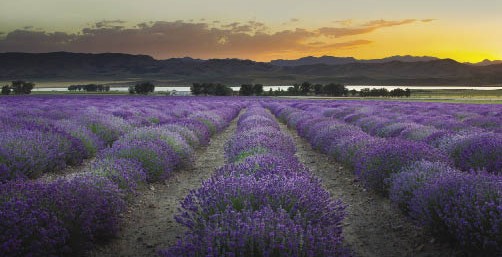
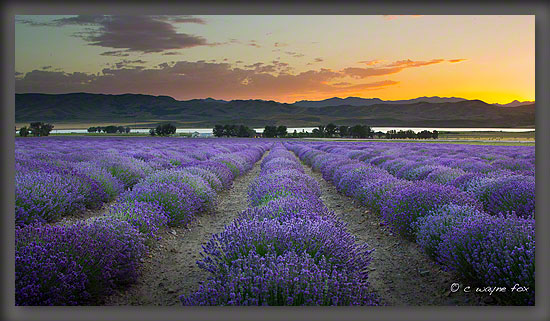
Lavender-Fields-Mona-Utah
Lavender Fields from Young Living Farms in Mona, Utah: photo by C. Wayne Fox

Driving into Mona, Utah on I-15 the fragrance of fresh lavender through an open car window is enchanting. Just fifteen minutes from all of the construction madness in and around Utah County, remnants of road-rage and stress fade away as the vast expanse of farms begins to unfold.

From early spring through September breathtaking rows of majestic purple lavender extend like a scene from an romantic French Countryside.

It might seem this must be a labor of love, but in fact these fields are generating mega bucks for one of Utah County’s most profitable  multi level marketing businesses.

One of six farms and seven distilleries worldwide, Young Living Essential Oils (YLEO) is a multilevel marketing company that has been based out of Utah Valley for the past 18 years.

Gary Young, founder and president of YLEO, has a mercurial history. As he tells it, it all began with an almost fatal logging accident at 24, which left him in a coma for three weeks, paralyzed, depressed, and confined to a wheelchair. Three years after the accident he claims to have regained feeling in his legs as a result of using essential oils.

Multi Level Health Supplement Companies in Utah CountyA miracle? A lie? Or a bona fide homeopathic remedy?

Gary grew up farming in Idaho. He started his own farm with a quarter acre in Spokane, Washington. He attended an essential oils class in Switzerland, and then through his travels he learned to distill plants and cultivate lavender and other herbs. Gary began developing his own clinical research in 1985. Subsequently, he bought 160 acres of farmland in Idaho to start mass producing “therapeutic grade” essential oils. The focus of Young’s passion is in “bringing forgotten knowledge back to the modern world.”

Young’s wife Mary is YLEO’s Executive Vice President and the keystone figure in the multilevel marketing company’s success. Distributors get 25 percent off products and reduced shipping, not to mention generous bonuses and jet-setting trips if they achieve annual sales goals.

The oils are considered powerful agents, far more potent than dried herbs. The YLEO catalog features hundreds of single and blended oils, as well as nutritional supplements and bath and skin care products, none of it cheap. YLEO has a loyal, worldwide, passionate following. Utah Valley Business Quarterly magazine rated YLEO as third in the Utah Valley Top 10 Revenue companies, generating $162 million in 2010 with 473 employees working for Gary Young’s empire. Both Gary and his distributors promote a lifestyle of abundance, health and longevity.

Health supplement companies generate $4 billion in annual sales — 4 times the revenue of the state’s more famous ski industry.

The sales are impressive considering “more than 100 supplement companies dot the terrain alongside I-15 snaking through Salt Lake City, Utah, generating $4 billion in annual sales—four times the revenue of the state’s more famous ski industry,” according to Time magazine. Utah’s dry climate is ideal for storing such products and Utahns have an entrepreneurial mindset, not to mention tight-knit religious community that not only offers the framework for building a MLM network, but also the relationships for perfect person-to-person sales opportunities.

I worked for the Young Life Research Clinic Institute of Natural Medicine, in Springville, Utah. One summer day, Young visited his clinic. As Gary takes the stage, his presence evokes squeals of excitement from his adoring staff.

The charismatic Young teaches during the clinic’s lunch hour. After completing a half day of massage, chiropractic, and colonic treatments patients are then offered cleansing drinks consisting of ground lemons and agave nectar, while they sit in a cozy room listening to Gary. Young’s voice is jovial and the hope of healing in his message is easy to latch on to, but outside of this environment there are skeptics and a documented dark side to Gary Young
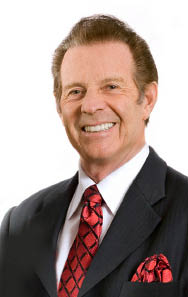
D Gary Young Found of Young Essential Oils
Con Artist or Healer? D Gary Young – Founder of Young Essential OilsNo medical records exist of his early paralysis and miraculous healing. In 1983 he was arrested in Spokane, WA for practicing medicine without a license, and again arrested in 1988 in California for deceptive advertising.

There were always rumors. For instance, that Young’s wife deceptively received successful in vitro fertilization treatments in order to convince their two young sons to scam barren women into believing YLEO products could help them conceive children well into their middle age.

In 2005, Young closed the clinic due to pending lawsuits, however his prescription for health paired with a connection to the abundance of positive thinking successfully continues to bring in millions of dollars per year from both domestic and international distributors.

“We have strict and specific guidelines we follow.” said Cory Weaver; Director of Global Farm Operations for Young Living. “Only organic herbicides are used to keep the plant properties free of chemical pesticides and pollution. We started the fields with seeds from our French farm, and now grow 180 acres.”

“Over the last five years the lavender farms in France have been damaged and lost due to drought and a virus. This spring we’ll be taking lavender from here back to France to

regenerate what was lost from the same plants that started this farm,” says Weaver.

It seems that same cycle of ongoing regeneration is what keeps users of the products coming back. Whether you believe in naturopathy or not, Young has a way of offering

a different perspective of healing paired with a take-control-of-your-health attitude that attracts people like a pheromone into a complex scheme for health and happiness.

Gary Young refuses to speak to the media regarding his past and has not returned Utah Stories’ phone calls yet for comment.

MORE STORIES AND  UPDATES  ON ESSENTIAL OILS:

Bad Medicine: Should You Trust Essential Oils Companies and Their Healing Claims?

The validity of evidence of Young Living’s case against doTERRA.

Young Living Farms receiving a warning letter from the FDA

Gary D. Young Fabricates Lies About Somalian Native 

Young Living: Successfully Suppressing the Facts

, , , ,

Join our newsletter.
Stay informed.


  • Utah Official’s $36K Travel Reimbursements Raise Questions About Use of Taxpayer Funds

    The trek into the office is a necessary evil for many employees; unpaid time that could be spent elsewhere. But some state employees are able to cash in on their commutes.

    That includes one member of Gov. Spencer Cox’s cabinet who heads the Utah Department of Cultural & Community Engagement. The department oversees a number of civic and social programs ranging from museums, libraries and the state historical society, to volunteerism efforts and multicultural affairs. 

    The employee’s in-state travel expenses made up a large chunk of the department’s employee reimbursements in recent years, according to documents obtained by The Utah Investigative Journalism Project obtained through a public records request. 

    The UIJP reviewed spreadsheets detailing the reimbursed expenses of the department’s 17-person leadership team over the 2024 and 2025 fiscal years. 

    The analysis showed one employee, Executive Director Donna Law, accounted for nearly a third of the team’s reimbursements in 2024 and 43% in 2025. Law, who lives in Cedar City, spent more than 11 times the average amount spent by all other employees included in the analysis. 

    The majority of Law’s expenses were categorized as in-state travel, which includes mileage and lodging. Between the two years, she spent $21,607.94 on lodging, $10,135.42  on auto mileage, and $1,455.00 in miscellaneous travel expenses and meals for a total of over $33,000. 

    The next highest amount spent on in-state travel was $3,385. Law’s overall spending far exceeded any other employee.

    The nearly $36,000 Law spent on travel and other items wasnearly three times that spent by the employee with the second highest amount in reimbursements. His expenses, in contrast, were largely out-of-state travel.

    Continue reading and support independent Utah journalism with a purchase of Utah Stories (Digital + Print) or 3 month free trial (Digital).


  • The $7 Million Recruit: How NIL Changed College Athletics Forever

    In 2012, Jabari Parker, a top high school prospect and member of the Church of Jesus Christ of Latter-day Saints, was facing his biggest decision to that point in his life: where to play college basketball. 

    Fans of BYU athletics hoped and perhaps prayed that Parker would pick the school owned by the church he was raised in. BYU was listed as one of his final choices. But he ultimately chose to spend his college years at Duke before attempting a career in the NBA. BYU fans were disappointed, but no one was truly surprised. Duke over BYU was the best choice for a young prospect in 2012. 

    A.J. Dybantsa.

    What changed between 2012 and 2024 when A.J. Dybantsa, the number one high school prospect, chose BYU over every other school? The answer is roughly $7 million dollars. That is what Dybantsa is reportedly making to play basketball at BYU. 

    The deal was supported by Utah Jazz owner Ryan Smith, who met multiple times with the Dybantsa family in multiple attempts to bring the young player to Provo. 

    According to Smith, he had no financial role in bringing Dybantsa to BYU, but the influence of Utah’s most famous billionaire acting as a “booster” or unofficial recruiter certainly swayed the decision.

    Prior to 2021, boosters acting as recruiters was taboo to the NCAA governing body. It was called improper recruiting. But in 2021, California began the modern era of NIL, or the ability of a college athlete to benefit from their name, image, or likeness, when they passed the “Fair Pay to Play Act.” 

    This new law gave college athletes in California the ability to benefit from their NIL, something that was banned in the rest of the country to that point. The NCAA saw that this law would create an unfair advantage for California schools that could now give young athletes the chance to make money off their talent and image while still in college. 

    The NCAA knew they needed to do something quickly, so they rushed through a policy that opened up NIL to all college athletes in the country, and it has been expanding and evolving over the last four years. 

    Grant Duff, who has coached at the University of Utah, Weber State University, and is now the defensive coordinator for Idaho State University, says, “The best part of NIL is that athletes have an opportunity to make good money. The downside comes with the free-for-all that money causes.”

    Dybantsa confers with BYU Head coach, Kevin Young.

    One of the biggest current examples of what a school can do when the boosters are willing to pay for success is Texas Tech University. From 2020-2024, Texas Tech had 34 wins, which works out to 6.8 wins per year with a low of 4 wins and high of 8. Then Texas Tech’s boosters got involved, led by Cody Campbell, an oil industry businessman and Chairman of the Texas Tech board. The football program was given 28 million dollars for NIL with a simple message attached to the large pile of money: Win. And win now. And win they did. 

    By signing NIL deals with athletes in the transfer portal, Texas Tech went from a middle-of-the-pack school in their conference to one of the top 12 teams in the country. They didn’t just win games in 2025, they made many of their opponents look like they didn’t belong on the same field, including the University of Utah and BYU twice. That is what money can buy.

    Continue reading and support independent Utah journalism with a purchase of Utah Stories (Digital + Print) or 3 month free trial (Digital).


  • Cottonwood Heights Corruption Allegations: A Case That Never Reached a Courtroom

    A year ago, we here at Utah Stories recorded a podcast episode that we never published. We were revisiting corruption allegations from ten years ago. We decided not to publish the video, so it sat there on YouTube for nearly 12 months.

    Then somehow the video was published. How? We are not sure, but once it got out there, the comments came pouring in.

    Dozens of viewers, then hundreds, supported the video with their comments on our examination of allegations of police misconduct in Cottonwood Heights. The video recounts how the Police Department was reported by business owners as focusing enforcement on customers of the former Canyon Inn bar. These allegations did not result in a publicly documented, full investigation by Utah’s Justice Department nor the FBI (at least to our knowledge). So why rehash the past?

    We believe the story of The Canyon Inn (and other area business owners) vs. CHPD and Cottonwood Heights Mayor Kelvin Cullimore raises questions about what can happen when allegations surface and do not move forward through a formal legal process with state or federal oversight.

    In 2012, Cottonwood Heights business owners at the mouth of the canyons began publicly objecting to police activity whereby up to seven cruisers were pulling over 711 and Canyon Inn bar customers on their busiest evenings.

    According to those accounts, drivers leaving the bar were frequently pulled over by police and were given DUI tickets, sometimes even after passing a sobriety examination. The volume and concentration of those stops led residents and business owners to complain about the “heavy-handed treatment” of CHPD toward motorists, especially in and around the Canyon Inn and neighboring 711, and eventually the Porcupine Pub.

    Customers responded in predictable ways. Some chose not to return and avoid the area. Others went to different establishments. Over time, the owner of the Canyon Inn, Jim Stojack, stated that his revenue declined by 70% and that he believed police activity near his business was the main contributing factor.

    Utah Stories reported on these concerns by conducting interviews; gathering video documentation provided by those involved; and making public records requests. Through our GRAMA requests, we reviewed DUI citations issued by the Cottonwood Heights Police Department and examined how those cases were resolved in Holladay Justice Court. During that period, we observed a higher number based on our review of DUI cases dismissed in court due to lack of evidence compared to other jurisdictions. One DUI attorney, Tyler Ayers, went on record saying that CHPD was issuing a high volume of DUI citations that were later dismissed.

    That observation raised questions about how cases were being documented and prosecuted. It did not, on its own, establish intent or misconduct, but it became part of a broader set of concerns raised by multiple sources.

    Continue reading and support independent Utah journalism with a purchase of Utah Stories (Digital + Print) or 3 month free trial (Digital).


  • Riverbed Ranch Utah: Cult, Commune, or Utah’s First Modern Homesteading Town?

    Driving out past the town of Delta on a gravel road for a couple of hours, we almost turned around. Following a rain storm, the road is wet and muddy but still decent. Jesse Fisher is worried we’ll get stuck, but we plow through giant puddles of water, and as the clouds lift, we reach the homestead community of Riverbed Ranch, consisting of 1250 acres of reclaimed desert.

    Almost like an oasis, Riverbed Ranch is home to 40 families who decided to depart city life, municipal taxes, congestion, air, light and sound pollution, and live in a place among chickens, goats and cows on self-reliant homesteads. 

    Describing Riverbed Ranch as “bucolic” would be inaccurate at this point. Sometimes there are purple flowers in the valley, but currently it is a desert — still beautiful, but most of the properties in the sprawling valley are still works-in-progress. But the scale of the valley and witnessing in person the first brand new town to break ground in Utah in 75 years is quite remarkable. 

    A few of the 2.5 acre plots consist of a trailer and a fence. Some plots have nice little homes that appear very homemade; others have more complete homes with nice fencing, with nicely organized pens for different animals, orchards and organization. 

    Some homes under construction even appear upscale and modern, where the inhabitants are indeed living as modern homesteaders, not seeking “luxury retreats” like so many other empty homes in Utah being built in hot tourist destinations such as Moab and Park City.

    We start by speaking with Tom and Kathy Barnes, whose homestead is a model for order and function. Turkeys walk around in their pen, excited for feeding time. Beside the turkey pen is another pen for chickens; one for goats, and another for pigs. All of the pens are connected to a large barn. By the look of their operation, the Barnes appear to be seasoned professionals.

    Indeed they are. Tom and Kathy raised their eight children “on a teacher’s salary,” homesteading in Payson, Utah on ten acres, reaching the point where the only store-bought items were toilet paper, shampoo, toothpaste and cashews. Most everything else, including fresh fruits, vegetables, milk and meat were raised themselves.

    Tom had just finished feeding his three hungry pigs when he took a moment to talk to me.

    “What are the advantages to living on a homestead?” I ask. 

    “Listen,” he says. “You can hear a pig eating … Once in a while we will hear a fighter jet pass over but that’s it.” 

    The Barnes are calm and content in their semi-retirement. They set up their homestead at Riverbed Ranch five years ago. They already knew homesteading and they realized even in retirement they could help the other inhabitants here, those with less experience, learn how to take on the demanding but satisfying lifestyle.

    “It’s basically like an extended family,” says Tom. “We are all like-minded out here. We are all going to help one another when our neighbors need help.”

    Tom says he and most of his neighbors are members of the LDS Church, and that most of the city’s LDS members are a part of a ward which makes up their “ward family.” “Out here,” he says, “everybody is our extended family. So we all know we are going to help one another and learn to get along … Like early pioneers in a small town. It’s very much the same thing.

    A wild goose chase?

    “We could live out here like it was 1849, but we have all of the conveniences of modern society, so why not take advantage of the best of both worlds?”

    I wonder how adaptable these modern pioneers are. Raised on a homestead, would these folks ever want to join the modern world again? The Barnes kids are mostly choosing city life, but their kids and grandkids love visiting them, running around free-range. Tom adds, “One of our sons is starting his own homestead in Piute County.”

    We drive around on the hard gravel roads and get a sense of how all of the residents here justify the hard-scrabble, off-grid life, which requires living off pumped well water, solar power for electricity, and propane for heat. 

    We are aiming to get a sense of the  bigger reason why all of these people are out here, far away from freeways and Walmarts. Are they all latter-day preppers?

    Continue reading and support independent Utah journalism with a purchase of Utah Stories (Digital + Print) or 3 month free trial (Digital).