Debate

Report Used in Young Living Farms Case Against DoTERRA Suspect

Was the evidence that Young Living filed in a court case against doTERRA in 2013 fraudulent?

|


According to Dr. Robert Pappas (Founder of Essential Oil University) the report that Young Living Farms included in their case against doTERRA in 2013 does not appear to be conducted on oils that doTERRA sells. Dr. Pappas comes to this conclusion because the chemicals compounds listed in their findings appear nothing like the peppermint oil on which Dr. Pappas has conducted many tests.

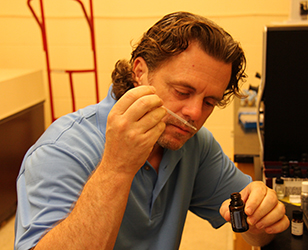
Dr. Robert Pappas, image from story written by Indiana University in 2012.

Dr. Pappas  has his PhD in chemistry and has done consulting work in essential oils for nearly two decades. He said that the conclusions of the findings of their lavender oil and peppermint oils which are shown in the case filings nowhere indicate that the oils tested are in fact doTERRA oils. The chemical analysis was conducted by the Centre National De La Recherche Scientifique’s whose headquarters are located in Paris, France. Their conclusions were the following:

“For each sample, the composition is not in agreement with norm ISO/FDIS 856. Abnormal presence of ethyl vanillin (molecule of synthetic origin). Found on page 35 of their report. The samples they tested are listed as the following:

Peppermint 1118702
Peppermint 1225402
Peppermint 130311A”

Utah Stories will attempt in the coming days to contact both Young Living Farms and the CNRS for their comments on the findings found in the report.

This is a follow up story to the story written entitled, “Damning Evidence the Young Living and doTERRA’s Oils are Adulterated.”


, , , ,


Join our newsletter.
Stay informed.


  • The Reality of Meth Psychosis on Utah’s Streets

    On the streets of downtown Salt Lake City, psychosis has become part of the landscape.

    People scream at invisible enemies. Some believe they are prophets. Others wander through traffic carrying conversations with voices nobody else can hear. To passersby, it can look theatrical, bizarre, and absurd. But behind many of those episodes is a darker reality few people want to confront directly: methamphetamine-induced psychosis, prolonged sleep deprivation, trauma, addiction, and the slow destruction of a person’s ability to distinguish reality from delusion.


  • The Utah Bombings That Exposed One of America’s Greatest Forgers

    On an ordinary October morning in 1985, downtown Salt Lake City was shattered by a blast that killed businessman and document collector Steve Christensen. Hours later, a second bomb tore through a quiet Holladay neighborhood, killing Kathy Sheets, the wife of Christensen’s former business partner. The next day saw a third explosion. This one was in a car near Temple Square that nearly killed rare-documents dealer Mark Hofmann. 

    Rumors swirled instantly, tying the attacks to money, religion, and shadowy early-Mormon documents Christensen had recently acquired. For days, Utah held its breath. What unfolded was stranger and darker than fiction. The bombs weren’t the work of religious extremists or enemies of the Church of Jesus Christ of Latter-day Saints, but instead, the doings of Mark Hofmann himself. Hofmann was a nerdy, soft-spoken dealer who had secretly become one of the most skilled document forgers in American history. 

    His creations were so convincing that they reshaped historical narratives, fooling scholars, collectors, and church leaders. When the lies began to close in, the bombs became his final, desperate attempt to keep his world from collapsing.

    Hofmann had been fabricating Mormon and American historical documents for years. He was a prodigy of deception, sourcing period paper, mixing inks that cracked just right, and mimicking handwriting with obsessive precision. Most of all, he knew how to read people. Utah in the 1970s and ’80s was a collector’s paradise. As bookseller Ken Sanders told Salt Lake Magazine, it was “a consciousness shift,” a recognition that rare Utah history was a treasure worth pursuing. It was also, he notes, fertile ground for affinity fraud.

    Nothing captured that vulnerability more than the Salamander Letter, a supposed 1830s correspondence which claimed Joseph Smith encountered a magical white salamander rather than an angel. The document shook Latter-day Saint circles. Church leaders, worried about its implications, quietly purchased it along with other materials Hofmann dangled before them. Many reasoned that if the church was willing to buy it, then it must be authentic and true, and Hofmann understood that psychology perfectly.

    Continue reading and support independent Utah journalism with a purchase of Utah Stories (Digital + Print) or 3 month free trial (Digital).


  • Why Restaurants Like Mazza Are Disappearing

    Across Salt Lake City, luxury restaurants continue to open. High-end dining rooms remain packed. Investors continue buying buildings in formerly quirky neighborhood districts. Chains increasingly move into areas once dominated by independent businesses. Meanwhile, many middle-class restaurants, the kinds of places that helped shape Salt Lake’s local identity over the past two decades, are struggling to survive.


  • A Simple Prepaid eSIM Setup for Smoother International Trips

    International travel feels easier when mobile data works the moment a trip begins. Maps, booking details, local transport apps, translation tools, and messaging services have become part of the travel routine. When access to these essentials is delayed, even a short airport transfer can feel more stressful than it should. That is why many travelers…