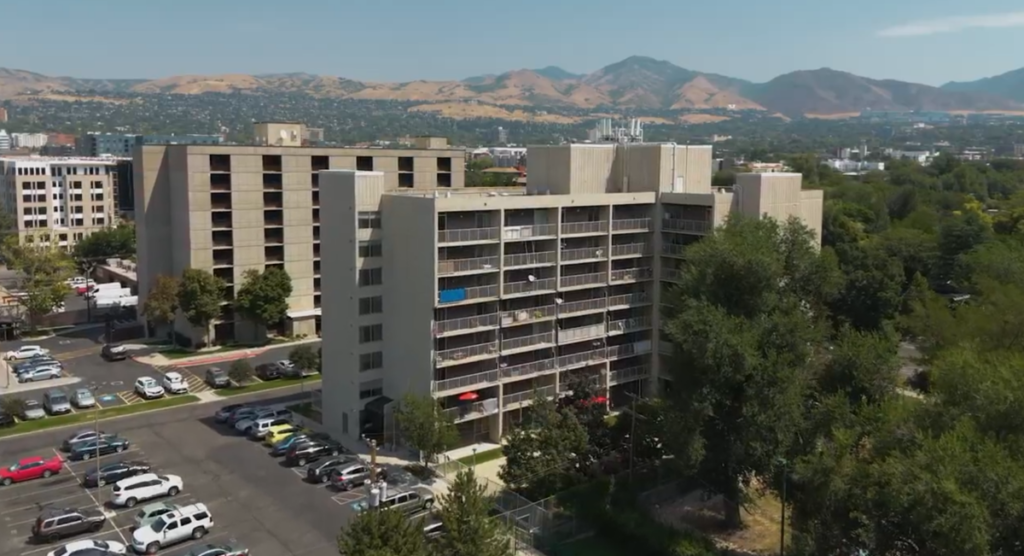

Every weekday, dozens of senior citizens make their way to the Millcreek Senior Center to receive complimentary lunches, one of the Center’s many programs for the area’s aging population. The lunches are provided free to anyone over 60, with a suggested donation of four dollars, but donations are not required or monitored.
“It depends on the location you’re in because the County operates over 13 different senior centers, and each center is in a different geographical location. Some of these areas are more food insecure and some are more about the socialization of the lunch program, and some are kind of both,” said Matt Waite, Millcreek Senior Center manager.
Waite added that the number of senior citizens seeking complimentary lunches has “steadily increased” in recent years, especially at the River’s Bend Senior Center in Rose Park, where food insecurity is more of an issue.
“It’s the increased cost of living,” Waite contends. “Especially if you were to visit some of our other centers, you’d see that the increase has significantly gone up for folks that need to come in for lunches.”
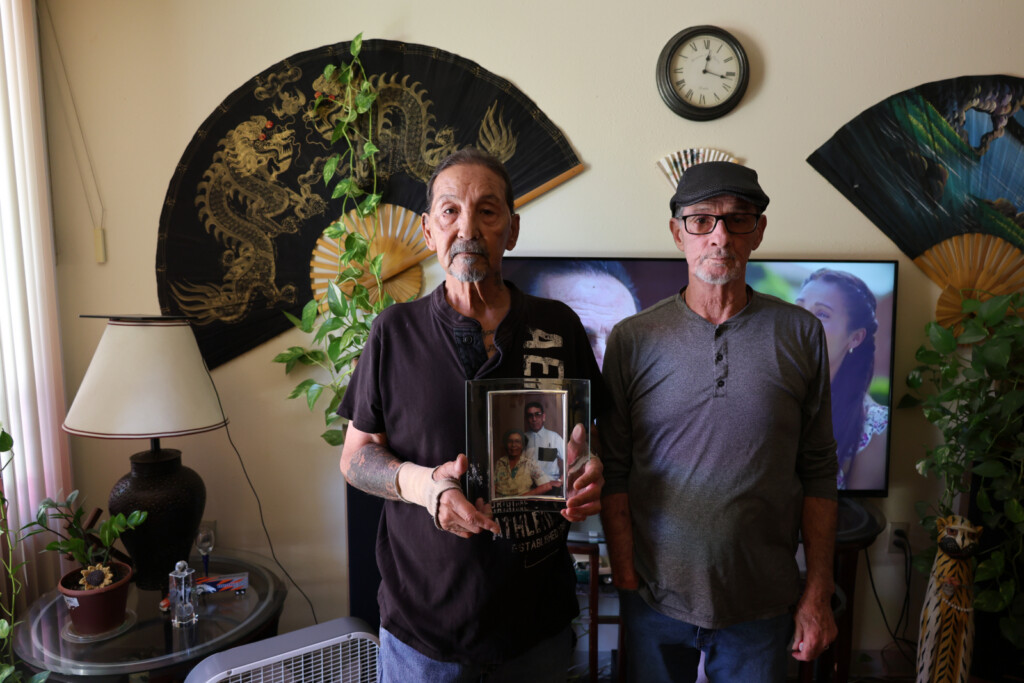
Senior citizens in Salt Lake City are indeed feeling squeezed, despite many of them being homeowners in the area for decades. Living off one Social Security check a month has become a challenge as water, sewer and utility rates in Salt Lake City continue to rise year by year, with 2026-2027 seeing potentially the most notable increase ever in sewer rates in a one-year timespan.

New Rate Increases
In their budget for 2026-2027, released in March, Salt Lake City’s Department of Public Utilities included significant increases for both residential water and sewer rates. These rate changes took effect on July 1. While drinking water rates remain notably higher than rates for sewer use, including in their percentage increase this year, sewer rates are now up anywhere from 18% to 28% per month, depending on use. For high-use residential properties, this could mean an extra $300 annually added to their sewer bill.
Newer homeowners may rest assured that the money they’re paying with these higher sewer rates is something of an investment in the city’s future, as well as the future of the Great Salt Lake. Aging homeowners, however, may feel left out of the equation.
Much of this “equation” has to do with the cost of the city’s new Water Reclamation Facility (WRF), located in the city’s Northwest quadrant, near Rose Park. In 2019, the facility was reported to be 55 years old, and the Department of Public Utilities broke ground on a reconstruction effort with an initial cost of $528 million, as reported by The Salt Lake Tribune. However, the final estimate, as the new WRF nears its completion scheduled for January 2027, has ballooned to more than $800 million.
This hefty price tag means the new WRF is the second-largest civil infrastructure project in Salt Lake City’s history, behind only the airport. According to the Director of the Department of Public Utilities, Laura Briefer, every bit of the recent rate increases have to do with the facility’s cost.
“It had everything to do with it,” Briefer said. “In this sector, when we talk about water and wastewater, we talk about vertical and horizontal infrastructure. Vertical infrastructure is typically the treatment plants; the things that are full of process. And vertical infrastructure has an enormous price tag because there’s complexity to the construction of the system.”
Necessary Infrastructure
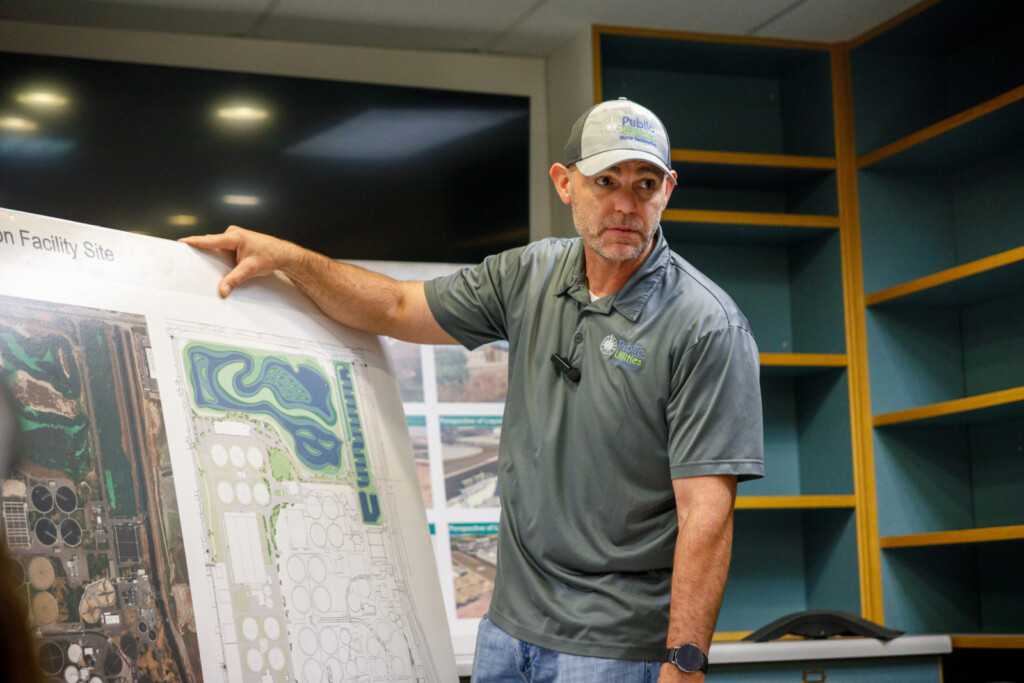
There is one sewage treatment plant for Salt Lake City. According to Facility Administrator Jamey West, the plant handles an average of 30 million gallons of wastewater per day, all of which makes its way via the Jordan River to Farmington Bay and the Great Salt Lake after it’s been treated.
Briefer unflinchingly refers to the new water reclamation facility as “necessary infrastructure.” While the old plant had been built on and modified several times to keep pace with water quality standards, the federal Clean Water Act, passed in 2016, brought even stricter regulations to states for the removal of phosphorus and ammonia in treated wastewater.
“In the case of our facility here, a large part of the cost of the facility is to treat the water to remove more nutrients that are contributors to things like harmful algae blooms in the Great Salt Lake,” Briefer said.
Briefer and the Department of Public Utilities, as well as others involved in the city’s “one-water” system, had seen these additional nutrient removal regulations coming. Factoring in the age of most of the facility and its concrete, making the facility susceptible to seismic activity, Briefer said the decision was made to build a new one.
“It was ultimately in the city’s best interest to build a new facility that’s designed to be able to meet the new water quality standards, and also designed to all the resiliency and sustainability aspects,” West added.
While Briefer explained that they did have “a long-range plan for rate increases,” and a deadline to finish construction by 2025, the COVID-19 crisis came almost immediately after they broke ground, greatly hindering initial progress.
“What we initially thought would be in total a $700 million project, financed 49% at the time by a low-interest federal loan, turned into an $850 million budget because we hit all the inflationary pressures that everybody else faced,” Briefer said.
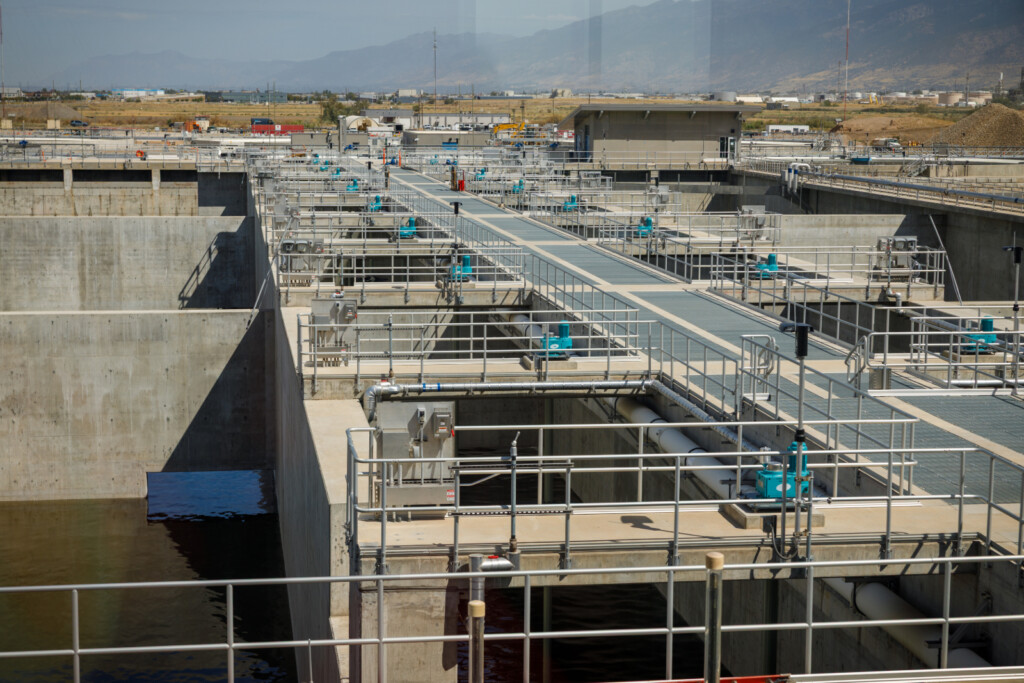
The All-New WRF
In order to continue treating the existing flow of wastewater while the plant underwent construction, Briefer, West, and the Department of Public Utilities, who have managed the project since its genesis, and the joint venture contracting outfit of Sundt and PCL Construction, had to be careful and intentional with their design process. The new facility was built alongside and on top of the old, from the new pump station a mile south that pumps the water towards its first stop in the all-new, shiny Headworks building for grit and rag removal, to the altogether safer last-stop UV-disinfection process.
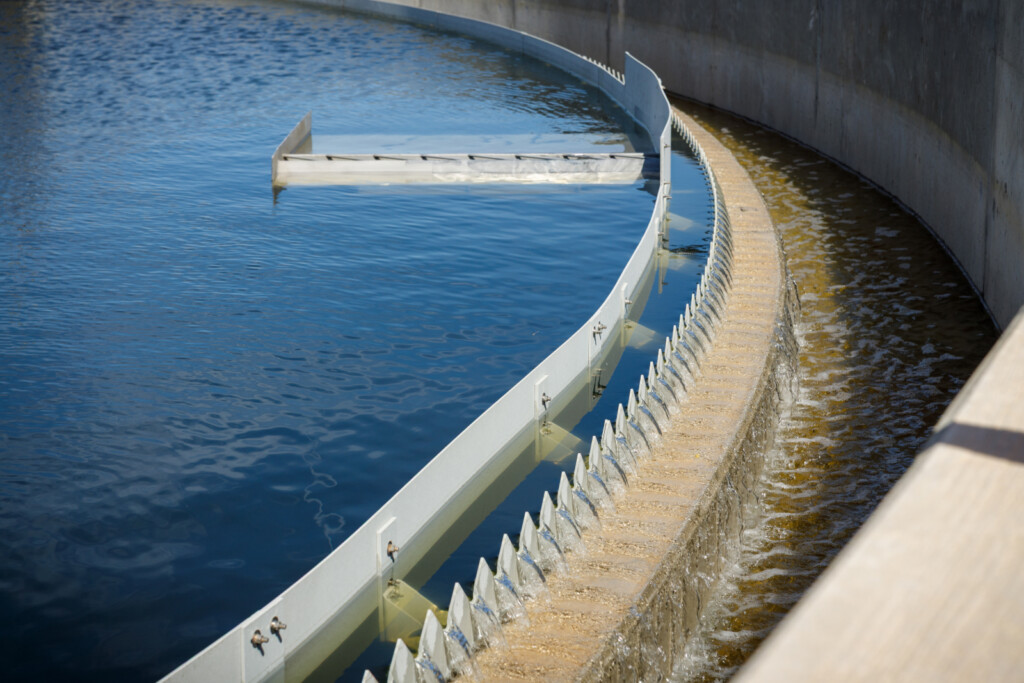
“Virtually the entire liquid treatment process is being replaced with new facilities, including Headworks, the primary clarifiers, biological nutrient removal reactors, secondary clarifiers, and the new UV disinfection stage,” West explained, regarding the newest additions.
The biological nutrient removal (BNR) reactors are where different biological environments and microorganisms are used to remove organic material and nutrients, particularly nitrogen and phosphorus, from the wastewater. The addition of this new system accounted for a large portion of the new facility’s cost, according to Briefer. West also said the BNR reactors are “one of the major differences between the existing plant and the new facility,” calling this step “a key part of allowing [the new facility] to meet the new nutrient requirements.”
Another element of the new facility evident during the tour, and likely welcome by residents of nearby Rose Park, is the new mechanical dewatering process for biosolids. Historically, the WRF used large, open-air drying beds where digested biosolids were dewatered and dried through evaporation. The new facility uses mechanical screw presses inside an enclosed dewatering building, which “significantly reduces the amount of exposed biosolids and allows the air from the process to be captured and treated for odor,” West said.
The team was also guided, from the first day, by their pursuit of an Envision Platinum certification in the new facility’s construction. Envision Platinum is a certification from the Institute for Sustainable Infrastructure and is given only to those who, throughout the construction process, are reducing waste, recycling concrete, and reducing clean water use in the testing phase.
Lack of Public Outreach
The new WRF’s capacity has been increased from 30 million to 48 million gallons (with designs for the future of the same given area capable of doubling even this number), at a time of sustained population growth for the city. It is reinforced against “The Big One,” the seismic event we all must think about when building with concrete, and undoubtedly buoys the health and safety of the entire water system, from the Great Salt Lake to the mountain streams that supply our drinking water.
However, the lack of PR and public education around the new facility is an issue when it comes to aging homeowners like those at Millcreek and River’s Bend Senior Centers, where wastewater isn’t a common topic of conversation (especially at lunch hour). The Department of Public Utilities says they enjoy providing a service that most of us don’t have to think about –– where we can “flush and forget” –– but it’s not easy to forget the charges on your water, sewer and utility bills, especially when you’re living off of one Social Security check per month.
If you are a homeowner in Salt Lake County, the Department of Public Utilities welcomes residents for extremely informative and engaging guided tours of the WRF every Friday. Learn more.
Feature image by John Taylor.