Epic Brewing burst onto the craft beer scene back in 2009 when the four largest breweries in Utah were experiencing double-digit growth and craft beer was surging in market share over the massive InBev Corporate, publicly traded brews.
Epic’s founders, David Cole and Peter Ericson, along with brewmaster Kevin Crompton, struck paydirt with a simple formula — beers with more than 3.2% ABV that tasted fantastic, offering a massive variety of beers along with standard offerings. Their formula: simple labeling — lots of choices, and big new beers coming out constantly. Epic’s beers became a huge instant hit. Their Pfeifferhorn Lager and Spiral Jetty IPAs were right on point. Utah Stories reported from our March 2012 beer issue, “Epic produces 35 different varieties of beer, turning out 44,000 bottles every 10 days …They expanded their distribution to twelve states.”
In just a few years of operation, Epic had outgrown their humble State Street facility and looked to expand. They decided to join Denver’s massive craft beer scene in the River North, or RiNo District.
Their location there was among forty other craft breweries (that’s correct, forty in about a five-mile radius), and they did well for years. But as the craft beer market lost quite a lot of its initial momentum, they had to choose between closing their Denver or their Salt Lake City location. “We decided to focus our efforts back on the Salt Lake market and close the Denver brewery,” explains Ryan Kluh.
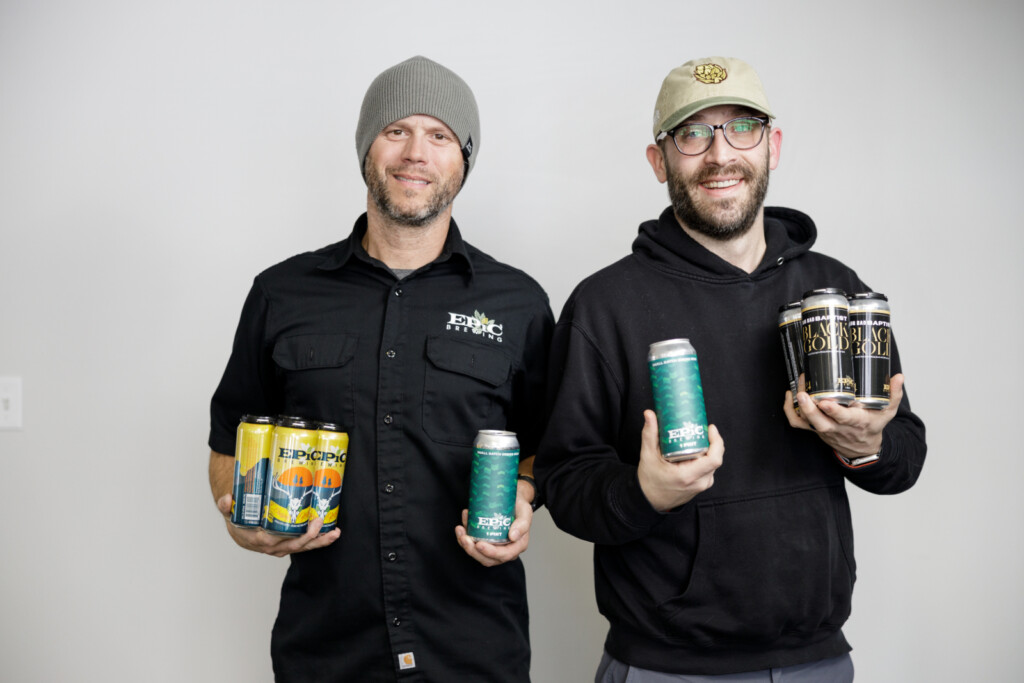
I sat down to speak with Ryan Kluh in Sales, and Marketing Head Brewer Ryan Turnbow, for a brew-talk podcast. They brought along samples of their latest and greatest hits. I already disclosed that I’m a beer snob (traditionalist). Still, I can appreciate the trends that have driven craft beer to new places and heights only found in the U.S. Anybody who knows Utah’s beer scene knows the Big Bad Baptist beer. It’s about the most bold, rich, flavorful beer in our market. “It’s made with coffee and chocolate,” says Turnbow. Boy, is it a huge beer. Cask-barrel conditioned in whiskey is like nothing else. It’s kind of like some guys went nuts in the brewhouse one day and decided to pour their favorite coffee and chocolate into an already dark beer. “Mikey [Mike Riedell], who operates Utah Beer Blog voted it the number one craft beer in Utah.” Kluh tells me. Epic now offers a Big Bad Baptist lineup which includes an old fashioned and a chocolate banana.
I moved on to sample their Pineapple Express.”This beer requires a pound of pineapple for every gallon we produce,” says Turnbow. I was surprised how enjoyable this beer was. It was a visit to Hawaii. This beer shake could be blended with some coconut and it would be an amazing pina-colada. This is a great beer for GenZs. In Germany, young consumers love a drink called Radler or Shandy. It’s essentially a light beer mixed with Sprite. It’s a traditional drink for cyclists. Pineapple Express is a fruity beer that would pair nicely with a warm beach or a day when you are wishing for one.
They brought samples of their Chasing Ghosts, but unfortunately I didn’t get a chance to sample it, but our team at Utah Stories loved it. My wife, who rarely drinks beer, loves Epic’s Brainless on Peaches. The Brainless series of beers are fruit-forward, almost lambic ales. I fell in love with lambics from Belgium. Epic’s Brainless series offers cherries, raspberries and peaches. These are almost champagne beers that non-traditional beer lovers will enjoy.
Epic’s tasting room at their 825 State Street location is something worth experiencing. Any beer-lover will thoroughly enjoy sampling a flight (or two) from their massive line-up. The vibe of the staff and the fun that everyone has brewing huge beers has kept me returning over the years.
Feature Image: Ryan Kluh and Clay Turnbow of Epic Brewing. Photo by John Taylor.