Utah Stories

Gondola up Little Cottonwood Canyon Proposal: Short-sighted, waste-of-money, elitist visions of grandeur should remain in the clouds

Utah elite is in favor of the proposed Gondola up the Little Cottonwood Canyon even though this project would devastate the environment of the canyon.

|


It appears that the $1-$2 billion dollar gondola-up-the-canyon proposal is currying favor with more elites. Snowbird has purchased the land where the base station and parking lot of the proposed gondola would be located.

Snowbird currently charges $130 for a day pass and for an extra $60 elites can get a special exemption from waiting in lines. Snowbird is probably the best ski resort in the world, but they just aren’t making enough money. They are starving in fact, why else would be in support of an idea this dumb?
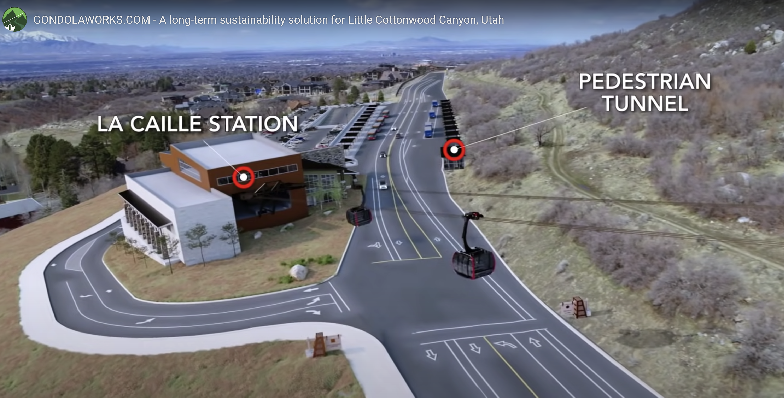
The future parking lot at the bottom of the Little Cottonwood Canyon for the proposed Gondola.

Under the current proposal, Snowbird could charge an additional $25 for patrons to park their vehicles at the gondola base station and another $25 per person to ride to the gondola up the canyon, on top of their $130 lift fee. Under this proposal, if a family of four wanted to enjoy a day of skiing at Snowbird, your total parking/gondola/skiing fee would be around $600, with lunch around $700. Of course, your family could save so much money if you were to buy the Alta-Bird Family Four pack for $3,990. But the point is, that skiing is by-in-large becoming out of reach for most Utahns. The proposed gondola would only exacerbate the situation and destroy the environment under the gondola as a bonus.

Gondola proponents are deep-pocketed and they are running a very nice PR campaign to further their efforts. CW Management owned by Chris McCandless, Wayne Niederhauser, and Kevin Gates. They are spending tens of thousands showing videos of what it would be like to be whisked away on a gondola at the base of the canyon rather than wait in your car in traffic.
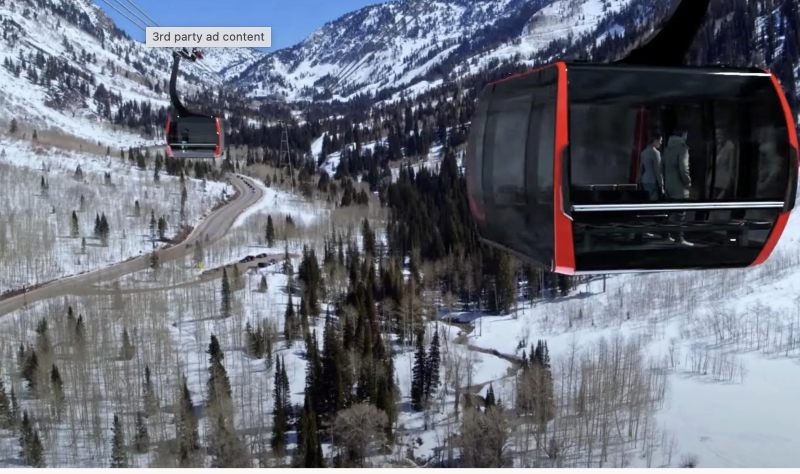
Rendering of proposed Gondola up the Little Cottonwood Canyon.

Without a doubt, the experience of a gondola is far superior to puttering up the canyon in a personal vehicle. But they spend no time addressing the environmental impact of 20-30 150-foot tall massive poles from which the wire-rope cables would need to be suspended to carry the gondolas. These 30 poles would require large roads for servicing; yards of concrete to secure into place, and they would decimate the ecology of the Little Cottonwood Canyon River and watershed area habitat for wildlife and backcountry hikers.

Of course, if you are riding the gondola up the canyon you would never have to personally witness this environmental devastation caused by the poles, so as long as the elites don’t need to see this then apparently it’s just fine. Fine with them, but not fine with people who actually love the canyons.

Carl Fisher the Executive Director of Save our Canyons, is doing everything to oppose this plan, now apparently endorsed by UTA, the Utah State Legislature, and all of the Good ‘Ol Boys who don’t give a shit about Utah’s environment but only want to find new ways to produce massive amounts of money. But a $1-$2 billion investment by Utah taxpayers to destroy the Little Cottonwood Canyon ecology to benefit the elites is rubbing Fisher and other like-minded folks the wrong way.

“There are people who can’t even ride transit to get to work, but we want to accommodate the fun hogs in a better way to get up the canyon. They are going to have better transit than families in Utah” said Fisher on the Utah Stories podcast. He added, “It’s only better if you can afford to pay a couple of thousand dollars per year to get you and your family up to enjoy resort skiing.”

Taking the big-picture view, Fisher is questioning why the Utah State Legislature doesn’t invest in better transit options for $2 billion, that could benefit far more Utahns, and help clean our air rather than investing that money into a gondola that would only benefit the elites and tourists.

A much better idea would be a fleet of electric busses accessible from a new Trax transit station at the mouth of the canyon, and greater accessibility of Trax stations, perhaps a Fort Union Trax line. This would cost about a billion less and it would make skiing more accessible not less for average Utahns. Also, this would require no widening of the Cottonwood Canyon Road and no further environmental degradation.

RELATED CONTENT

Ticket to Ride: “Political Pressure” Comes to Bear on Little Cottonwood Canyon Transportation Plans

Utahns’ Love Affair with Cottonwood Canyon

Little Cottonwood Canyon is under threat by Utah’s population boom

100-Year-Old Wasatch Mountain Lodge Hidden in Dense Forest of Big Cottonwood Canyon

Most Utahns in Favor of Billboard Ban


SUPPORT LOCAL JOURNALISM AND SUBSCRIBE TO PRINT MAGAZINE


Subscribe to Utah Stories weekly newsletter and get our stories directly to your inbox

* indicates required


, , , , , , ,


Join our newsletter.
Stay informed.


  • Salt Lake City Newcomers Club: Finding Friendship and Belonging Since 1948

    Moving away from your hometown can come with many blessings. But for some, it also comes with just as many bouts of loneliness. That ache of not knowing where to meet people, or grieving the friends you left behind, comes in waves. Workplaces and churches can sometimes provide ready-made communities, but what happens when they don’t? Where do you go to find true belonging?


  • Highway 6 and the Midland Trail: Utah’s Transcontinental Highway History

    From Price Canyon to Delta’s desert stretch, Utah played a central role in building the Midland Trail, one of America’s earliest transcontinental highways and the foundation of today’s Highway 6.


  • A Stand-Up Wheelchair Gives Paralysis Patients Greater Independence

    After a cycling accident left him paralyzed, Bill Winchester had to relearn how to navigate daily life from a wheelchair. A stand-up wheelchair later gave him the ability to rise, move more independently, and regain parts of the active life he once knew.


  • Whiskey, Bullets & a Buried Town: Archaeologists Reveal Alta’s Wild Past

    Before Alta was known for powder days and lift lines, it was a silver mining town clinging to the side of a narrow canyon. In the late 1800s, men lived at 8,000 feet, went underground each day, and endured winters that regularly buried buildings in snow. This past summer, that mining town resurfaced — literally — during construction at the Alta Ski Area.

    To understand what Alta really looked like, you don’t begin with legend. You begin with its trash — and this time, that happened almost by accident.

    Alta Ski Area was installing underground water reservoirs to support snowmaking. Because the project sits on Uinta-Wasatch-Cache National Forest land, an archaeologist was required to monitor the excavation. No one expected the trench to produce much.

    But, It did.

    Artifacts began surfacing almost immediately. Enough that the Forest Service contacted the Utah State Historic Preservation Office for help. Lexi Little, who coordinates the Utah Cultural Site Stewardship Program, helped mobilize nearly 30 volunteers to assist with what quickly became a focused two-week excavation.

    Winter deadlines were approaching. The pipes for the reservoirs had to go in the ground. There wasn’t time for a slow, extended dig.

    “It was two weeks of digging in the dirt and helping figure out exactly what we were looking at,” Little said.

    Most of the people screening soil weren’t professional archaeologists. They were trained stewards from around Utah — part of a statewide volunteer network that now approaches 500 people. They poured dirt through shaker screens, scanning for fragments that could piece together a town long buried.

    “Archaeology is human trash,” Little explained. “Archaeologists are very into trash.”

    Alta had left plenty behind.

    https://youtu.be/hzIHzx3OGoo?si=dKcl2CEz-t6FZzYw

    Victorian-style ceramics appeared first — the kind typically used in hotels. Medicine bottles followed. Ink bottles. Hand-blown glass. A porcelain doll’s foot surfaced from the soil, a small detail that shifted the mental image of the town. Families were here. Children were here. This wasn’t only a camp of miners.

    The bottles helped establish time. Manufacturing details — whether glass was hand-blown or mold-made, whether a maker’s mark appeared on the base — allowed archaeologists to date many of the artifacts to the 1870s through the 1890s, when Alta was booming as a silver mining town.

    “That gives you that range of dates for when Alta was really booming,” Little said.

    One reusable soda bottle clearly stamped “Salt Lake City” connected the canyon to the valley economy below.

    Then something unusual rolled out of a dirt pile.

    A corked bottle. Intact. Liquid still inside.

    Continue reading and support independent Utah journalism with a purchase of Utah Stories (Digital + Print) or 3 month free trial (Digital).