Community Relations

Ticket to Ride: “Political Pressure” Comes to Bear on Little Cottonwood Canyon Transportation Plans

While cog rail in Little Cottonwood Canyon is an exciting prospect, it may also be a lucrative one for C.W. Management, a development company owned by influential former Utah State Senate President Wayne Niederhauser and former Sandy City Councilman Chris McCandless. The company owns the La Caille estate that is the base station for a…

|


By Eric S. Peterson and Jennifer Greenlee
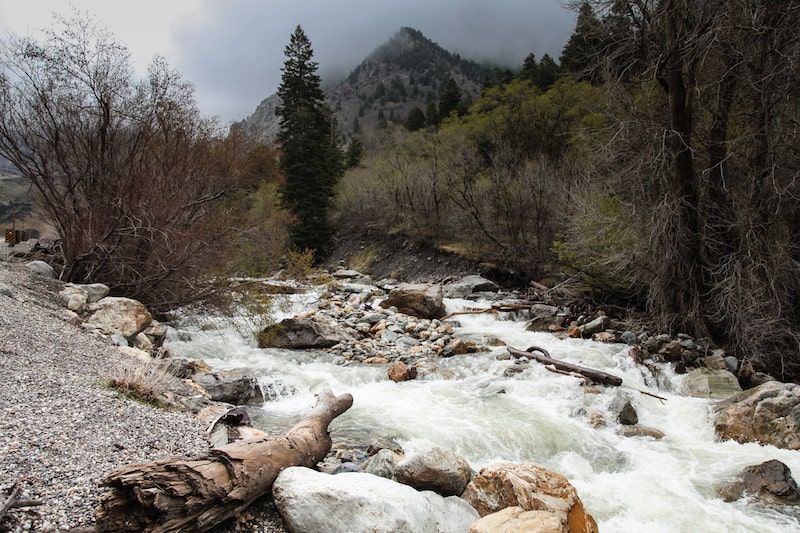
Big Cottonwood Canyon, winter 2019. Photo by Dung Hoang.

In December 2020, Central Wasatch Commission executive director, and former Salt Lake City Mayor Ralph Becker, was fixated on one of several transportation alternatives that were discussed regarding how to get skiers, hikers and bikers up Little Cottonwood Canyon while keeping cars out.

“With a train, it’s possible we could get to the point where we don’t really have cars,” Becker said excitedly.

Commission staff has made an initial recommendation for the cog rail proposal, and the Utah Department of Transportation included the rail route in an Environmental Impact Study it is currently developing. While there is a lot of enthusiasm, there’s also some skepticism. This proposal was only inserted into the study process late last fall, after the CWC had already been studying other alternatives. The proposal has raised concerns from the U.S. Forest Service that it might clash with federal regulations against transportation projects that impact public parks and recreation areas. 
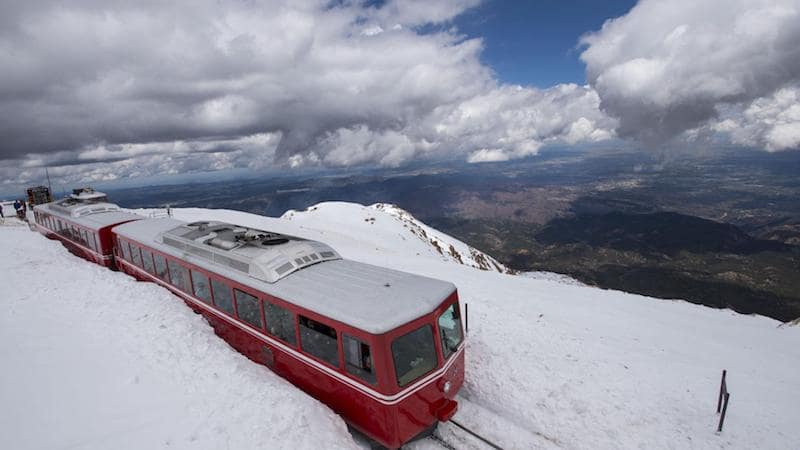
In a January 2021 email obtained by The Utah Investigative Journalism Project, Forest Service staff discuss the fact that UDOT originally ruled out a rail route up the canyon but then changed their minds.

“UDOT had originally screened-out the cog rail, but due to industry and political pressure (not FS), UDOT decided to carry the cog rail evaluation through,” the email reads.

While cog rail is an exciting prospect, it may also be a lucrative one for C.W. Management, a development company owned by influential former Utah State Senate President Wayne Niederhauser and former Sandy City Councilman Chris McCandless. The company owns the La Caille estate that is the base station for a proposed gondola up the canyon, and the base for the only proposed rail route.

This same company has been very well positioned in the canyons, having also developed property at the mouth of Big Cottonwood Canyon, shortly after Niederhauser passed legislation to pave the way for toll roads in the canyons.
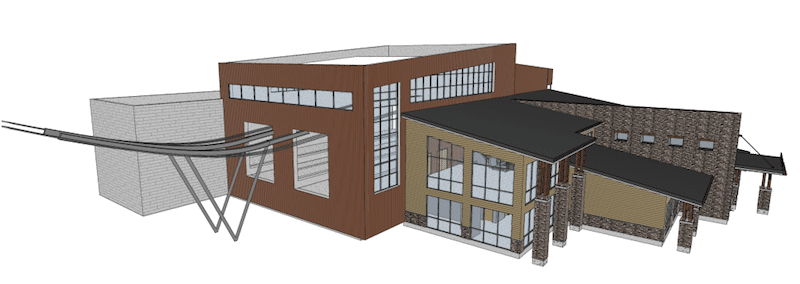
Proposed gondola station at La Caille.

“It’s a jigsaw”

The CWC has worked in tandem with UDOT on the canyon transportation question. The goal is being able to reduce congestion up the canyon by putting 1,000 people on transit per hour. The CWC discussed its option in a meeting in March of this year. The proposals included two enhanced bus route options, one of which would include widening roads up the canyon. The first bus option comes with a $334 million price tag, while the widened road options would reach $481 million. While these were the cheapest options, they did not account for the fact that the buses would need to be replaced in 12 years.

Two aerial gondolas were proposed, one from the canyon park-and-ride costing $546 million, and another from the La Caille property costing $576 million.

Only one cog rail route was proposed. With La Caille as the base station, this proposal would cost $1.5 billion.

CWC Deputy Director Blake Perez explains that while the CWC has been studying the alternatives since 2020, UDOT will have the final say. The CWC looks at a larger picture of access issues across the Wasatch Front. 

“It’s a jigsaw puzzle, and what UDOT is looking at is one piece of that puzzle,” Perez says. 

He says the CWC staff were able to adapt quickly in November of 2020 and study cog rail after UDOT made the late addition of the La Caille rail and gondola routes part of the Environmental Impact Study or EIS. 

The CWC staff endorsed the rail option by finding it scored the highest on a comprehensive matrix of factors including environmental, safety, reliability and others. Perez notes the full commission has not yet made an official recommendation but is likely to this summer.

Invariably with such a project, not all pieces of the puzzle are going to fit. 

David Carter, with the Salt Lake Climber Alliance, worries about the impact the late proposed options will have on climbing and bouldering in the canyon, especially in historic areas that have undergone significant work to be restored and maintained by the non-profit.

“We were a little surprised by the additional alternatives,” Carter says of the La Caille routes. “It seems they were released without as much notice and without the public comment and engagement processes.”

UDOT Little Cottonwood Canyon Project Manager Josh Van Jura is adamant, however, that the late additions were not due to political pressure and were actually the result of public comment.

“It was not added back in because of political pressure,” Van Jura says. “As part of the public comment period, we did get a comment that said, ‘why aren’t you looking at a cog rail at the same origin point as Gondola B?’”

Public comments, however, also showed amazement about the nature of the UDOT proposal. One Cottonwood Heights resident, for example, complained that UDOT overlooked the fact that the new La Caille proposals would impact a 26-acre open space parcel recently acquired by Cottonwood Heights City and Utah Open Lands. 

While UDOT had sent a notice saying they would study how to mitigate the impact on the open space, they also acknowledged they were unaware of the city’s open-space purchase when they proposed the La Caille alternatives.

The resident noted that the confusing decisions by the agency would cause people to speculate about why canyon improvements were being made in the first place. 

“Many will conclude that the only reason now for massive improvements on SR-210 is to make sure that Snowbird Ski Resort and McCandless and Niederhauser become rich at public expense,” the resident wrote.

The Forest Service would not provide comments for this article. But email discussions show the federal agency’s confusion about UDOT’s decision-making.

In a January 20 email, Uinta-Wasatch-Cache National Forest District Ranger Bekee Hotze asked another staffer: “I thought the cog and gondola were going through Tanner Park, but the write-up says no,” she wrote of the new UDOT alternatives. “However, for the cog, the alignment goes right through Grit Mill, which was just completed and cost over half a million dollars.”

UDOT’s draft EIS has been in development since 2018, and now, after adding the two new routes, it’s expected the draft will be issued this summer, at which time the public will have more opportunities to offer feedback. Update: UDOT has now released two preferred routes for Little Cottonwood Canyon. One is Enhanced Bus Service and the other is Gondola Alternative B with the base station at La Caille. More info can be found at UDOT’s site here.
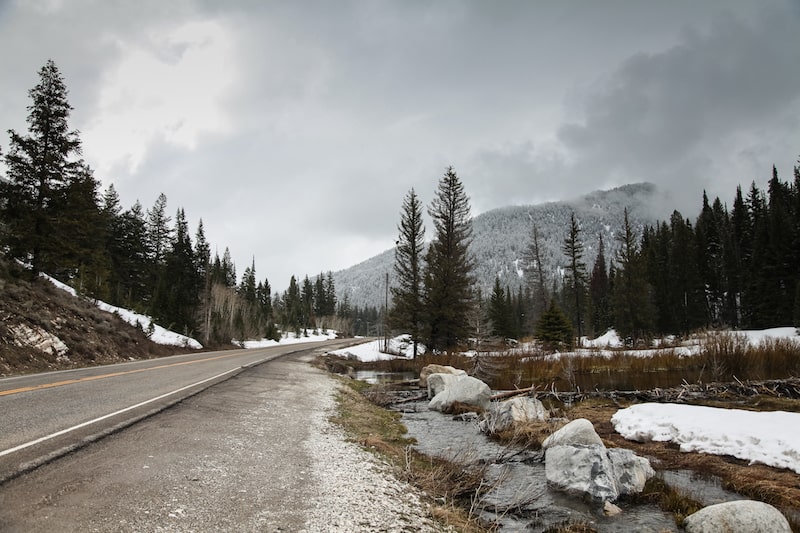
An unusually quiet moment on the road up Big Cottonwood Canyon. Photo by Dung Hoang.

Buy it or Lose it

C.W. Management would not respond to repeated requests for comment, but partner and developer Chris McCandless has been very frank in meetings with the CWC about the precious opportunity he could offer by utilizing his La Caille property as a transportation base.

In a December 1, 2020 meeting with the CWC, McCandless discussed the project and their personal stake in it.

“We’re big fans of Little Cottonwood Canyon,” McCandless said. “We spend a lot of time there and we’d love to see a solution before we can’t ski anymore.”

He also noted that they have a parking structure with an 1,800 stall capacity available and ready to be put to use. 

However, he also warned that his company’s financial stake meant that he would need to sell the property for it to be used as a transportation base. He noted that the company would be able to hold onto it only for a few years, and if they didn’t have a buyer, they would develop homes at the location instead.

That would mean passing on the rail opportunity, especially as UDOT has only advanced the La Caille rail alternative.

“If we put a bunch of houses on it,” McCandless said. “That opportunity is gone.”

Subscribe to Utah Stories weekly newsletter and get our stories directly to your inbox

* indicates required


nbsp;

, , ,

Join our newsletter.
Stay informed.


  • Utah Official’s $36K Travel Reimbursements Raise Questions About Use of Taxpayer Funds

    The trek into the office is a necessary evil for many employees; unpaid time that could be spent elsewhere. But some state employees are able to cash in on their commutes.

    That includes one member of Gov. Spencer Cox’s cabinet who heads the Utah Department of Cultural & Community Engagement. The department oversees a number of civic and social programs ranging from museums, libraries and the state historical society, to volunteerism efforts and multicultural affairs. 

    The employee’s in-state travel expenses made up a large chunk of the department’s employee reimbursements in recent years, according to documents obtained by The Utah Investigative Journalism Project obtained through a public records request. 

    The UIJP reviewed spreadsheets detailing the reimbursed expenses of the department’s 17-person leadership team over the 2024 and 2025 fiscal years. 

    The analysis showed one employee, Executive Director Donna Law, accounted for nearly a third of the team’s reimbursements in 2024 and 43% in 2025. Law, who lives in Cedar City, spent more than 11 times the average amount spent by all other employees included in the analysis. 

    The majority of Law’s expenses were categorized as in-state travel, which includes mileage and lodging. Between the two years, she spent $21,607.94 on lodging, $10,135.42  on auto mileage, and $1,455.00 in miscellaneous travel expenses and meals for a total of over $33,000. 

    The next highest amount spent on in-state travel was $3,385. Law’s overall spending far exceeded any other employee.

    The nearly $36,000 Law spent on travel and other items wasnearly three times that spent by the employee with the second highest amount in reimbursements. His expenses, in contrast, were largely out-of-state travel.

    Continue reading and support independent Utah journalism with a purchase of Utah Stories (Digital + Print) or 3 month free trial (Digital).


  • The $7 Million Recruit: How NIL Changed College Athletics Forever

    In 2012, Jabari Parker, a top high school prospect and member of the Church of Jesus Christ of Latter-day Saints, was facing his biggest decision to that point in his life: where to play college basketball. 

    Fans of BYU athletics hoped and perhaps prayed that Parker would pick the school owned by the church he was raised in. BYU was listed as one of his final choices. But he ultimately chose to spend his college years at Duke before attempting a career in the NBA. BYU fans were disappointed, but no one was truly surprised. Duke over BYU was the best choice for a young prospect in 2012. 

    A.J. Dybantsa.

    What changed between 2012 and 2024 when A.J. Dybantsa, the number one high school prospect, chose BYU over every other school? The answer is roughly $7 million dollars. That is what Dybantsa is reportedly making to play basketball at BYU. 

    The deal was supported by Utah Jazz owner Ryan Smith, who met multiple times with the Dybantsa family in multiple attempts to bring the young player to Provo. 

    According to Smith, he had no financial role in bringing Dybantsa to BYU, but the influence of Utah’s most famous billionaire acting as a “booster” or unofficial recruiter certainly swayed the decision.

    Prior to 2021, boosters acting as recruiters was taboo to the NCAA governing body. It was called improper recruiting. But in 2021, California began the modern era of NIL, or the ability of a college athlete to benefit from their name, image, or likeness, when they passed the “Fair Pay to Play Act.” 

    This new law gave college athletes in California the ability to benefit from their NIL, something that was banned in the rest of the country to that point. The NCAA saw that this law would create an unfair advantage for California schools that could now give young athletes the chance to make money off their talent and image while still in college. 

    The NCAA knew they needed to do something quickly, so they rushed through a policy that opened up NIL to all college athletes in the country, and it has been expanding and evolving over the last four years. 

    Grant Duff, who has coached at the University of Utah, Weber State University, and is now the defensive coordinator for Idaho State University, says, “The best part of NIL is that athletes have an opportunity to make good money. The downside comes with the free-for-all that money causes.”

    Dybantsa confers with BYU Head coach, Kevin Young.

    One of the biggest current examples of what a school can do when the boosters are willing to pay for success is Texas Tech University. From 2020-2024, Texas Tech had 34 wins, which works out to 6.8 wins per year with a low of 4 wins and high of 8. Then Texas Tech’s boosters got involved, led by Cody Campbell, an oil industry businessman and Chairman of the Texas Tech board. The football program was given 28 million dollars for NIL with a simple message attached to the large pile of money: Win. And win now. And win they did. 

    By signing NIL deals with athletes in the transfer portal, Texas Tech went from a middle-of-the-pack school in their conference to one of the top 12 teams in the country. They didn’t just win games in 2025, they made many of their opponents look like they didn’t belong on the same field, including the University of Utah and BYU twice. That is what money can buy.

    Continue reading and support independent Utah journalism with a purchase of Utah Stories (Digital + Print) or 3 month free trial (Digital).


  • Cottonwood Heights Corruption Allegations: A Case That Never Reached a Courtroom

    A year ago, we here at Utah Stories recorded a podcast episode that we never published. We were revisiting corruption allegations from ten years ago. We decided not to publish the video, so it sat there on YouTube for nearly 12 months.

    Then somehow the video was published. How? We are not sure, but once it got out there, the comments came pouring in.

    Dozens of viewers, then hundreds, supported the video with their comments on our examination of allegations of police misconduct in Cottonwood Heights. The video recounts how the Police Department was reported by business owners as focusing enforcement on customers of the former Canyon Inn bar. These allegations did not result in a publicly documented, full investigation by Utah’s Justice Department nor the FBI (at least to our knowledge). So why rehash the past?

    We believe the story of The Canyon Inn (and other area business owners) vs. CHPD and Cottonwood Heights Mayor Kelvin Cullimore raises questions about what can happen when allegations surface and do not move forward through a formal legal process with state or federal oversight.

    In 2012, Cottonwood Heights business owners at the mouth of the canyons began publicly objecting to police activity whereby up to seven cruisers were pulling over 711 and Canyon Inn bar customers on their busiest evenings.

    According to those accounts, drivers leaving the bar were frequently pulled over by police and were given DUI tickets, sometimes even after passing a sobriety examination. The volume and concentration of those stops led residents and business owners to complain about the “heavy-handed treatment” of CHPD toward motorists, especially in and around the Canyon Inn and neighboring 711, and eventually the Porcupine Pub.

    Customers responded in predictable ways. Some chose not to return and avoid the area. Others went to different establishments. Over time, the owner of the Canyon Inn, Jim Stojack, stated that his revenue declined by 70% and that he believed police activity near his business was the main contributing factor.

    Utah Stories reported on these concerns by conducting interviews; gathering video documentation provided by those involved; and making public records requests. Through our GRAMA requests, we reviewed DUI citations issued by the Cottonwood Heights Police Department and examined how those cases were resolved in Holladay Justice Court. During that period, we observed a higher number based on our review of DUI cases dismissed in court due to lack of evidence compared to other jurisdictions. One DUI attorney, Tyler Ayers, went on record saying that CHPD was issuing a high volume of DUI citations that were later dismissed.

    That observation raised questions about how cases were being documented and prosecuted. It did not, on its own, establish intent or misconduct, but it became part of a broader set of concerns raised by multiple sources.

    Continue reading and support independent Utah journalism with a purchase of Utah Stories (Digital + Print) or 3 month free trial (Digital).


  • The Stratos Project Was Already Approved. So Why the Public Meeting?

    Thousands showed up to protest. The decision may have already been made.

    When thousands of Box Elder County residents packed the fairgrounds to protest the proposed 40,000-acre Stratos data center, they thought they were confronting the people in charge.

    They weren’t.

    The county commissioners stood at the front of the room, absorbing the anger, the frustration, the disbelief. They looked like decision-makers. But by their own account, they weren’t.

    Because the decision may have already been made—long before the public ever showed up.

    The Illusion of Authority

    What happened at that meeting wasn’t civic engagement. It was something closer to theater.

    No meaningful public comment. No real debate. No clear path for residents to influence the outcome. Just a room full of people reacting to a project that, structurally, may already be locked in.

    Why?

    Because the real authority doesn’t sit with Box Elder County.

    It sits with the Utah Military Installation Development Authority.

    Once MIDA designates a project area, the rules change. Local zoning can become irrelevant. Private land stays private. Water rights remain private. And the role of local government shifts from decision-maker to facilitator.

    In plain terms: the county doesn’t decide if the project happens. It helps manage how it happens.

    So when residents showed up demanding answers, they were asking the wrong people.

    A Process That Skips the Public

    That should concern anyone paying attention.

    Because it flips the normal order of things. Instead of:

    Proposal → Public input → Decision

    We get:

    Decision → Public meeting → Reaction

    And by the time the public enters the room, the real levers of power have already been pulled.

    So what exactly was that meeting?

    If commissioners don’t have authority to stop the project, then the meeting wasn’t about deciding anything. It was about absorbing pressure. Managing optics. Creating the appearance of a process that had already moved on.

    That’s not transparency. That’s choreography.

    Follow the Missing Pieces