**This story was edited 10/14/2021 to include some of the results of our Reddit forum experiment (see bottom)
**This story was edited 10/13/2021 to include an example of bothsiderism, and to correct a few errors.
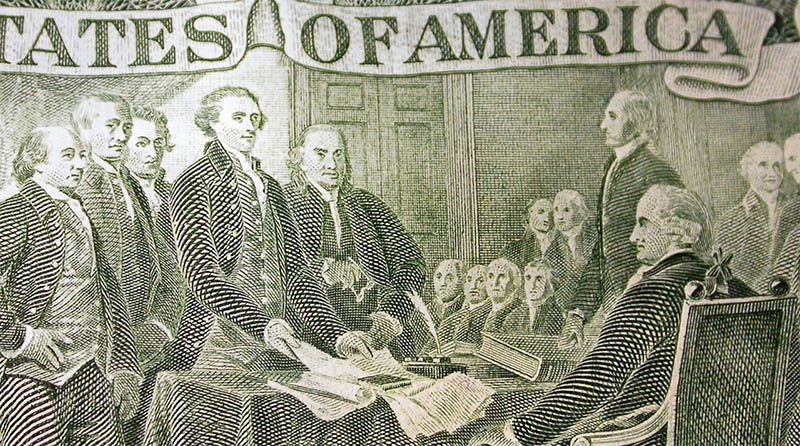
Our founding fathers came from extremely diverse backgrounds, economies, and political beliefs, yet they were able to assemble a Constitutional Convention and wrap the Colonies in a set of ideals that bound us together in a common Constitution. This motley alliance enabled the United States to have just enough federal power to protect the young nation against adversaries but also usher in the greatest amount of freedom humans have ever enjoyed.
Today it appears that most people who strongly identify with their political parties are unable to speak with the opposing side and those with oppositional points of view.
Utah Stories is now engaging the Reddit users to consider both sides to the vaccine passport debate, which we covered in a previous episode of the program. We will not get into the nature of that debate in this article or episode but instead, take a step back in examining how our public discourse and spirited debate have eroded in the United States both on the local and national levels. How is it that those who are of different political persuasions can no longer speak?
Our concern is not so much that they aren’t speaking but they have so much disdain and hatred for each other. This was demonstrated when demonstrators descended on a local restaurant The Bayou, whose ownership supports vaccine passports. Is there any historical precedent for this? And what are the root causes of this extreme tribalism and mob mentality?
A Lack of Diversity of Thought
Why at this moment in history are we finding less tolerance for diversity of ideas and opinions than ever before? Why are we finding that on college campuses groups fighting to shut down speakers who they oppose? And why do so many people on opposing political sides believe that the members of the opposite party are simply ignorant or stupid.
We have covered in a previous episode how the rise of social media certainly has a lot to do with the growing sentiments of intolerance for political ideas. “Filter bubbles” allow users of Twitter and Facebook to have the most hyperbolic posts, along with their own opinions delivered to their feeds. The algorithm works this way because social media companies realize it’s these emotionally charged posts that glue readers to the platforms. But a fairly new best-selling book provides compelling evidence that our climate of growing intolerance for differing ideas and opinions is rooted in Universities.
“The Coddling of the American Mind” by Greg Lukianoff and Jonathan Haidt points out how iGen students in college today have not been taught not to honor and respect opposing points of view, but instead they need to seek out and find examples of racism, bigotry, homophobia, xenophobia and transphobia and silence or mob professors, students or speakers who might have values that run contrary to “inclusiveness”.
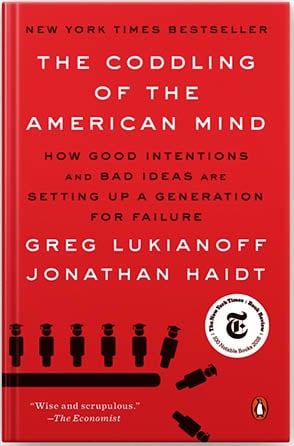
Furthermore, a spirit of open debate and discussion is no longer a major component of college campuses, but rather the rise of “safetyism” has taken over. Where administrators are providing means for students to never need suffer hearing about ideologies that might threaten their world views. Students have labeled the condemnation of their ideas as “micro-aggressions” and they are beginning to equate speech with violence. Administrators across the nation are further coddling students by creating “safe environments” where they cannot be exposed to ideas that might be labeled as “toxic” or more recently “Trumpist”. Furthermore administrators are firing teachers who students believe might not “inclusive” to popular ideology such as LGBTQ and trans-rights, and the use of proper pro-nouns applied to trans-students. Brett Wienstien was forced to resign from Evergreen State College in Oregon, after a mob of students claimed he was a racist. The school administrators did little to defend Wienstein, but placated the students who mobbed and attacked Wienstien.
Lukianoff and Haidt point out that by professors encouraging the dismissal or complete rejection of oppositional points of view create a myopic view of the world. By not allowing students to have their world-views or political ideologies challenged, the Universities are not producing graduates fit for the harsh realities of the workplace. Instead, Universities are fostering the world view of popular SJWs creating an “Us vs. Them” mindset, where around half of the citizens of the United States are among “the basket of deplorables”. (as Hillary Clinton stated in the 2016 presidential election).
This also is causing those who are involved in the public discourse to adopt and “safetyism” approach to debate and work to find those who should be canceled believing that “cancel culture” is a great thing, whereby those with differing points of view are silenced. We found in our Reddit experiment that most of the people who participated in commenting were defending “cancel culture” and most believed that it was a positive trend, and had historical president and that it wasn’t exclusively a left-wind phenomenon.
Could An American Civil War or “Peaceful Divorce” Be Coming?
Those who are most heavily involved in the culture wars are actually calling for a “peaceful divorce” if not an all-out Civil War to divide our country. This is a ridiculous assertion, and would certainly make the United States a fallen empire, unable to manage the rising threats from Russian, China and the Middle East that will inevitably challenge our freedom.
WATCH THE PODCAST
In this episode, we also examine a term called “bothsiderism” which is a growing sentiment on the left that believes that some arguments are “pointless” and by examining the opposing points of view readers are giving credence to wrong thinking.
The state of our nation and the state of our president have all but passed the point of rescue, but the press, in misguided pursuit of objectivity and led by the New York Times, still “bothsides” its coverage. Make no mistake: This too is bias, and though it’s not nearly as corrosive to democracy as the Trump administration, it distorts and accelerates that corrosion—all in the name of neutrality, no less.
— Roger Sollenberger, Paste, 27 Dec. 2018
Examining various points of view is what makes ideas and values grow stronger. Strength is derived by being challenged in our belief systems and in life, by coddling our children and teaching them that the opposition to their values is deplorable people or “Trumpists”, we are setting the stage for an authoritarian government to be established with the abolishment of free speech.
Believe we are wrong? We would love to hear from you.
Thanks to our sponsors of the show:
Wasatch Brewery: Celebrating their 35th-year anniversary
Subscribe to Utah Stories weekly newsletter and get our stories directly to your inbox