
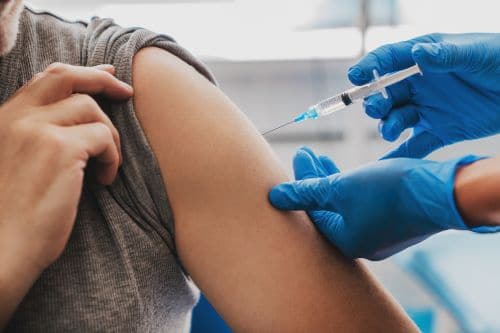

LDS Church President Russell Nelson, is encouraging church members to get vaccinated but nearly 20% say they will not. Another 15% of Utahns say they are hesitant. Utah has recently had 2,634 deaths reported from Covid and over 20,000 hospitalizations.
Utahns have a greater distrust of the media and the CDC than other states. Utah is highly conservative, and Church members have had a history of being highly skeptical of federal government power and intrusiveness for generations dating back to the Mormon Pioneers. This has led to many Utahns believing that alternative therapies might be a better answer than vaccinations promoted by the head of the CDC Anthony Fauci.
Therapies such as hydroxychloroquine, Ivermectin, and Remdesivir have all been labeled by many in the left-leaning press as “quackery.” Especially when these alternative therapies were promoted by former President Donald Trump. But with more doctors promoting the usage of Ivermectin, there are more Utahns attempting to get preventative care, even if it means using the drugs intended to deworm horses and cows.
What About Ivermectin?
There is a widespread theory, now promoted by Senator Rand Paul, that a drug to treat parasites and head lice in humans called Ivermectin is being suppressed because it is so effective in preventing COVID-19.
Is this true?
A large study about the effectiveness of Ivermectin was started in April then cancelled due to what researchers were calling widespread confirmation bias. There has been no conclusive evidence that Ivermectin is more effective than a placebo in treating Covid. Still many doctors swear by its effectiveness and prescriptions have now become hard to come by resulting in some Utahns using Ivermectin intended for animals for themselves (which has caused some problems).
The Heart of the Covid Vaccination Debate
The crux of the issue is how we choose to live with Covid-19 and all of its future variants in the best interest of public safety as well as personal liberty? This debate boils down to how much government control we wish to allow into our lives.
There are two questions, and unfortunately, it seems our country is completely divided along political lines regarding Covid mandate policy. The issue is do we impose and enforce vaccine passports? Or can we allow individuals to decide for themselves?
The Vaccine Passport Debate
Vaccine passports according to those who want them, would keep the vaccinated safe from the careless unvaccinated, who are the main cause of the virus spreading. Vaccine passports according to those who oppose them, are new draconian laws and “big brother” taking another step toward authoritarianism, where we remove our privacy and personal liberty in the interest of allowing big pharma and the government to take control over our health and our privacy.
Is this the role of the government to impose on citizens a mandate for vaccines and future booster shots? Or should this be a person’s individual choice and responsibility to decide for themselves?
The Conservative/Libertarian Argument Against Vaccine Passports And Government Mandates for Vaccines
Utah is a highly conservative state. Utahns not only have a deep-seeded distrust of federal government power, but many Utahns also don’t trust big corporate powers such as big pharma. Conservatives and Libertarians believe that there is nothing that big pharma would like more than to have the government mandate that everyone gets a vaccine and that subsequent “booster” shots are made mandatory.
The problem with this is that we are trading personal liberty for safety. Benjamin Franklin said that “Those who would give up essential Liberty, to purchase a little temporary Safety, deserve neither Liberty nor Safety.” Franklin said this before vaccines or before cell phones or technology, but his greater point is that if we consider our liberty so cheap, that if we are willing to sacrifice it and handing it over to the government and big pharma — Then we no longer understand the cost so many paid to get it in the first place, and we don’t then deserve it.
The Liberal Argument For Vaccine Passports And Government Mandates for Vaccines
If we examine the argument on the Liberal side, we find that those who have been vaccinated and know that they can still get infected, believe that everyone that isn’t being vaccinated is essentially harming everyone who is complying and getting vaccinated. This argument is essentially that personal liberty can only remain personal if they remain away from the public.
The left-leaning argument is that when a person goes out into public, and there is a possibility of infecting other people with a deadly virus, then this person should no longer have the liberty to spread the virus to the rest of the public. This argument makes sense at face value.
The Nuance of the Argument
I can see their point, but there is a lot of nuance to this position and a ton of grey area. I’ll just point out the most obvious.
First, if someone is imuno-compromised, meaning that they cannot take vaccines because they have a weak immune system, should these people then be banned from going out in public?
Second, if someone has already been infected with Covid, and estimates are currently at 2 out of every 3 people have already been infected with Covid; and they are healthy otherwise, then they have the antibodies to fight the infection. Then why should this person be getting a vaccine that could be more harmful than good for their body? See the spike protein problem with those who have been young and healthy and have faced complications from vaccinations.
Third, How is the government going to possibly mandate that small restaurants check every customer who walks in their door, when restaurants are so short-staffed already? Are they going to go around penalizing small ma-and-pa restaurants who aren’t properly checking with sting operations?
Also, what is going to make anyone who is checking these passports believe that someone didn’t just download a fake passport?
The Extremely Slippery Slope of Vaccine Passports
Now, this is where the slope gets especially slippery because the only real way the government can mandate this is by maintaining a database and by checking digitally. This way everyone who walks into a bar or restaurant will need to be scanned, then potentially our medical records are no longer private but public. Then we have a class system based on our immunological records and our compliance with the government and big pharma. This is where we essentially trade in our freedom and get a new form of digital authoritarianism.
Digital Drivers Licenses
Utah is one of just seven states that has already signed up for a new concept called digital drivers licenses. This will enable everyone’s drivers licenses to be connected to a database to track all sorts of things. Vaccinations could just be one out of many entries in the database. The extent of what information digital drivers licenses will track is still undetermined at this point, but unfortunately, this gives everyone who is opposed to vaccine passports additional fodder for conspiracy theories (which might be true or false).
Subscribe to Utah Stories weekly newsletter and get our stories directly to your inbox