Over the past eight months, small businesses and restaurants have struggled to survive restrictions established to confine the spread of Covid-19.
Some have shut their doors for good, among them Kaffe Mercantile’s downtown location at 2276 Washington Blvd. The popular coffee bar still operates two other cozy sites at 1221 26th St. on Ogden’s east bench and 930 Chambers St. in South Ogden.
On its website, Kaffe Mercantile thanked its downtown customers for their 2.5 years of support, explaining that decreased sales during COVID-19 made it hard to pay their lease.
After 11 years on Historic 25th Street, Making Scents Emporium announced at the end of October that they were closing their doors for good. Other permanent shutdowns include the Village Inn in South Ogden and Carriage Cleaners at 3205 Harrison Blvd.
Alignable, a small business network, recently noted that 35 percent of small business owners could not pay December’s rent. Alignable noted the industry’s hardest hit in 2020: restaurants and bars, beauty salons and barbers, travel and lodging, and fitness and gyms.
But many small businesses managed to hang on amid increased restrictions, scrambling to innovate and adapt.
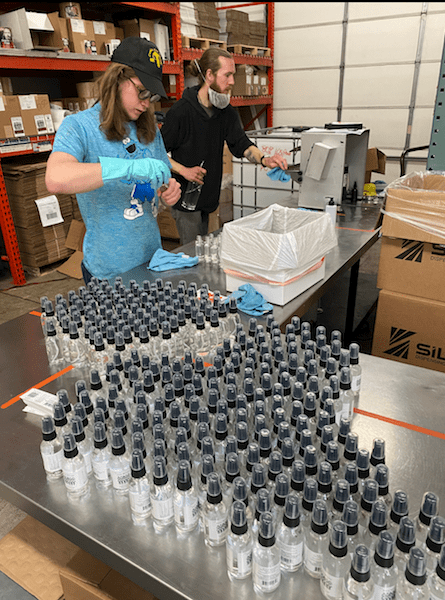
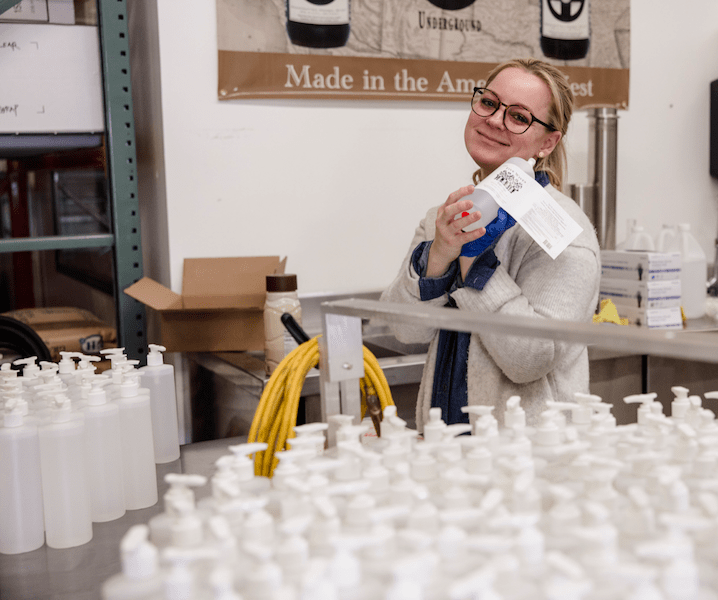
Early on, Steve Conlin — CEO of Ogden’s Own Distillery — seized the opportunity to help the community fight back against the pandemic. In mid-March, he received a Federal notice that his small company could manufacture hand sanitizer, a product suddenly in high demand.
“We thought, can we do this and should we do it? The answer to both was yes, so we sprang into action,” Conlin said.
Within a few days, their shelves were stocked with hand sanitizer and people lined up outside to purchase some. It didn’t hurt that bottles bore the same Five Wives label as their handcrafted vodka, poking fun at Utah’s polygamous roots.
As COVID-19 ravaged the Navajo Nation, Conlin said he donated and delivered almost 1,800 gallons of hand sanitizer to their doorstep, and then gathered donations to transport another round.
“It’s great to be part of a community,” Conlin said, “and to be able to engage the community where help is needed.”
Ogden’s Own also had to switch up the way it advertised.
“We’d been going to events and festivals — all these things where people gathered, and obviously there’s no gathering happening,” Conlin said of their preference to directly engage consumers. “So we’re running more traditional advertising through the holiday season featuring billboards, radio advertising and that kind of stuff.”
For now, Conlin focuses on keeping his 15 employees safe, which means continuing to avoid the temptation to mass-gather. Fortunately, he said that growth in Ogden’s Own sales remains on par with previous years at 25 to 30 percent.
“We’re cautiously optimistic and look forward to the day things normalize,” Conlin said, “but we know there’s a long four to six months to go still.”
Restaurants have been especially hard hit with the loss of full-occupancy inside dining.
Utah Restaurant Association President Melva Sine cited a recent national report that said 37 percent of Utah operators doubt if they can still be in business six months from now without additional federal and state aid.
“If we don’t provide relief to restaurant owners and operators, there are no jobs for these people to go back to,” Sine warned. “Nobody can pick up that number of employees.”

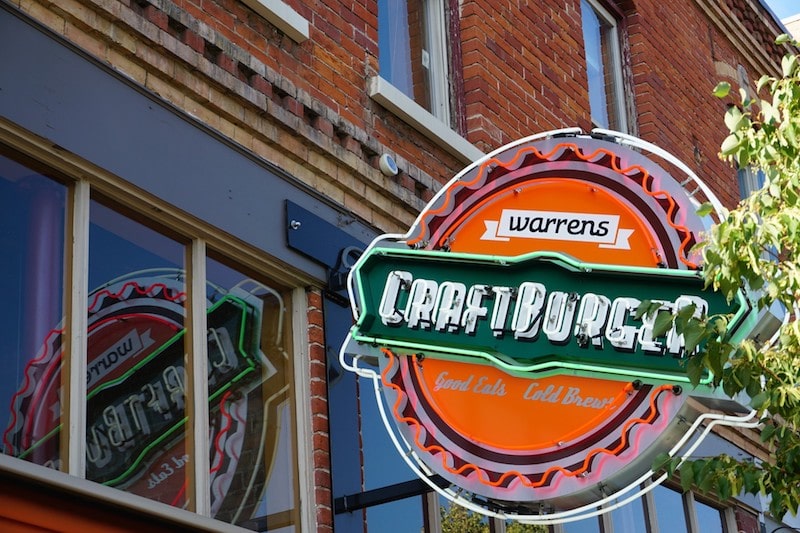
Kirk Dean owns Warren’s and Dylan’s Drive-Ins along with the more upscale Warren’s Craft Burgers on Ogden’s Historic 25th Street. With curbside and online ordering, he and his wife Leigh were able to retain their two dozen Craft Burger employees, in part because their drive-in patronage remains somewhat steady.
“We’re not even close to breaking even at that (25th Street) location, but we’re able to subsidize it and keep it going,” Dean said.
The Deans also tapped into the notion that consumers might appreciate family-style meals in addition to their regular menu. Their Facebook page, lists five such options that come with salad and cookies for dessert.
By offering affordable dishes to take home and serve up around the table, Dean said “that might be a great alternative to fast food dining.”
While not a big moneymaker, Dean said these options have been well-received: “We’ve got a lot of great feedback, and I think we gained some loyal customers.”
Nevertheless, COVID-19 continues to rage, and Dean said that almost every day an employee calls to say they can’t work because of testing positive or having been in contact with someone who did.
“It will be next year before we get back to normal,” Dean said.
Kim Bowsher, who heads up the nonprofit Ogden Downtown Alliance, noted that businesses that “hybridized” their sales model seemed to fare better. But restaurant to restaurant and retailer to retailer, the numbers vary.
“It really is all over the board,” Bowsher said.
Cathy McKitrick is a retired journalist turned freelancer. She can be reached at catmckit@gmail.com.

Subscribe to Utah Stories weekly newsletter and get our stories directly to your inbox