I’m taking this week off from writing about takeout and curbside restaurant meals since I actually ventured to a restaurant to dine in-house for the first time in more than three months. Ironically, the restaurant I chose to visit this week happens to also be one of the last I wrote about before the pandemic hit and local restaurants closed.
The restaurant is Nohm. There are a couple reasons for my choice. I have to admit that I’m still not too keen on dining in restaurants right now. However, Nohm has both outdoor and indoor dining. They require masks to be worn until customers are seated and the staff wears masks. Reservations are necessary – no walk-ins. They took our temperatures before seating us. And importantly, Nohm is a large restaurant with tables already spaced far apart. Finally, how could I resist a multi-course omakase-style meal cooked and served (yes, he’s a waiter now too) by talented owner/chef David Chon, priced at a mere $35 per person. The price, I noticed, has risen to $45 per person this week – perhaps because we told him he wasn’t charging enough. This meal deal is still a steal at $45. In the “real” world – that world of busy, successful restaurants that existed a few months ago – I think that Mr. Chon could easily charge $65-$80 for his generously portioned, flawlessly executed omakase meals. Enjoy this value while you can.
To be frank, business has been slow at Nohm during the pandemic and it didn’t make sense for Chon to offer his entire a la carte menu. So for now, he’s doing these multiple course tastings – which is a slam-dunk win for customers. There is no better dining bargain to be found that I’m aware of. When my wife and I dined on Saturday night there was so much food and so many courses that I couldn’t eat all of every dish. Here’s how the evening went, and why I’m writing about Nohm for the second time in four months.
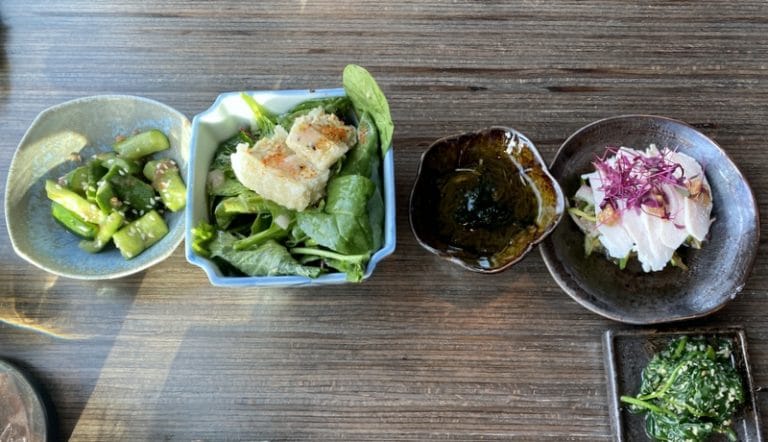
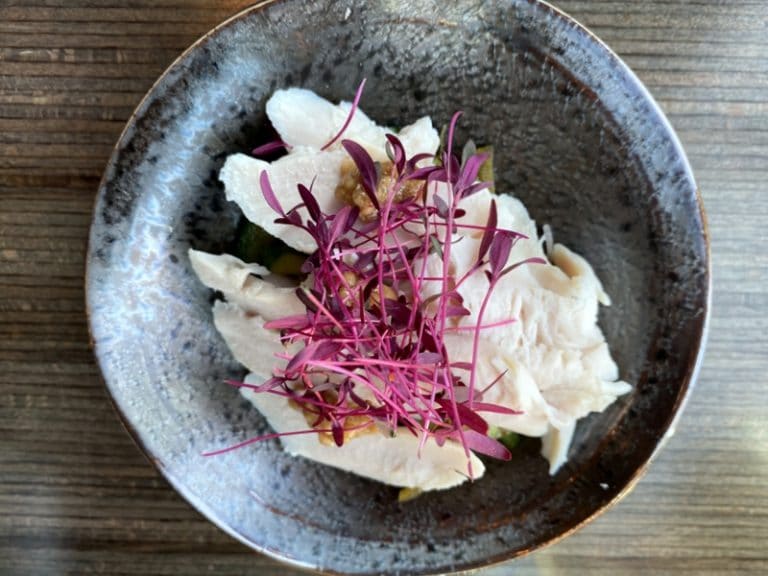
Our meal began with tasting portions – some pretty large – of five different salads. Yes, five. Included was fresh greens with a sesame oil dressing and sesame seeds, a seaweed salad, fried tofu on a bed of greens (the tofu is made from scratch in-house from soy and mung beans), pickled cucumber with sesame, and poached, thinly-sliced oh-so tender chicken tenderloin salad. That’s five plates of food just for the first course. Oh, and it’s five plates per person, not shared.
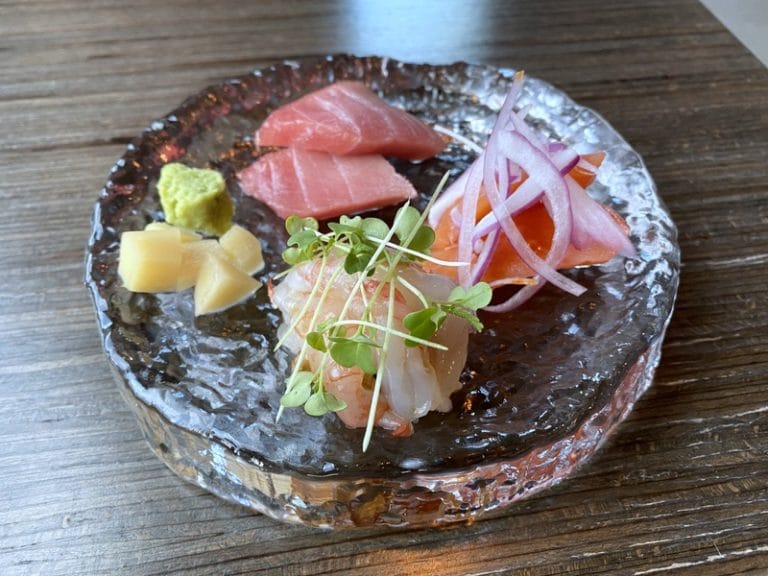
Up next was a gorgeous sashimi assortment served with fresh ginger and wasabi. Included in the sashimi (raw fish) was red trout, blue-fin tuna, and shrimp slices that concealed a cooked, crunchy and delicious shrimp head underneath. Again, my wife and I each got our own plate of sashimi as part of the meal. That sashimi combo alone would cost $15 to $20 in most sushi restaurants.

As I mentioned when I reviewed Nohm earlier in the year, the restaurant specializes in yakitori. And, you know that David Chon and his kitchen staff is serious about yakitori when you learn that he uses very expensive Japanese charcoal called binchō-tan, which burns at a very high temperature.
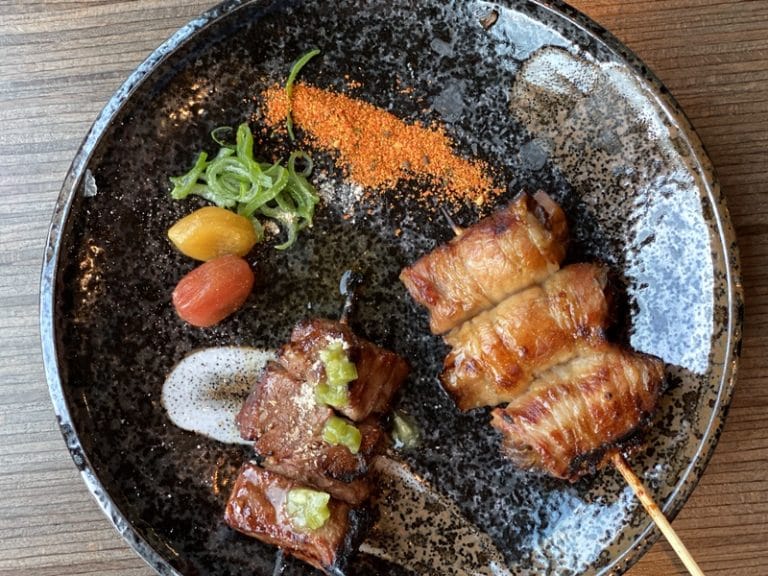
The third course for the evening was a yakitori plate featuring a grilled melt-in-the-mouth beef ribeye skewer and pork belly-wrapped maitake mushroom – simply delicious
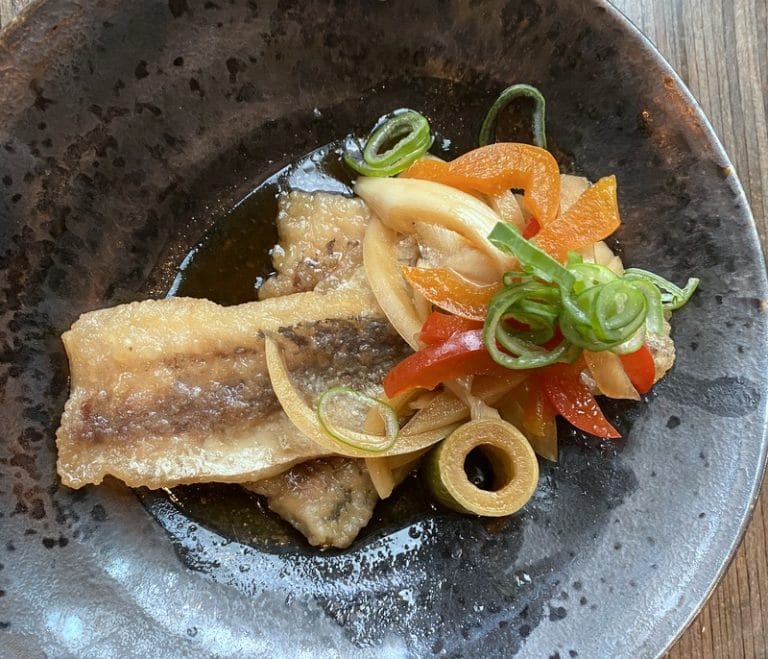
Who doesn’t love a good fish fry? I guarantee you will love Chon’s fried horse mackerel with pickled veggies if it’s on the omakase menu when you visit Nohm. It’s outstanding.
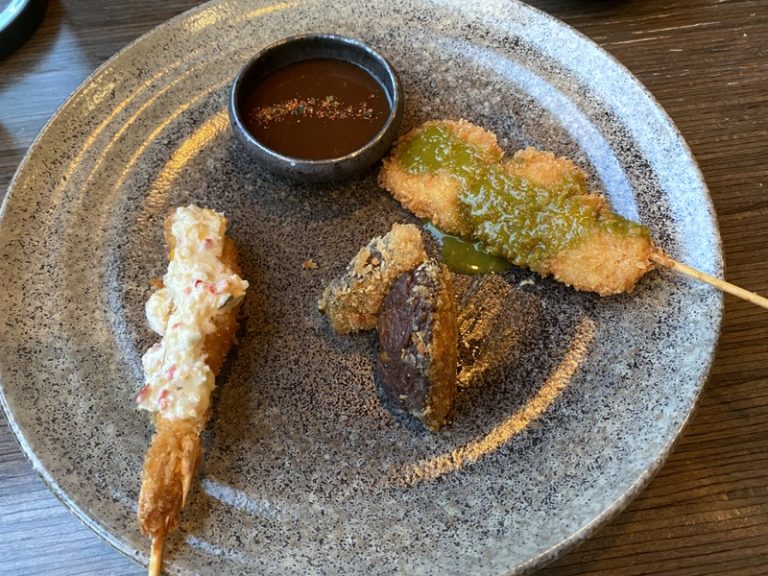
At this point during dinner, having already eaten most of the seven dishes that had already been put in front of me, I was about to surrender. But then, reminding myself that I’m a professional eater, I put away the white flag and boldly ventured on. The final course of the omakase meal was an assortment of panko-fried skewers. Included was tender shrimp with heavenly homemade tartar sauce, battered and fried shiitake mushrooms, and fried sea scallops – all served with a rich homemade katsu sauce for dipping.
It’s a real bummer that Nohm opened just weeks before the pandemic closed down local restaurants. It’s one of Utah’s finest dining destinations and I urge you to support it. The food is freaking great and the ambiance and service is outstanding as well. And, if you’d prefer not to dine-in, Nohm also offers a curbside pickup menu featuring items such as chicken katsu, spicy pork belly, rice cakes, pan-fried udon, blue fin tataki, kimchi fried rice, and kushiage mori. Trust me on this, you’re going to love Nohm.
Culinary quote of the week:
“Never go to sleep when your meat is on the fire.” — Pueblo Indian Proverb
*All photos by Ted Scheffler
FOR MORE RESTAURANT REVIEWS GO HERE.
THIS CONTENT IS FROM UTAH BITES NEWSLETTER.
CLICK HERE AND RECEIVE WEEKLY RESTAURANT REVIEWS, TED’S FAVORITE RECIPE, AND DRINK OF THE WEEK.
 Originally trained as an anthropologist, Ted Scheffler is a seasoned food, wine & travel writer based in Utah. He loves cooking, skiing, and spends an inordinate amount of time tending to his ever-growing herd of guitars and amplifiers.
SUPPORT OUR SPONSORS: click on their logos to visit their website
[envira-gallery slug=”food-logos”]