Warriors on Cataract takes veterans onto the Colorado to heal
Warriors on Cataract exists as a nonprofit organization working to get underserved populations out into the Moab wilderness, including those who need help healing from the trauma of having served in the military.
They focus on conducting four-day river trips for veterans who struggle with any sort of trauma resulting from their time in the military. This trauma may include PTSD, physical injuries, and sexual violence.
The river trips traverse 96 miles through the Colorado River corridor between Moab and Lake Powell, with plenty of hiking and campfire time along the way. There is also yoga and meditation.
Daniel Dustin is a Vietnam veteran and professor of parks, recreation, and tourism at the University of Utah. He wrote a journal article for the River Management Society describing the ways Warriors on Cataract helps veterans to heal from their experiences in the military.
Dustin wrote, “In the absence of a clearly defined ‘just war,’ soldiers find meaning in living and dying for each other … Problems arise when soldiers return from war, their tribe disbanded, and are left alone to fend for themselves. Such a homecoming often results in social isolation, a sense of anomie, and disenfranchisement from the larger society. What emerged on the Cataract Canyon river trip, especially among the Marines from the 2nd Battalion, was a countervailing force, a reconstitution of the tribe …”
From an interview, he said, “There’s an incredible sense of brotherhood and sisterhood, of feeling like they’re back in a community that can listen to one another, understand one another’s issues related to their military experience.”
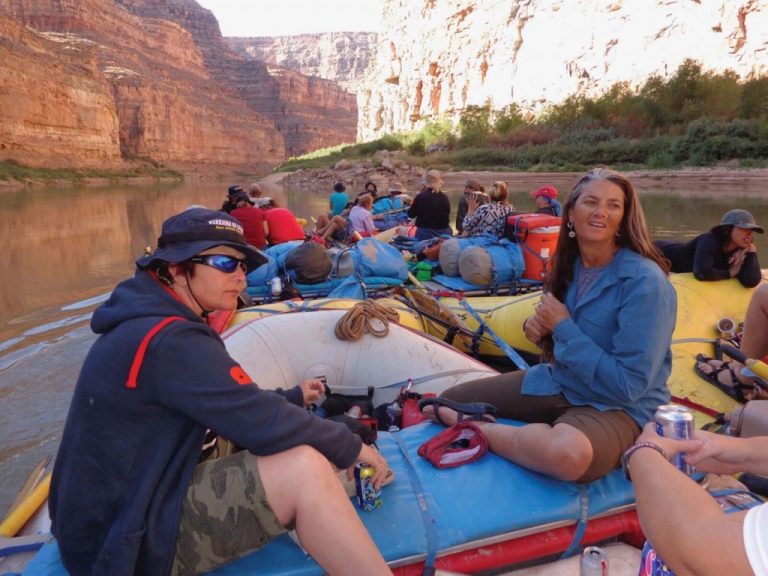
Warriors on Cataract provides its tribal river trips for approximately 100 veterans per year
This includes two or three men’s and/or co-ed trips in the spring and one or two women’s trips in the fall.
The nonprofit began this work in 2011. Its founder, Colorado based Frederick Solheim, does most of the management of the nonprofit himself. Warriors currently has no paid staff, though with sufficient funding, Solheim would be interested in changing that in the future to expand capacity to significantly more than 100 veterans per year.
The above mentioned 2nd Battalion, 7th Marines regiment, has had particular difficulty with suicide for veterans re-entering civilian society.
From a 2015 New York Times article written by Dave Philipps: “The men of the 2/7 overwhelmingly see a tie between combat and their suicide problem. Not only were all of the men who committed suicide young infantrymen who struggled with experiences of killing and loss, they say, but it is possible to trace one traumatic moment forward and see how those involved are now struggling. During eight months of combat [in 2008], the unit killed hundreds of enemy fighters and suffered more casualties than any other Marine battalion that year.”
Warriors on Cataract makes an effort to reunite soldiers from particular units, such as the 2/7, for its river trips. Keith Branch, a veteran of the 2/7 and participant in Warriors on Cataract, spoke about his experience with the nonprofit in a recent video. “Since then,” he says, “we’re approaching 30 suicides since 2008 from just my unit alone (with 1200 soldiers in the unit). When I got out, I struggled. I did not have the support system that I had in the military, nor the lifestyle, or the brotherhood—everything that makes Marines Marines, and service people service people. I believe in the healing powers of the river and the canyons … I can say for certain that every single trip saves lives.”
Warriors on Cataract receives funding from a variety of sponsors including anonymous individuals, aerospace companies, other veterans, the Rotary Club, and the Grand Canyon River Runners Association. Local real estate baron Mike Bynum and his son Zach provide motels at a quarter of the market rate. Local guide companies provide their services at reduced rates. The Moab Elks and VFW provide dinner and shuttling services free to the veteran participants.
Click HERE to read about another program designed to help struggling veterans.