Utah Stories

Discover Hidden Gem Eateries in Salt Lake

Discover a new restaurant that may be hiding right under your news and have a new taste experience.

|


We all hear about the popular restaurants. We all know of the top-of-the-town restaurants that everyone “must visit.” But lesser-known places, with exceptional food and atmosphere are the places we tend to associate with road-trip memories. These are the places in and around Salt Lake that are perfect for folks new to town—they are our local hole-in-the walls.
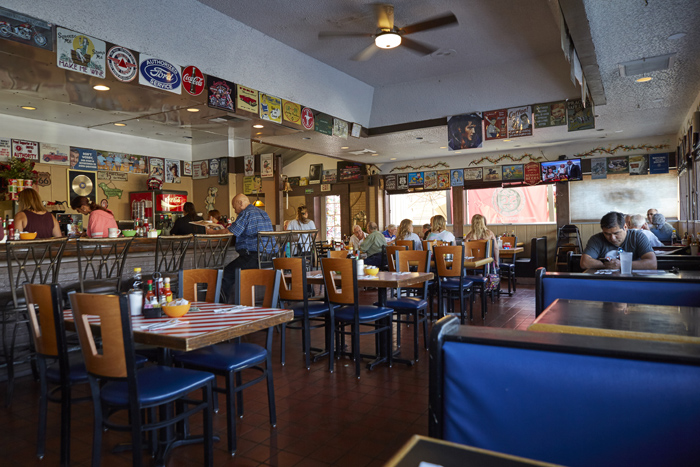
Sharon’s Cafe. Photos by Steven Vargo.

Sharon’s Café

If you were to find a travel guide highlighting local eats, this would be at the top of the list. Sharon’s, open only for breakfast and lunch, is the place where everybody knows your name. No matter what time you go in, everyone is relaxed, enjoying life, and is in no hurry to be anywhere else. The food is equally as welcoming, yet simple and delicious—with breakfast classics such as skillets, omelets, pancakes, and waffles.

The lunch menu offers sandwiches, burgers, soups, and salads. This is not a place just to get a meal and move on, it will become part of your regular routine.

2263 Murray Holladay Road, Salt Lake City


Siam Orchid

Some of the best restaurants can be found in obscure locations; in this case, a strip mall next to a Smith’s. Siam Orchid has an eclectic, delicious, and inexpensive lunch menu. The lunch combo includes your choice of two dishes—curries, soups, salads, pork, and tofu. There are also single-dish items such as pad thai, pad see-eiw, and drunken noodles. But the gem of the menu is the noodle lunch option: pick your noodles—egg, flat rice, or thin rice; your broth—naam, hang (which is actually no broth), or tom yum (spicy and addictive); and then your meat.

This is an unpretentious place where the experience, food, and prices leave you in happy disbelief. The owner took over a failing restaurant a few years ago, and turned it into this thriving eatery.

*Siam Orchid closes at 3pm*
4410 S. 900 E., Salt Lake City

La-Cai Noodle House

The words “almost hidden” and “State Street” don’t go together too often. But just try to find this little gem as you head toward downtown while still paying attention to the road. Once you do, it will definitely be worth it.

The menu here is large, authentic, and incredibly satisfying—they were serving Pho long before it was the trendy dish it has now become; try both the Pho Rare Beef and Brisket and Meatballs. Come back weekly until you’ve also had the Spicy Beef Sate Noodle Soup, Bun-Vermicelli with Grilled Pork & Eggroll, Flat Rice Noodles with Seafood, and add some crab rangoon as an appetizer.

I have never seen an advertisement for La-Cai and now I know why: their food is the only promotion they will ever need.

*La-Cai Noodle House closes from 3pm to 4:30pm on weekdays and reopens for dinner until 9:30pm. Friday and Saturday hours are 11am to 9:30pm. Closed Sundays.*
961 S. State Street Salt Lake City
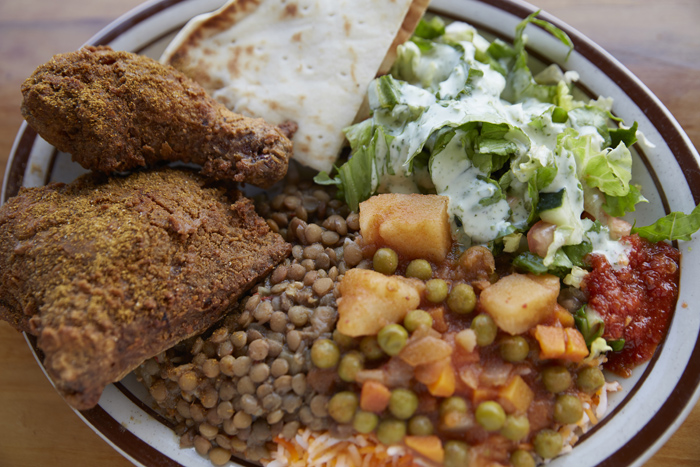
Curry Fried Chicken.

Curry Fried Chicken

Tucked into a little space on State Street, just north of downtown is a restaurant with an exotic flair in their food and a laid-back vibe. Curry Fried Chicken took an American classic—fried chicken—and uncovered an acre of diamonds. The sizzling chicken has batter infused with Indian spices and is deep fried to achieve extra crispiness. If you order the Curry Fried Chicken Plate, it comes with rice, naan, lentils, and salad.

They also offer a Tandoori Chicken Plate, kebabs, and Shwarma Plates. Sitting at the counter allows you to watch the preparation—thus enhancing the experience. This fusion of American and Indian cuisine and culture will leave your mouth watering and your soul rejuvenated.

660 S. State Street, Salt Lake City



,

Join our newsletter.
Stay informed.


  • Whiskey, Bullets & a Buried Town: Archaeologists Reveal Alta’s Wild Past

    Before Alta was known for powder days and lift lines, it was a silver mining town clinging to the side of a narrow canyon. In the late 1800s, men lived at 8,000 feet, went underground each day, and endured winters that regularly buried buildings in snow. This past summer, that mining town resurfaced — literally — during construction at the Alta Ski Area.

    To understand what Alta really looked like, you don’t begin with legend. You begin with its trash — and this time, that happened almost by accident.

    Alta Ski Area was installing underground water reservoirs to support snowmaking. Because the project sits on Uinta-Wasatch-Cache National Forest land, an archaeologist was required to monitor the excavation. No one expected the trench to produce much.

    But, It did.

    Artifacts began surfacing almost immediately. Enough that the Forest Service contacted the Utah State Historic Preservation Office for help. Lexi Little, who coordinates the Utah Cultural Site Stewardship Program, helped mobilize nearly 30 volunteers to assist with what quickly became a focused two-week excavation.

    Winter deadlines were approaching. The pipes for the reservoirs had to go in the ground. There wasn’t time for a slow, extended dig.

    “It was two weeks of digging in the dirt and helping figure out exactly what we were looking at,” Little said.

    Most of the people screening soil weren’t professional archaeologists. They were trained stewards from around Utah — part of a statewide volunteer network that now approaches 500 people. They poured dirt through shaker screens, scanning for fragments that could piece together a town long buried.

    “Archaeology is human trash,” Little explained. “Archaeologists are very into trash.”

    Alta had left plenty behind.

    https://youtu.be/hzIHzx3OGoo?si=dKcl2CEz-t6FZzYw

    Victorian-style ceramics appeared first — the kind typically used in hotels. Medicine bottles followed. Ink bottles. Hand-blown glass. A porcelain doll’s foot surfaced from the soil, a small detail that shifted the mental image of the town. Families were here. Children were here. This wasn’t only a camp of miners.

    The bottles helped establish time. Manufacturing details — whether glass was hand-blown or mold-made, whether a maker’s mark appeared on the base — allowed archaeologists to date many of the artifacts to the 1870s through the 1890s, when Alta was booming as a silver mining town.

    “That gives you that range of dates for when Alta was really booming,” Little said.

    One reusable soda bottle clearly stamped “Salt Lake City” connected the canyon to the valley economy below.

    Then something unusual rolled out of a dirt pile.

    A corked bottle. Intact. Liquid still inside.

    Continue reading and support independent Utah journalism with a purchase of Utah Stories (Digital + Print) or 3 month free trial (Digital).


  • How Horses Help Kids Heal: Inside Utah’s Equine Therapy World

    Kelty Johnson trains horses for a living, but her deeper work happens in the quiet space between animal and human. On the Utah Stories podcast, she explains how equine therapy helps children regulate emotions, build confidence, and reconnect through presence rather than pressure.


  • Angela Brown: The Woman Behind SLUG Magazine and Craft Lake City

    Angela Brown is the publisher and owner of SLUG Magazine, one of the city’s longest-running independent publications and a central voice in Utah’s alternative arts and music scene. She is also the founder of Craft Lake City, a nonprofit that has grown into one of the state’s largest platforms for local makers and creative entrepreneurs.


  • Can Utahns Still Afford to Have Kids?

    When families cannot afford homes near their jobs, the daily math becomes brutal. Commutes stretch longer. Childcare costs pile up. Mortgages consume more of a household’s income. The result is what economists call “house-poor” families—people who technically own a home but have almost nothing left over to live on.

    The obvious question is: why isn’t this being fixed?