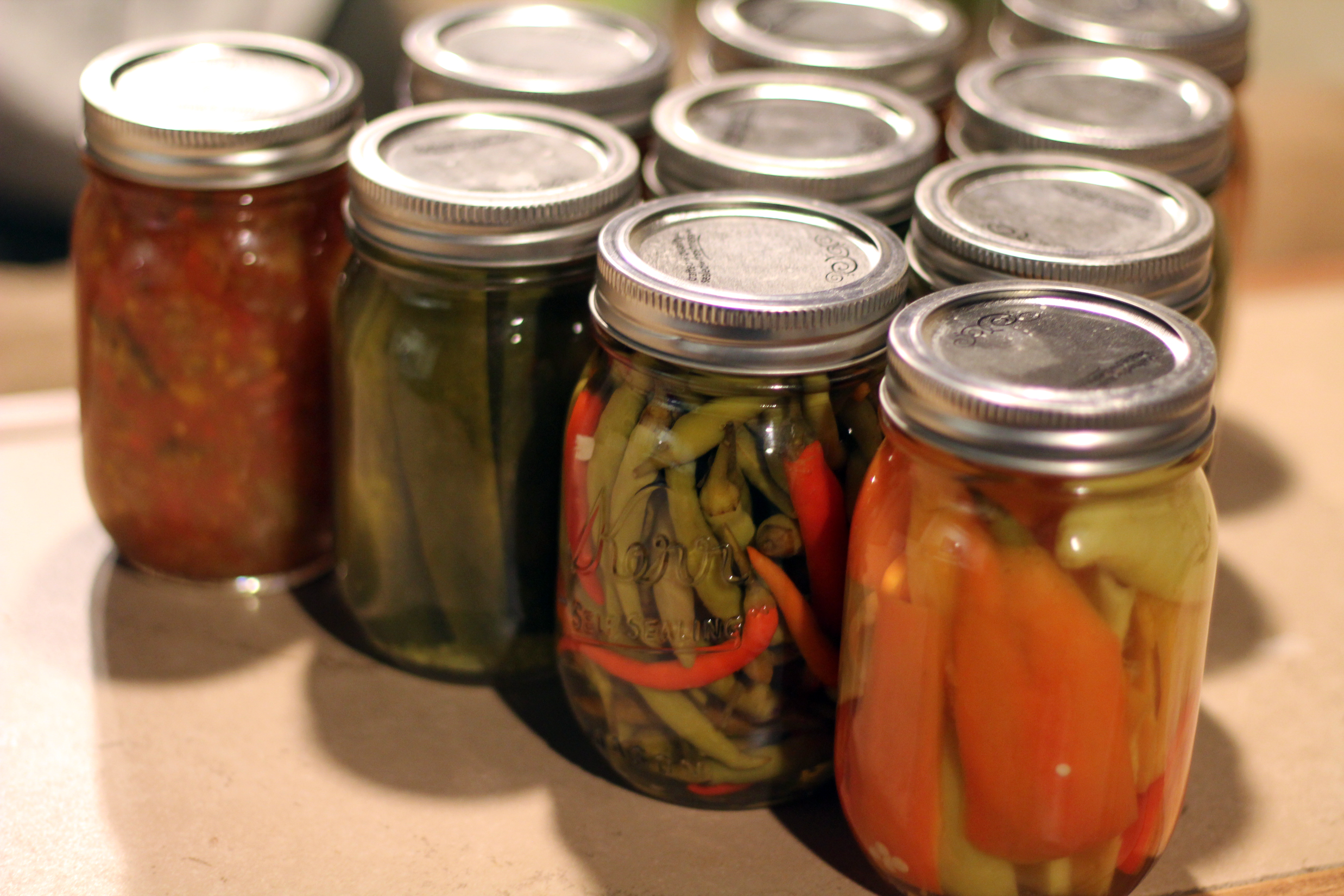
As I was growing up, my neighbors had a root cellar; a stone outbuilding that was always dark and cool. Inside, from floor to ceiling, were stacked bottles of peaches, cherries, jams, and tomatoes. Everything that grew in their garden was canned and kept for use throughout the year.
Today, canning is becoming a lost art. But there are a few stalwarts who carry on the tradition.
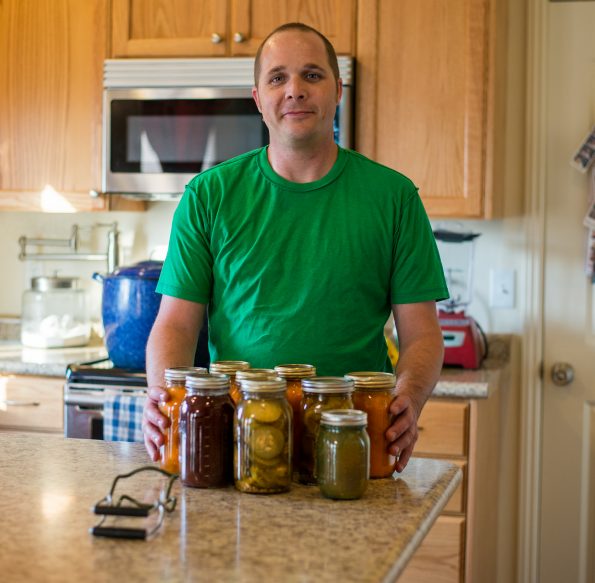
Stephen Nageli remembers watching his mom can fruits and vegetables when he was small. After he got married, his wife, Crystal, canned some peaches. He watched and wanted to try it for himself and eventually became the family’s designated canner.
After a few failures, he found that following a recipe precisely greatly increased his incidence of success. He bought books on canning and read up on the internet. His favorite was an old copy of the Ball Blue Book of Canning. He eventually mastered the art and learned to stick to the established recipes, saying that following the crazy recipes you get from friends or relatives is probably not safe.
And what is the hardest part of canning? According to Stephen, “It is timing, timing, timing. You need to make sure the water is boiling and everything is set to go. The jars need to be hot when they go into the boiling water so the food temperature doesn’t drop and spoil the entire batch.”
Stephen cans for himself and for his family “because it tastes better than anything I can buy, and it is fun to work with food. I feel closer to it than anything I can buy in the store.” He plans his yearly garden based on what he wants to can in the fall.
Canning is an art like any other, and failure is part of the mix. Once, Stephen made a cherry jam that he says was actually cherry cement. There is a spoon test, or sheeting test, you can use when making jam that lets you know when it has set. You freeze a spoon and put a drop of the jam on the spoon. If the jam doesn’t drip off, it has jelled and is ready. If you process it too long, it gets too thick and doesn’t run at all and you end up with cement.
When asked if canning can be dangerous, Stephen said you always have to watch out for burns. But as far as processing food and having it go bad, he said that the only food that is really a problem is tomatoes. With most food, you can smell if it’s gone bad when you open the jar, but tomatoes can develop botulism and you can’t smell that. They do show black on the underside of the lid, but if prepared according to directions, you shouldn’t have any problems. Stephen says, “Follow the directions to a T and never modify them, ever!”
His favorites are chili sauce and orange chili marmalade. One year he put up grape juice with white grapes that turned out pink. His kids loved it.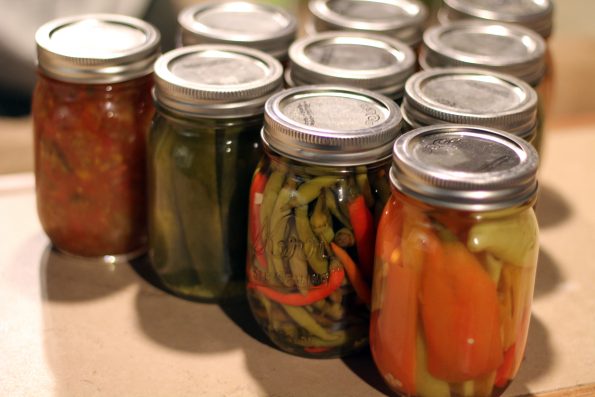
If you grow a garden and you hate to see your hard work end up in the trash, do some research, buy some jars, and can some things to enjoy on a cold winter day.