Utah Stories

Christmas in Ogden

A holiday tradition since 1962, Ogden’s Christmas Village is a must-see.

|


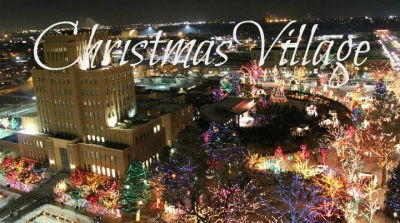
Christmas Village
Photo by Blake Citte

Christmas Village in Ogden, now in its fifth decade of operation, is the heart and soul of Christmas in Ogden.

In 1962 Jerry Green took his son Tommy to the “parade” which ended far too quickly – one floatand a few police cars escorting old Saint Nick. That immense disappointment led to what is now thousands of lights, dozens of village homes and a tradition that will charm the socks off eventhe curmudgediest curmudgeon. Jerry passionately brought together the downtown merchants to fund and support the very first Christmas Village in 1962 and Utah Power and Light donated the electricity.

Though the event has grown and changed over the years, there continues to be a Christmas Village Committee that lovingly nurtures this miniature town to life each and every holiday season.

Ogden City coordinates the stringing and hanging of the lights, having added more electrical capacity to handle it all. The village committee recruits new cottage sponsors and helps maintain the existing. The whole thing comes together as the village is lit on the Saturday after Thanksgiving.

The village remains lit and ceremonious through the remainder of the year. Santa’s Castle stands front and center of the Ogden City Amphitheater, where families can partake in Santa photos and the sharing of wish lists. In the Amphitheater, local choirs and dance groups perform Tuesdays through Fridays throughout the month of December

“The darkest part of winter is chased away with the electric light parade,” said local Shawnee Sawyer, who takes her family down each year. “Our family enjoys bundling up and joining our community in welcoming the holiday season. We visit the Christmas Village several times during the season and it provides for a great, free, family outing.”

Residents come down multiple times to visit the village, get photos with Santa, ride the Christmas Village Express and to enjoy the nostalgia of Historic 25th Street. “We love that we can shop here on the street and sneak up to the village without any traffic or hassle. It’s that old small town charm, you just don’t see places anymore,” shared resident Tanita who brings her two daughters each year for Christmas shopping and to walk the village.

Christmas Village is located on the eastern end of Historic 25th Street, which was recently named one of the Best Places in America, and is home to over thirty local, independent retailers. In fact, the street is 100% local and has been for more than a century!

Join our newsletter.
Stay informed.


  • Highway 6 and the Midland Trail: Utah’s Transcontinental Highway History

    From Price Canyon to Delta’s desert stretch, Utah played a central role in building the Midland Trail, one of America’s earliest transcontinental highways and the foundation of today’s Highway 6.


  • Utah Acquires US Magnesium Assets in $30M Deal to Protect the Great Salt Lake

    Utah leaders announced the state has successfully won the bid to acquire key assets of the defunct US Magnesium facility on the Great Salt Lake, including its associated water rights and property.


  • Whiskey, Bullets & a Buried Town: Archaeologists Reveal Alta’s Wild Past

    Before Alta was known for powder days and lift lines, it was a silver mining town clinging to the side of a narrow canyon. In the late 1800s, men lived at 8,000 feet, went underground each day, and endured winters that regularly buried buildings in snow. This past summer, that mining town resurfaced — literally — during construction at the Alta Ski Area.

    To understand what Alta really looked like, you don’t begin with legend. You begin with its trash — and this time, that happened almost by accident.

    Alta Ski Area was installing underground water reservoirs to support snowmaking. Because the project sits on Uinta-Wasatch-Cache National Forest land, an archaeologist was required to monitor the excavation. No one expected the trench to produce much.

    But, It did.

    Artifacts began surfacing almost immediately. Enough that the Forest Service contacted the Utah State Historic Preservation Office for help. Lexi Little, who coordinates the Utah Cultural Site Stewardship Program, helped mobilize nearly 30 volunteers to assist with what quickly became a focused two-week excavation.

    Winter deadlines were approaching. The pipes for the reservoirs had to go in the ground. There wasn’t time for a slow, extended dig.

    “It was two weeks of digging in the dirt and helping figure out exactly what we were looking at,” Little said.

    Most of the people screening soil weren’t professional archaeologists. They were trained stewards from around Utah — part of a statewide volunteer network that now approaches 500 people. They poured dirt through shaker screens, scanning for fragments that could piece together a town long buried.

    “Archaeology is human trash,” Little explained. “Archaeologists are very into trash.”

    Alta had left plenty behind.

    https://youtu.be/hzIHzx3OGoo?si=dKcl2CEz-t6FZzYw

    Victorian-style ceramics appeared first — the kind typically used in hotels. Medicine bottles followed. Ink bottles. Hand-blown glass. A porcelain doll’s foot surfaced from the soil, a small detail that shifted the mental image of the town. Families were here. Children were here. This wasn’t only a camp of miners.

    The bottles helped establish time. Manufacturing details — whether glass was hand-blown or mold-made, whether a maker’s mark appeared on the base — allowed archaeologists to date many of the artifacts to the 1870s through the 1890s, when Alta was booming as a silver mining town.

    “That gives you that range of dates for when Alta was really booming,” Little said.

    One reusable soda bottle clearly stamped “Salt Lake City” connected the canyon to the valley economy below.

    Then something unusual rolled out of a dirt pile.

    A corked bottle. Intact. Liquid still inside.

    To access this post, you must purchase Utah Stories (Digital + Print) or 3 month free trial (Digital).


  • The Only Full Bottle of Alcohol Ever Found in Utah Was Unearthed in Alta

    When a backhoe rolled a corked bottle out of the dirt at Alta this summer, no one immediately grasped what they were holding. It wasn’t empty. It wasn’t shattered. It was full. “The bottle that was discovered up at Alta is the only bottle of alcohol ever discovered in an archaeological excavation in the state…