Marketplace

Simply Eden: Goat Milk Soap Shop

Organic goat milk soaps made here in Utah. Read more to learn more about this growing Eden business.

|

Simpy eden goat milk

Simpy eden goat milk
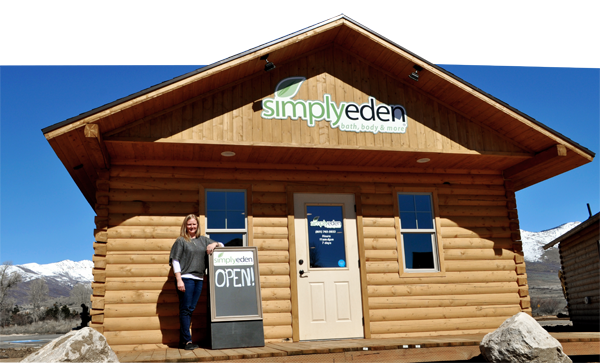
Athena Steadman Simply Eden Storefront

There’s a goat cam in Athena Steadman’s barn. On her Simply Eden website, anyone can watch live-feed video of her Nigerian Dwarf dairy goats which provide the main ingredient for Simply Eden’s goat milk products.

Simply Eden has grown from an experimental cottage industry to a much-in-demand supplier of natural soaps and lotions. “No way did I ever think it would be this big,” says the accidental entrepreneur. “My husband suggested getting a goat, and I thought if I’m getting a goat I should make something from it.”

Having outgrown her modified home basement, Athena recently opened a storefront in Eden Center, a cluster of handsome single-unit log structures located just west of Eden, Utah’s Valley Market Grocery.

Though her handmade soaps and lotions are uncomplicated, running a small husbandry-based business means that Athena and her husband Coe not only raise and breed goats, but also market, make, package and distribute product, and manage a blog, website and dynamic Facebook page. “My philosophy with the products is to keep it simple, which is funny,” she laughs, “because everything I do is so complex.” The Simply Eden store also provides a retail outlet for other northern Utah artisans.

Balancing responsibilities has contributed to Athena’s success, as has offering quality goods made with natural ingredients. In fact,even without pushing brand visibility, Utah businesses now are approaching her asking if they can carry her products.

“I love having the freedom to do what I want,” says the Ogden Valley impressario. “I do love the goats, and I love living up here.”


,


Join our newsletter.
Stay informed.


  • Why Restaurants Like Mazza Are Disappearing

    Across Salt Lake City, luxury restaurants continue to open. High-end dining rooms remain packed. Investors continue buying buildings in formerly quirky neighborhood districts. Chains increasingly move into areas once dominated by independent businesses. Meanwhile, many middle-class restaurants, the kinds of places that helped shape Salt Lake’s local identity over the past two decades, are struggling to survive.


  • A Simple Prepaid eSIM Setup for Smoother International Trips

    International travel feels easier when mobile data works the moment a trip begins. Maps, booking details, local transport apps, translation tools, and messaging services have become part of the travel routine. When access to these essentials is delayed, even a short airport transfer can feel more stressful than it should. That is why many travelers…


  • The Armenian DNA Mystery No One Can Explain

    Joulhayan described ancient remains discovered near the Aras River, near Mount Ararat, where researchers reportedly compared ancient genetic samples with modern Armenians and found remarkable continuity stretching back thousands of years.
    “How could that be?” he asked. “Mongolians attacked. Turks. Persians. Romans. Greeks. Armenian DNA should have changed.”


  • Utah Wants Affordable Homes. So Why Did It Kill the Starter Home Bill?

    Utah leaders have spent years talking about affordable housing.

    Governor Spencer Cox has repeatedly emphasized the need for more attainable housing, with a goal of creating tens of thousands of starter homes priced below $300,000. Yet despite broad agreement that housing affordability remains one of the state’s biggest challenges, one proposal designed specifically to encourage the construction of smaller, more affordable single-family homes failed to advance during the most recent legislative session.

    The question raises an uncomfortable issue: if Utah agrees there is a shortage of starter homes, why are those homes still so difficult to build?

    According to attorney and real estate professional Asha Klarich, much of the debate comes down to how communities want to grow and who gets to make those decisions.

    House Bill 184, known as the Small Lots and Starter Homes Amendment, was intended to reduce regulatory barriers and allow smaller homes to be built on smaller lots. The proposal would have created a process for builders and homeowners to seek exceptions to local zoning requirements and construct homes on lots as small as roughly 5,400 square feet.

    The idea was straightforward. Smaller lots generally mean lower land costs. Lower land costs can translate into lower home prices.

    For many first-time buyers, that sounds far more appealing than another apartment building or densely packed townhome development.

    “I think most people would prefer a smaller home on a smaller lot than apartment-style living in a high-rise,” Klarich said during a recent discussion about housing legislation.

    The bill ultimately failed.

    Continue reading and support independent Utah journalism with a purchase of Utah Stories (Digital + Print) or 3 month free trial (Digital).