

Thousands of law enforcement agencies across the country have accessed surveillance cameras in Weber County, raising questions about privacy, accountability, and taxpayer-funded surveillance.
Every time Utah drivers pass through certain intersections, their license plates may be photographed, recorded, and entered into a surveillance database accessible to law enforcement agencies across the country. But who controls that information, and how much do citizens really know about where their data goes?
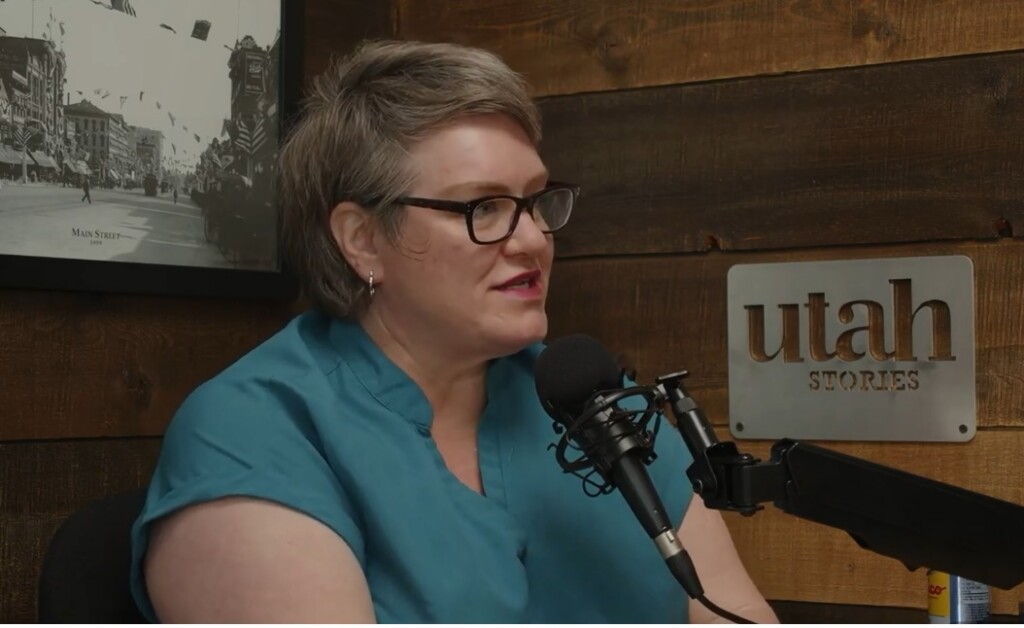
On a recent episode of the Utah Stories podcast, host Richard Markosian spoke with Connor Ratcliffe of the Utah Civic Compact about Flock cameras, automated license plate readers, and the growing concerns surrounding government surveillance.
Flock Safety is a private security technology company that provides automated license plate recognition systems, commonly called ALPRs. These cameras photograph passing vehicles and use software to identify license plates, allowing law enforcement to search for vehicles associated with criminal investigations.
While the technology can help locate stolen vehicles, missing persons, and criminal suspects, Ratcliffe believes its widespread deployment has created serious privacy concerns.
Thousands of Agencies Accessing Utah Cameras
Ratcliffe became involved in investigating Flock cameras after residents in Weber County began organizing town halls about the technology. His organization subsequently submitted public records requests to examine how local surveillance systems were being used.
What they found surprised him.
According to Ratcliffe, records obtained from Weber County revealed that approximately 3,400 law enforcement agencies across 48 states had accessed the county’s cameras since around 2022.
Among the most frequent users was Houston, Texas, which Ratcliffe said accounted for more than one million searches over four years.
Why would police officers in Houston repeatedly search cameras hundreds of miles away in Weber County?
Ratcliffe explained that Flock’s platform allows agencies to establish data-sharing agreements. Unless officers restrict the geographic scope of their searches, the system can search cameras belonging to other participating departments.
The problem, he argues, is that the records do not adequately explain why those searches occurred.
“We’re not saying anyone broke the law,” Ratcliffe said. “We’re saying that there is no way to tell.”
Utah Police Receive Praise for Transparency
Despite his concerns about surveillance, Ratcliffe emphasized that his investigation has not uncovered evidence of Utah law enforcement officers abusing the technology.
In fact, he praised the Weber County Sheriff’s Office for cooperating with his organization’s investigation.
Deputies provided records, answered questions, and even demonstrated how the Flock system operates.
Ratcliffe said Utah departments generally maintain strict internal policies governing who can access surveillance information and under what circumstances.
He also acknowledged that officers consider the cameras valuable investigative tools.
The controversy, therefore, is not simply whether police should have access to surveillance technology. It is also about what happens to the information after cameras collect it.
Who Owns the Surveillance Footage?
One of Ratcliffe’s greatest concerns involves the distinction between the information law enforcement receives and the original footage collected by Flock cameras.
According to his interpretation of the company’s contracts, law enforcement agencies receive access to what is defined as customer data, while Flock retains extensive rights over the underlying footage.
Ratcliffe argues that this arrangement leaves the public with little ability to determine how the company uses or shares the original information.
Private companies are not necessarily subject to the same public records requirements as government agencies, making independent oversight more difficult.
The discussion also explored whether surveillance information could be accessed by federal agencies, immigration enforcement, or private data companies.
However, Ratcliffe acknowledged that his organization’s records did not establish widespread immigration-related searches or prove that Flock was sharing footage with companies such as Palantir.
His concern is that the lack of transparency makes those questions difficult to answer.
Are Taxpayers Paying for Their Own Surveillance?
The financial implications of Flock cameras also raised questions.
Ratcliffe said federal public safety grants have helped municipalities purchase surveillance systems, reducing the direct financial burden on local governments.
He cited Ogden as an example, estimating that its camera systems cost approximately $600,000 to $650,000 over four years.
Without federal funding, Ratcliffe believes local governments would face greater pressure to justify those expenditures.
He expressed support for proposals to restrict federal funding for automated surveillance systems.
Rather than eliminating every investigative camera, Ratcliffe suggested that government agencies could operate and maintain their own surveillance databases without relying on private contractors.
“I would like to see them hosting the data in-house and not using these sketchy third parties,” he said.
Where Does Surveillance End?
The conversation eventually expanded beyond license plates to technologies capable of collecting information from smartphones, vehicle sensors, and potentially future brain-computer interfaces.
Ratcliffe fears that increasingly sophisticated data collection could eventually make personal privacy much harder to protect.
Markosian compared the prospect of constant surveillance to George Orwell’s warnings about government monitoring and control.
For Ratcliffe, the central question remains how society balances public safety with constitutional protections.
Automated cameras may help investigators solve crimes, but the ability to search millions of vehicle records across jurisdictions raises questions that technology alone cannot answer.
As surveillance networks expand, Utah residents may increasingly face a fundamental question: Who should control the information collected about their daily movements, and who should be accountable for how it is used?