
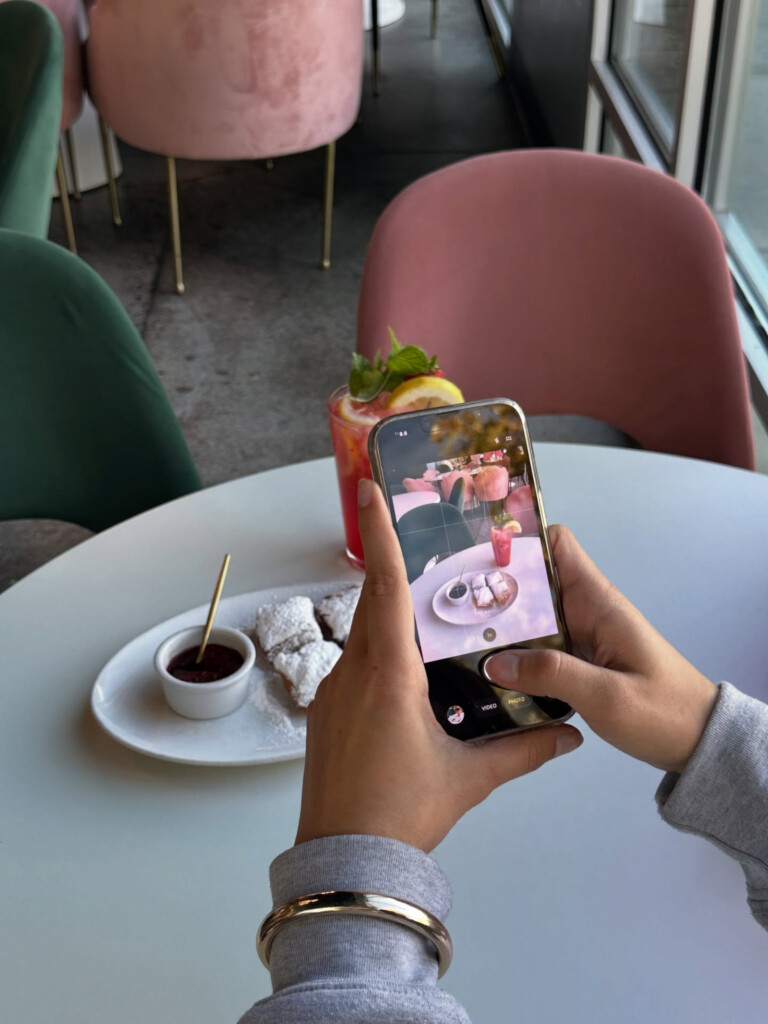
Before patrons take the first bite at many of Salt Lake’s most popular restaurants, there’s often a photograph.
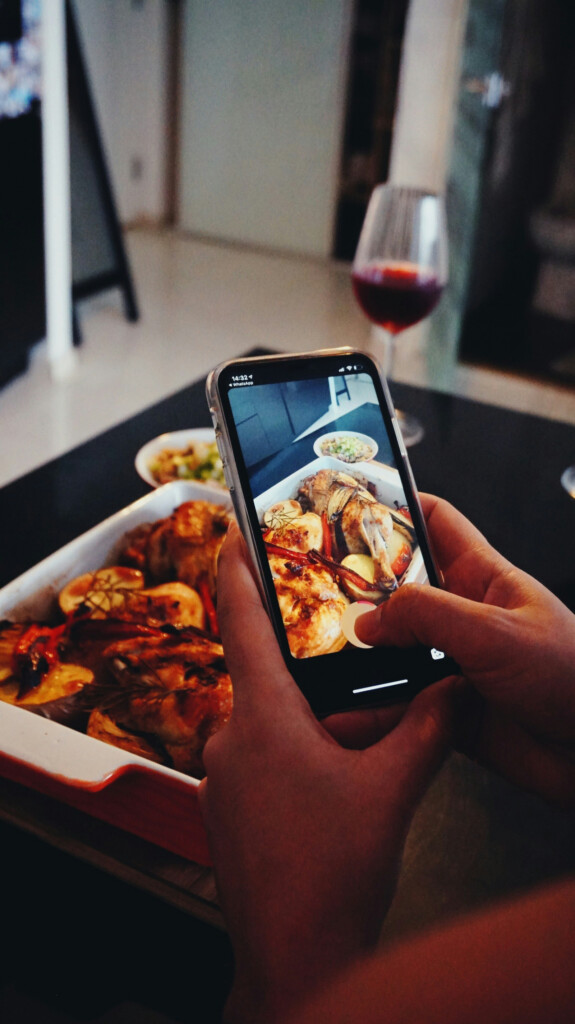
A plate arrives at the table carefully composed and placed beneath lighting that seems almost too perfect to be accidental. Around the room, phones emerge for a quick snap, a short video, a post — and the restaurant has gained an audience far beyond the people sitting inside it.
The rise of Instagram and TikTok (and the influencers who create content) have changed not only how diners discover great places to eat, but how some restaurants are designed in the first place.
Walls, lighting, bathrooms, bar tops, cocktails, tableware, and even the way a dish arrives at the table can now serve a second purpose — as potential marketing content meant to be seen. From dramatic interiors and neon signs to distinctive tableware and meticulously plated dishes, visual appeal has become part of many restaurants’ business strategy.
And numbers support that strategy. A recent Toast survey of 850 people who use social media at least weekly found that 42 percent preferred social media over search engines when discovering new restaurants, 62 percent sometimes checked a restaurant’s social media before deciding where to dine, and 40 percent said an influencer’s review had influenced their decision to dine at a restaurant.
Designing for the Share
Some restaurants serve unforgettable meals. Others serve unforgettable moments. Across Salt Lake, restaurant owners are designing social media-worthy aesthetics as a way for customers to incorporate what they like about a business into their own identity and elevate venues where people genuinely want to be.
Interior designers and architects are consequently thinking about movement, lighting, and sightlines in addition to color and composition. Design takes into account how a dramatic entrance can become the opening shot of a restaurant review. They’re also creating areas specifically for Instagrammable moments and sometimes carving out micro-environments that fit perfectly in a phone’s camera.
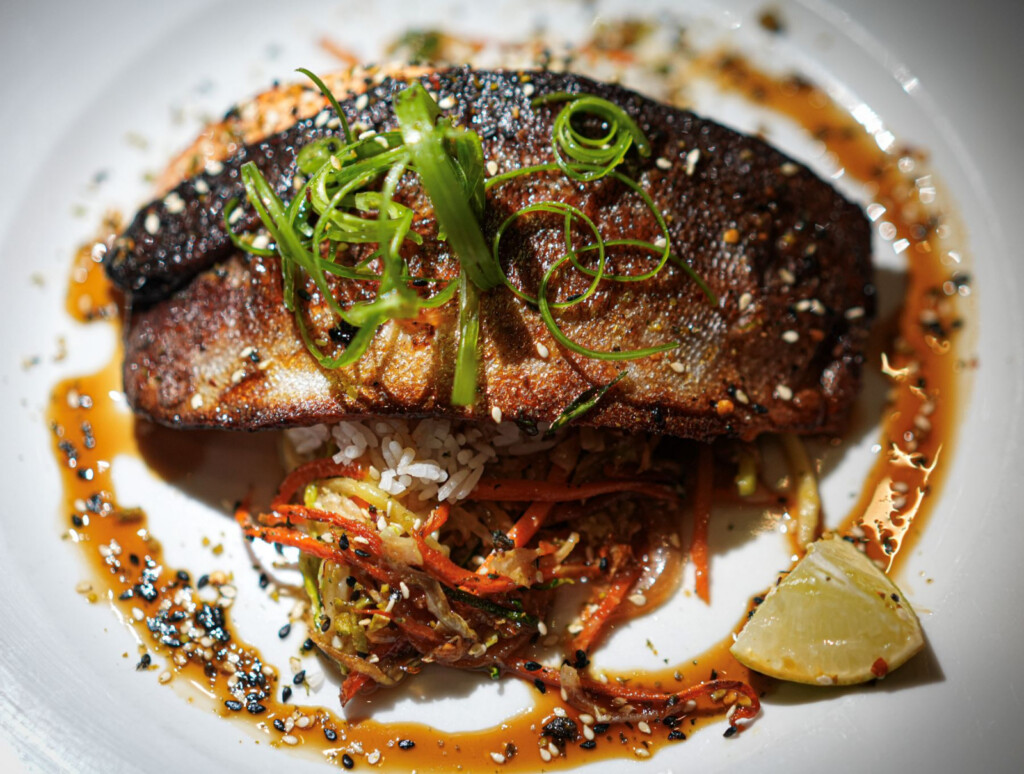
More and more, the meal itself is also built around how a beautifully plated dish can become a 15-second video, a bartender can torch a cocktail, or a server can pull apart a cheese-filled dish.
Salt Lake’s restaurant scene offers plenty of examples of spaces where visual storytelling is part of the experience.
At The Bar at Asher Adams, the setting begins with the architecture itself.
Located inside the beautifully restored 1909 Union Pacific Depot, the bar sits at the center of the hotel’s breathtaking Grand Hall, where soaring domed ceilings, original stained-glass windows, historic murals, and elegant architectural details transport guests to the golden age of rail travel.
The depot’s original ticket windows were reimagined to serve as the backdrop for the elegant cocktail bar, and designers preserved the distinctive metalwork while incorporating shelves lined with spirits and glassware.
Original oil-on-canvas murals depict Utah’s landscapes and railroad history. Plush velvet seating, leather sofas, café tables inspired by historic waiting rooms, and globe-shaped lamps reminiscent of train platforms invite guests to capture the moment. A nostalgic photo booth lets visitors create vintage-style photo strips.
At Marmalade Brunch House, the social media appeal is much more deliberate. Moody charcoal walls set a sophisticated French-inspired backdrop for blush-pink and teal velvet chairs, polished marble tabletops, and shimmering gold accents, while glowing neon signs create a series of obvious photo opportunities. Fresh flowers and thoughtfully layered décor create a space that’s both chic café and stylish social lounge.
Owners and brothers Chris and Nelson Madrill explain their concept: “We wanted a little decorative spot to bring everyone together in the neighborhood.”
Ultimately, the goal is to create a place people want to gather — and the social media content becomes part of that experience.
At Gossip Kitchen, the latest venture from Chef Soy (Batsaikhan Ariunbold), the culinary visionary behind Mint Sushi & Tapas, the design strategy is about discovery. A combination of contemporary Japanese tapas, premium cocktails and a speakeasy-inspired atmosphere create an experience intended to be discovered, shared, and talked about.
The front dining room welcomes guests with rich textures, dramatic lighting, marble tabletops, and contemporary finishes that create an elegant backdrop for a bite or a full meal. Venture toward the south part of the building through an unmarked door and the atmosphere shifts into an elegant cocktail lounge where low-lighting and copper tones create a swanky setting for Japanese cuisine to accompany craft cocktails.
Then there is Central by Saffron Valley, where you’ll climb aboard for a culinary journey inspired by India’s iconic railway stations. As a child in India, owner Lavanya Mahate (2025 James Beard Award semifinalist for Outstanding Hospitality) regularly took the train between Andhra and Chennai, about 400 miles apart. “Our food is really inspired by all these places,” she explains.
Central’s flavor-filled ride is a journey with surprises around every corner — like a robot delivering your food and clearing dishes — and where thoughtfully designed details like platform signs identifying dining areas and a vintage-inspired station clock modeled after the famous Chennai Central Railway Station tell a well-crafted story before the first dish arrives.
A locomotive installation anchors the dining room where diners will find the buffet station on one side, while an elegant club car-style bar creates countless photo opportunities that transport guests halfway around the world. Several dishes even arrive in traditional metal tiffin carriers, paying tribute to Mumbai’s way of transporting lunches from homes to workplaces every day.
Mahate explains, “It’s literally a journey and it’s built on connection, community, gathering and good food.”
In each case, the visual experience gives diners something memorable but also a shareable moment for social media.
The Business of Being Shareable
There’s a reason restaurant owners are paying attention to design more than ever. Social media can create awareness, establish a visual identity, and put a restaurant in front of potential diners at precisely the moment they’re deciding where to go.
But restaurant design must lead to an experience with enough personality that people want to photograph it, talk about it, and ideally, return to it.
A 2026 Boston Globe report on the future of “Instagrammable” restaurants noted that some chefs and operators are shifting away from purely social-media-driven aesthetics and toward food, authenticity, and personal connection.
For restaurants, the best social media strategy may be to create something genuinely worth experiencing first because while photographs and video are powerful, it’s the food, hospitality, and experience that will keep people returning.
Feature Image courtesy of Marmalade Brunch House.