
What is the Moab Name Worth to Jeep©?
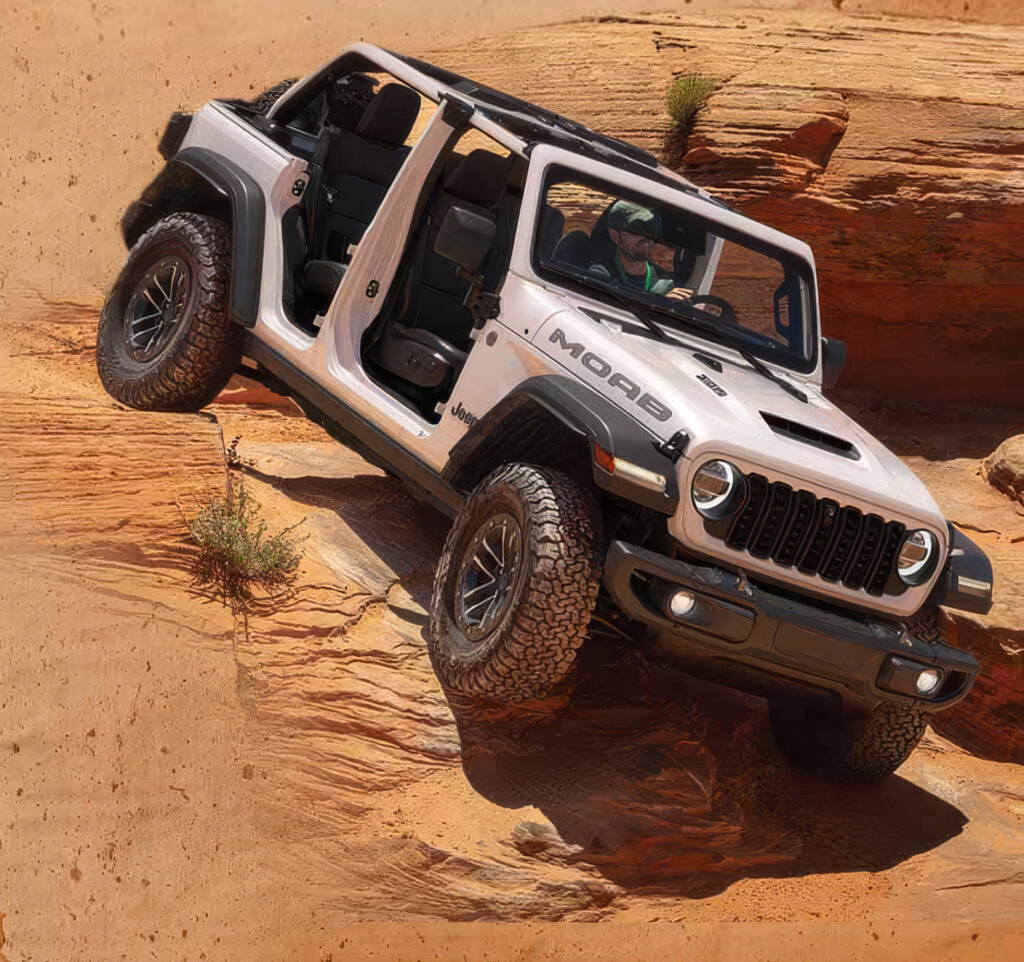
A Jeep eases toward a sandstone ledge, its front tires rising until blue sky fills the windshield. The vehicle rocks, grips and climbs. Beyond the hood, Moab’s red cliffs stretch like another planet. It is the kind of scene Jeep has sold for decades: freedom, toughness and adventure, all framed by a landscape the company did not create but has helped make inseparable from its brand.
For Dave Hellman, the relationship between Moab and four-wheel-driving is more than an advertising image. Hellman owns Xtreme 4×4 Tours, a Moab-based company that takes visitors onto the area’s off-road trails. He has been four-wheeling for about 40 years, involved in Moab’s off-road community for 23 years and running his company for 16. During that time, he has watched Moab become increasingly famous for off-roading.
“I’ve watched the industry grow tremendously, with more visitors, rentals, tours, vehicle types, and overall interest in Moab,” Hellman said.
Hellman believes Moab’s terrain continues to attract drivers from around the world.
“It’s one of the best places in the world to go off-roading,” he said. “Moab has incredible terrain — everything from easier scenic trails to very technical four-wheel-drive routes — and you can recreate here much of the year.”
The connection between the words “Jeep” and “Moab” dates back nearly 60 years. In 1967, the Moab Chamber of Commerce organized the first Easter Jeep Safari as a one-day off-road trip intended to attract visitors. Jeep has since brought vehicles and concepts to the area, featured its red-rock scenery in advertising, and placed the Moab name on vehicles such as the 2026 Wrangler Moab 392.
After decades of informal association between Jeep and Moab, the city decided to place a formal price on official sponsorship. Moab invited four-wheel-drive manufacturers to submit proposals for naming and promotional rights, and Jeep was the only company that responded. The resulting two-year agreement gives Jeep the right to call itself “The Official 4WD of Moab.”
Under the agreement, Jeep will pay the city $125,000 in unrestricted cash each year. The company will also loan Moab five Jeeps, which city staff valued at approximately $100,000 annually, and support community events and at least two trail-maintenance or preservation projects. In return, Jeep can use the city’s name and logos in advertising and will serve as presenting sponsor of four events each year.
The agreement also includes a goal of providing $10 million worth of advertising connected to Moab over two years. That raises a question: Does a town already filled with tourists need millions of dollars in additional promotion?
Hellman views Jeep-related tourism as part of a relationship that already brings substantial money into the area.
“It’s a major economic benefit and generates significant tax revenue,” he said. “Off-road visitors spend money on rentals, tours, hotels, restaurants, fuel, repairs, parts, shopping, and other services.”
Hellman cited a Kem C. Gardner Policy Institute report showing that visitors spent approximately $447 million in Grand County during 2024 and generated about $61 million in state and local taxes. Those figures include all tourism because available information does not separate off-roading from other activities.
“From my experience, off-road visitors tend to spend quite a bit locally because there are so many expenses tied to the activity,” he said.
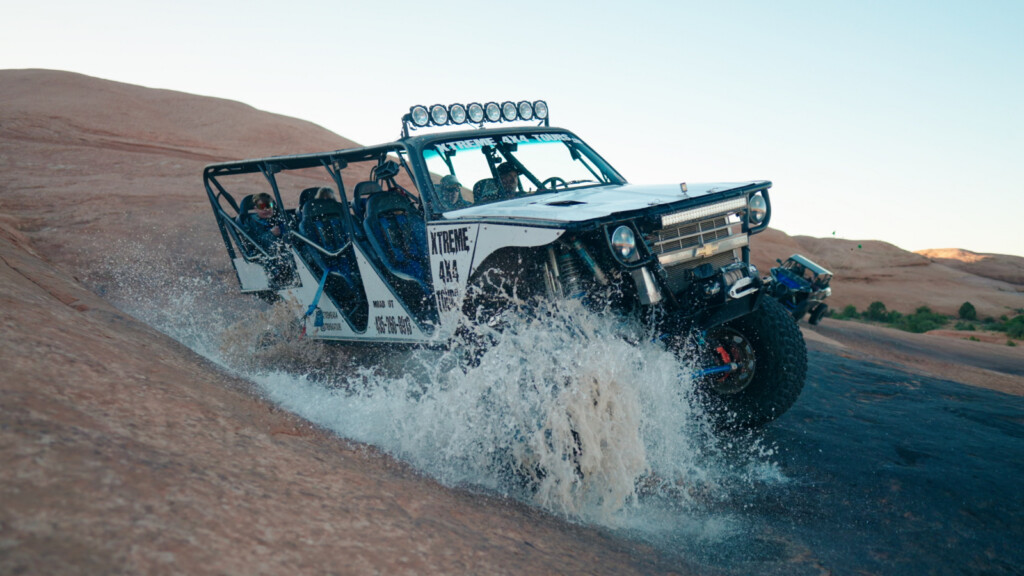
Tourism also creates costs. More vehicles can bring additional traffic, trail wear and demand on public services. According to Hellman, responsibility for maintaining popular trails is divided among government agencies, visitors and the recreation community.
“It’s shared between the BLM, Grand County, user fees, grants, volunteer organizations, and the recreation community,” he said.
Hellman pointed to Sand Flats Recreation Area, which receives more than 250,000 visitors each year. Its user fees remain within the program to help pay for maintenance and services. He believes the effects of off-roading can be managed when visitors follow the rules and stay on designated routes.
Hellman also believes outsiders sometimes misunderstand off-roaders.
“The biggest misconception is that off-roaders aren’t responsible or don’t respect the land,” Hellman said. “In my experience, the opposite is true. Responsible off-roaders stay on the trails, pick up trash, respect the landscape, and are often the first people to help when someone breaks down, gets stuck, rolls a vehicle, or needs assistance. There is a strong culture of helping each other and protecting the trails because we want them to remain open for future generations.”
To Hellman, the partnership recognizes a relationship that already exists and allows Moab and its surrounding landscape to receive something in return.
“I don’t really see it as a negative corporate-branding issue because Jeep and Moab were already associated with each other,” he said.
Hellman added that what comes back should not only benefit the city financially. If Jeep profits from Moab’s name, trails and landscape, he believes some of that value should help preserve what made the name valuable in the first place.
“That means supporting trail maintenance, responsible recreation, education, and continued public access to the places that make Moab valuable to the Jeep brand.”
Feature Image Courtesy of Jeep©.