Eight hundred years ago, people living in Utah faced a problem that feels surprisingly familiar today. Water was becoming less dependable, established ways of making a living were becoming harder to sustain, and people were moving into and through the region.
Within several generations, a way of life that had existed for centuries had changed so dramatically that archaeologists would eventually give what came afterward different cultural names.
What happened remains one of the great mysteries of Utah’s past.
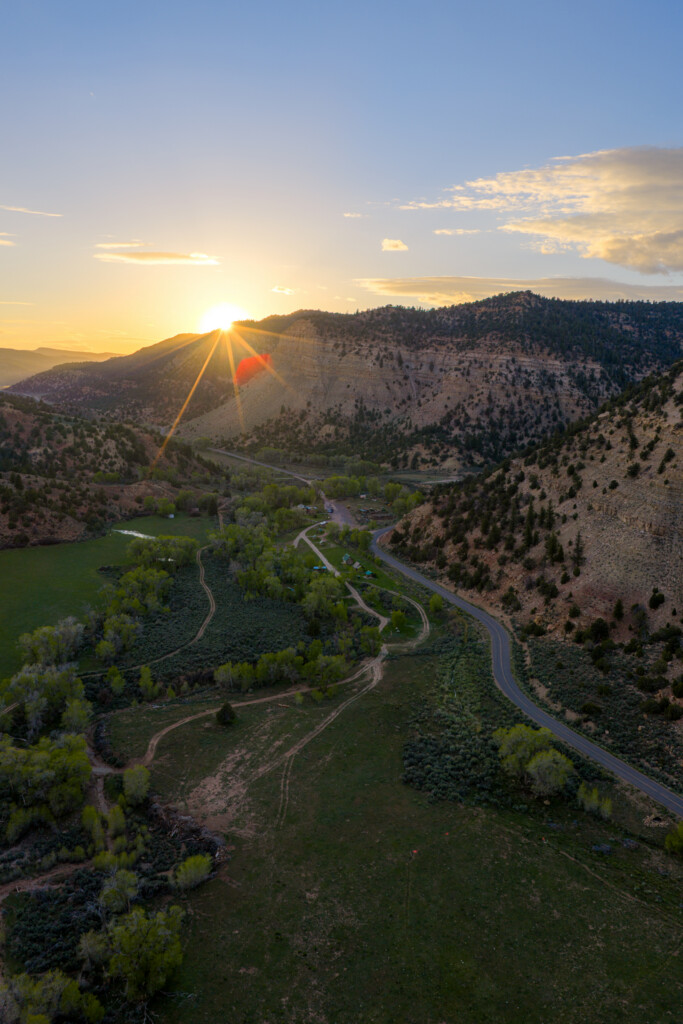
The people archaeologists call Fremont had farmed portions of Utah for centuries. They grew corn, built pithouses, made pottery, stored food in granaries and supplemented agriculture by hunting and gathering. Their settlements were often positioned near canyon mouths where streams deposited fertile soils suitable for farming.
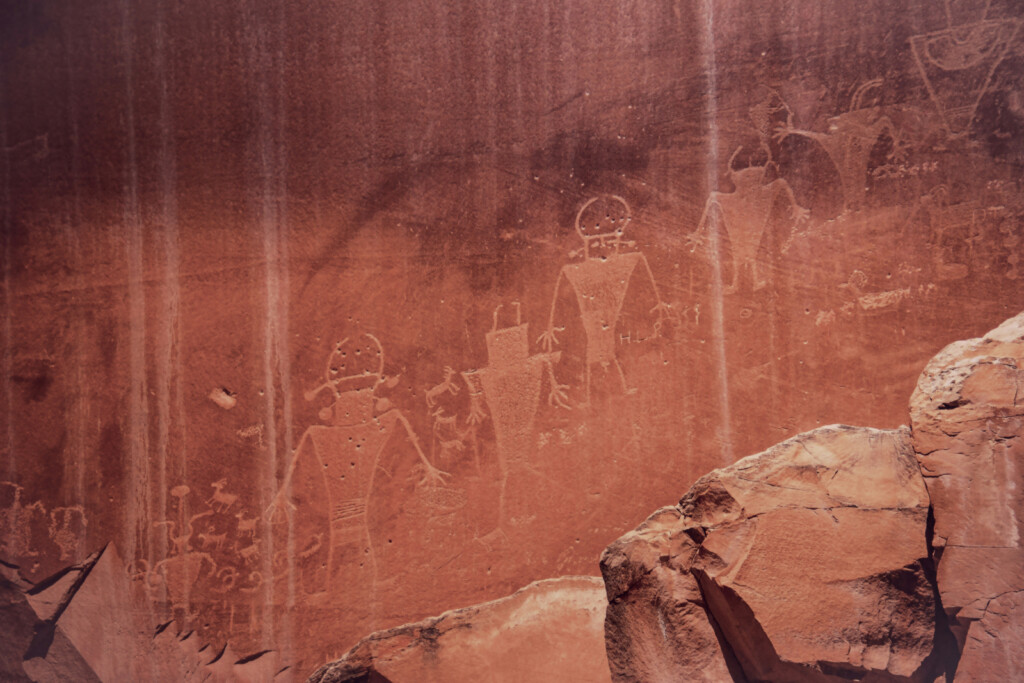
They also left behind a remarkable visual record. Broad-shouldered human figures appear on canyon walls wearing necklaces, earrings and elaborate headdresses. The famous Pilling Figurines, small clay figures with carefully rendered hairstyles, clothing and jewelry, suggest that some of those details may have represented how people actually looked and identified themselves.
The Fremont were not Utah’s first artists. Thousands of years earlier, people associated with the Archaic period created the haunting Barrier Canyon Style figures found throughout southeastern Utah. At the Great Gallery in Horseshoe Canyon, enormous tapered humanlike forms stare from the sandstone, often without recognizable arms or legs.

Blaine Reniger, founder of History Moab, cautions against pretending we know exactly what such images meant. He approaches them through archaeology, anthropology, linguistics and ethnobotany, looking for clues rather than definitive answers. One possibility he raises is that some images recorded spiritual experiences associated with ceremonial use of psychoactive plants such as datura.
The interpretation is impossible to prove from the paintings alone, but the uncertainty is part of what makes Utah’s ancient record so compelling. We know these people through what survived, and what survived is incomplete.
By the thirteenth century, however, the evidence begins telling a different story.
Archaeologist Joel Janetski, who taught at BYU for nearly three decades and has extensively studied Fremont and post-Fremont sites, says one of the clearest changes was where people chose to live. Fremont settlements had frequently occupied agricultural locations near canyon mouths. As farming declined, settlements increasingly appeared closer to marshes and wetlands, where people had access to fish, waterfowl and edible plants.
The change appears in their possessions as well. Pottery became thicker and less elaborate. Basketry changed. Projectile points changed. Moccasins changed. By about 1400, farming had largely disappeared from areas along the Wasatch Front where it had once been common.
Climate provides part of the explanation. Janetski points to changes in summer moisture beginning around 1150 in portions of the eastern Great Basin. Corn agriculture depended heavily on that moisture, and tree rings and pollen cores indicate changing climatic conditions during the period.
For people whose food supply depended partly upon crops, a sustained change in rainfall was not an abstract environmental problem. It changed where a family could live, what it could eat, and whether planting corn in the same place the following spring still made sense.
At the same time, other people were arriving.
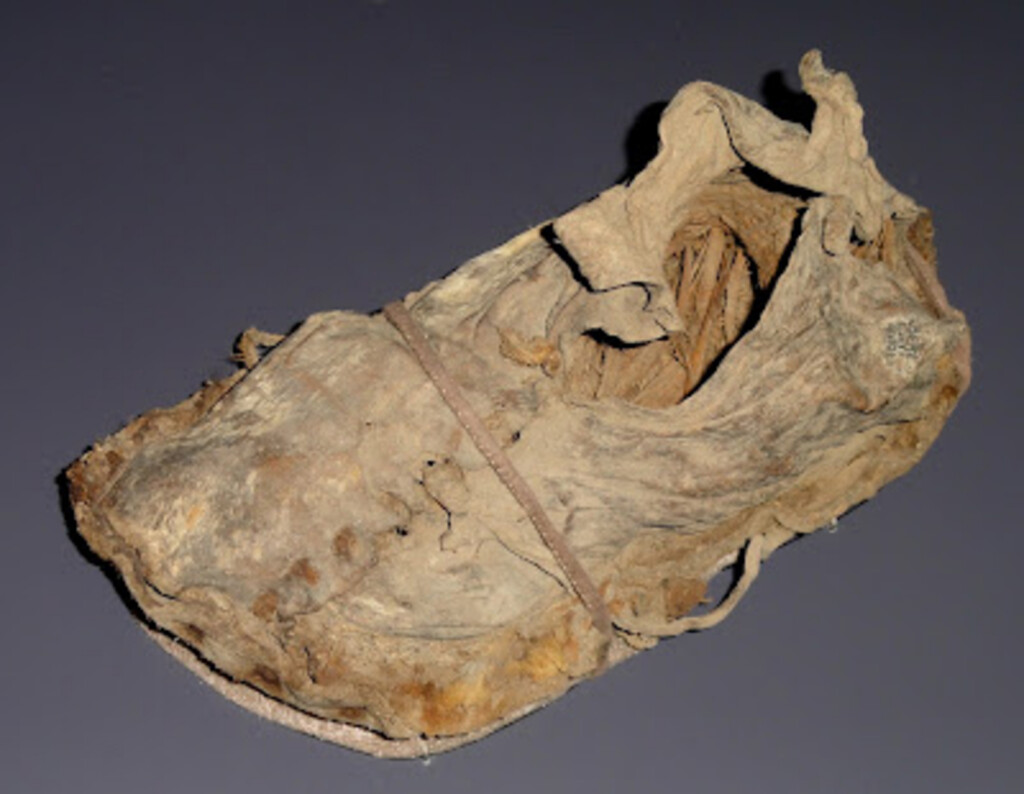
Some of the most remarkable evidence was preserved inside Promontory Cave near the Great Salt Lake, where archaeologists found hundreds of moccasins and fragments dating primarily to about A.D. 1250–1290.
Their construction differed dramatically from Fremont footwear. Fremont moccasins found elsewhere in Utah sometimes retained animal fur and even dewclaws from deer or mountain sheep. Promontory moccasins used techniques with strong northern parallels and sometimes incorporated porcupine-quill decoration and buffalo hair for insulation.
Janetski and other researchers have associated the Promontory people with southward-moving Athabaskan or Proto-Apachean populations. Meanwhile, ancestors of Numic-speaking peoples, including the Ute, Paiute, Shoshone and Goshute, were also moving into portions of the region.
Reniger describes this period as a kind of hurricane of migration, an image that helps explain why the disappearance of Fremont material culture has resisted a simple explanation. The climate was changing while populations were moving. New groups encountered established communities around the same water sources, hunting grounds, and productive valleys. Those encounters could have produced competition and conflict, but also trade, intermarriage and the exchange of knowledge.
Even the word “Fremont” complicates the mystery. It was not a name these people used for themselves, but an archaeological term derived from the Fremont River and applied to a recognizable collection of houses, pottery, tools, art and subsistence practices.
If people stopped farming, left their pithouses, abandoned heavy pottery and began moving seasonally, much of what allows archaeologists to identify them as Fremont would disappear even if some of the people remained.
Janetski believes some Fremont populations may have moved south and contributed to modern Puebloan populations, while preliminary genetic evidence also points toward population change during the post-Fremont period. Reniger believes some Fremont people may have remained and eventually been absorbed into other populations. Eight centuries later, the evidence does not require a single answer.
That uncertainty makes their experience more relevant to Utah today.
Modern Utah is again asking how many people an arid landscape can support, where future water will come from, and whether practices developed under one set of conditions will remain practical under another. Our technology bears no resemblance to that of the Fremont, and the comparison should not be taken too far. Reservoirs, pipelines and modern agriculture give us options they never possessed.
What their history demonstrates, however, is that landscapes eventually impose limits. A community can invest generations in homes, fields and infrastructure and still reach a point when conditions change enough that adaptation becomes unavoidable.
For the Fremont, that adaptation may have taken many forms. Some people probably moved. Some changed how they obtained food. Some encountered newcomers and became part of different communities. Over generations, identities and languages may have changed along with the material things people left behind.
The abandoned granaries, changing pottery and unfamiliar moccasins preserved in Utah’s caves record what happens when environmental pressure, migration and human choices converge.
Eight hundred years later, Utah is still negotiating its relationship with the same fundamental constraint that shaped their world: how to build a life in a beautiful, productive and unforgivingly dry place.
Feature Image by Mariola Grobelska on Unsplash.