
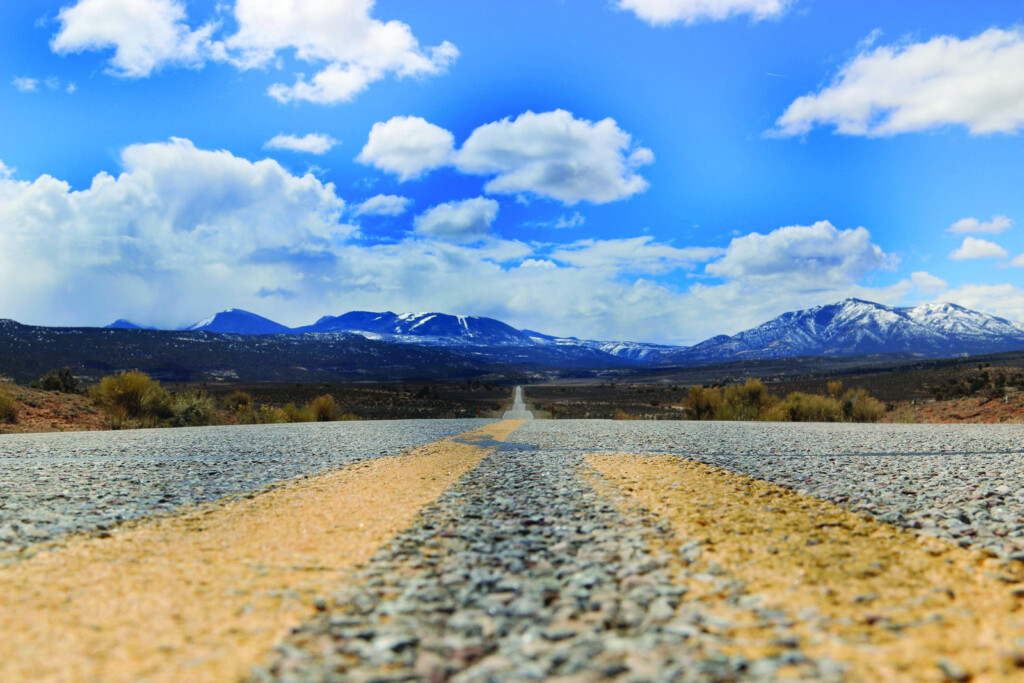
Dave Hellman makes his living on roads that, to someone looking at a map of Utah, might barely look like roads at all.
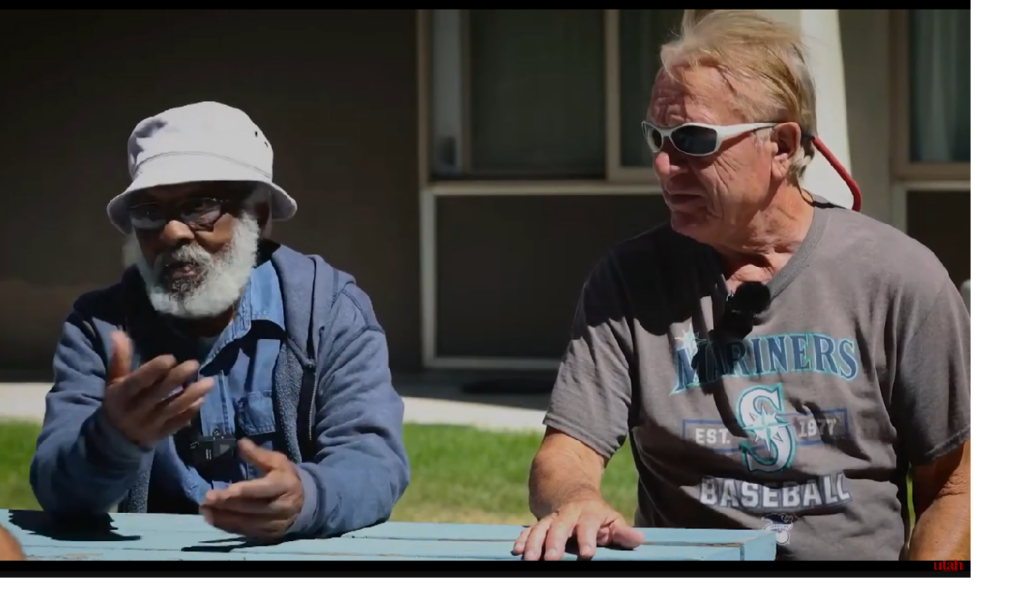
Hellman owns Xtreme 4×4 Tours in Moab and takes visitors into the red-rock backcountry in a seven-seat rock crawler he designed and built himself. Earlier this year, when Utah Stories spent time with Hellman on Hell’s Revenge, he wasn’t particularly interested in the legal theories behind federal land ownership. His concern was considerably more immediate.
“There are millions of acres out here,” Hellman said. “If you were flying over at ten thousand feet, Moab would be a tiny little speck on the map, and they want to close down anything that you can walk on.”
Hellman has watched fights over motorized recreation change access around Moab. In the Labyrinth Rims and Gemini Bridges travel-management area, the Bureau of Land Management left roughly 700 miles of routes open to off-highway vehicles while closing roughly 300 miles to motorized travel and restricting others.
Conservation organizations such as the Southern Utah Wilderness Alliance argue that restrictions are necessary to protect archaeological sites, wildlife habitat, riparian areas and increasingly pressured desert landscapes. Hellman sees established roads that have existed for decades and provide recreation, access and livelihoods.
“We stay on the trails off-roading,” he said. “We’re not just driving over bushes. We’re staying on the trails that have been there for years and years.”
For Hellman, the fight over federal lands is not really about who owns the vast stretches of red rock surrounding Moab. It is about whether he can continue using the roads that his business and his livelihood depend on.
Michelle Quist believes disputes like that can justify taking the federal government to court.
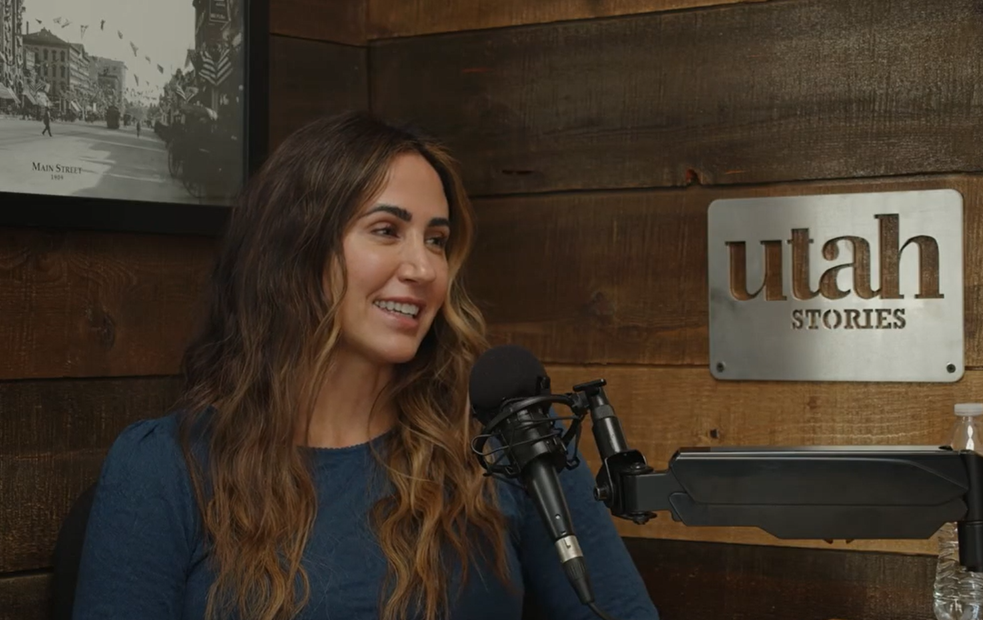
Quist, an attorney who ran for Utah attorney general in 2024, participated in road-access litigation before becoming a candidate herself. During the attorney general campaign, candidates debated how aggressively Utah should challenge the federal government over public lands. Quist says she was the one on the debate stage who had actually worked on those kinds of cases.
“The funny thing in that debate is that none of them had actually done it,” Quist said during a recent Utah Stories podcast interview. “I was actually the one with the experience that had actually been involved in those cases.”
Her experience exposes some of the practical problems hidden beneath Utah’s much larger political fight with Washington.
In southern Utah, a public road might be little more than a dirt route crossing miles of federal land. A storm washes it out. A culvert fails. Vehicles can no longer pass, and somebody has to repair it.
“Their budget gets blown after two or three storms pass through and it’s still a federal road,” Quist said. “And yet the county’s responsible to come in and repair the road over and over.”
Federal agencies manage the land, while counties, residents and businesses may depend on access through it. Quist says that arrangement requires cooperation, but when cooperation breaks down or the federal government closes a road, litigation can become necessary.
She sees those lawsuits as tools for resolving specific problems — preserving access, protecting county budgets or determining who has authority over a particular road.
But Utah has also pursued something far more ambitious.
In August 2024, the state went directly to the U.S. Supreme Court and challenged the federal government’s authority to indefinitely retain approximately 18.5 million acres of BLM-managed land that Utah described as “unappropriated.” Those lands were part of roughly 37.5 million federally owned acres in Utah, amounting to about 69 percent of the state.
Rather than asking a court to reopen a road or reconsider a land-management decision, Utah challenged the federal government’s policy of retaining those millions of acres in federal ownership.
The state promoted the effort under the banner “Stand for Our Land,” arguing that federal control affects everything from recreation and grazing to wildfire management and rural economies.
Quist saw the lawsuit very differently.
“What is a waste of money are things like billboards saying … we’re gonna sue to take back our land,” she said.
She wasn’t objecting to Utah fighting Washington. She was questioning whether this particular legal strategy could accomplish what Utahns were being led to believe it could.
“That was a case we never could have won at the Supreme Court level,” Quist said.
In January 2025, the Supreme Court denied Utah permission to file the case. The Court did not explain its reasoning and did not rule on the merits of Utah’s constitutional argument.
But Quist’s criticism raises a larger question about what Utah means when its leaders talk about controlling or “taking back” public lands.
The distinction has become particularly relevant again this summer.
On July 13, President Donald Trump dramatically reduced the boundaries of two of Utah’s largest national monuments. Bears Ears was reduced from approximately 1.36 million acres to about 121,100 acres, while Grand Staircase-Escalante was reduced from approximately 1.87 million acres to about 181,500 acres. The administration said lands removed from monument status would become available for broader multiple-use management.
Utah leaders welcomed the decision.
“We deeply value these natural, cultural, and scientific treasures,” Gov. Spencer Cox said in the state’s July 13 announcement. “The question has never been whether to protect them, but how to protect them best.”
Yet nearly three million acres losing national-monument status did not mean Utah suddenly owned nearly three million additional acres.
The state itself made that clear. Lands outside the new monument boundaries remain protected under existing law “as a part of America’s public lands.”
What changed was how those federal lands can be managed.
That distinction — between ownership, management and access — is easy to lose in Utah’s public-lands battles.
Hellman’s concern in Moab is primarily about access. He wants established motorized routes kept open.
The Bears Ears and Grand Staircase-Escalante fight is largely about management: how much federal land deserves the additional restrictions and protections that come with national-monument status, and what uses should be permitted outside those boundaries.
Utah’s Supreme Court case went further. It challenged the federal government’s continued ownership of 18.5 million acres.
And this is where Quist believes Utahns should look more carefully at what they are being promised.
Utah’s original complaint asked the Supreme Court to declare the federal government’s policy of indefinitely retaining those lands unconstitutional and to require the United States to begin disposing of them. The complaint did not say those 18.5 million acres would simply be transferred to Utah.
In its later Supreme Court filings, Utah continued to argue that the Constitution’s power “to dispose of” federal property did not permit perpetual federal retention, pointing to historical examples in which federal lands were eventually sold or granted to states.
For Quist, the gap between the political message of taking back Utah’s lands and the actual legal remedy being sought was significant.
“I felt like the state wasn’t being honest with Utah about what it was doing,” she said.
Her criticism carries more weight because she isn’t arguing that Utah should stop challenging the federal government.
She has worked on those challenges herself.
A road-access lawsuit can answer a relatively concrete question: Can the federal government close this road, or does the public have an established right to continue using it?
The bigger the fight becomes, however, the harder it can be for ordinary Utahns to understand what victory would actually look like.
The debate is unlikely to disappear. Nearly 70 percent of Utah remains federally owned, and decisions made in Washington can determine how millions of acres are used. Those decisions affect conservation, grazing, recreation, mineral development, archaeological resources, county governments and businesses like Hellman’s.
There will inevitably be times when Utah believes Washington has gone too far, and there will be times when the courts are the appropriate place to settle that dispute.
The question Quist raises is whether every public-lands fight deserves the same commitment of taxpayer money simply because fighting Washington remains politically popular in Utah.
Before spending taxpayer money fighting Washington, Utahns deserve to know what is being fought over: ownership, management or access and what actually changes if Utah wins.