Breaking News

What Was Happening Inside Phillips Plaza Before the Murder in Salt Lake?

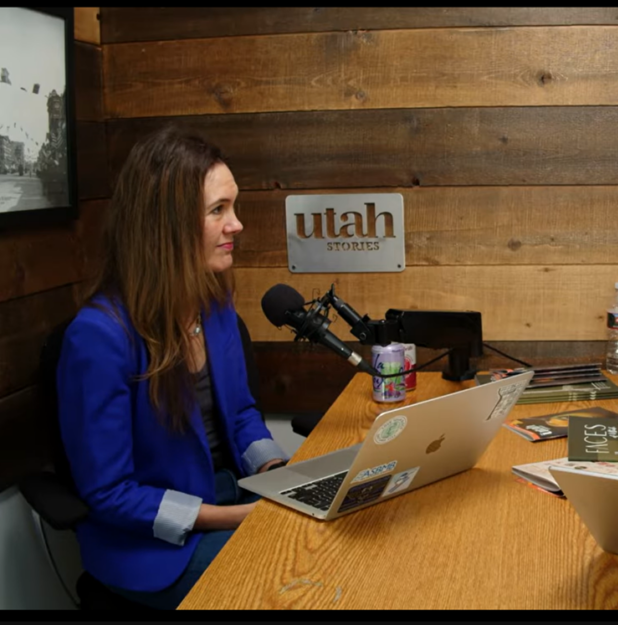
Three days before Ralph Hoffman was killed, Utah Stories interviewed Phillips Plaza residents who described security concerns, unauthorized visitors, and questions about how vulnerable tenants were being supervised. After the murder, many of those concerns remain unanswered.

|

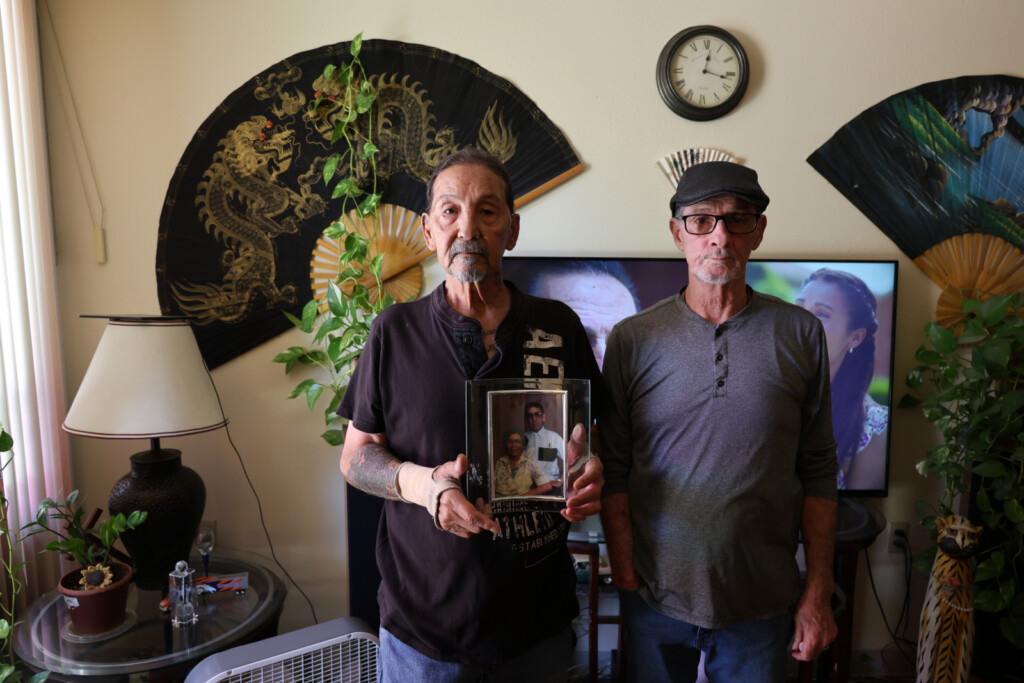
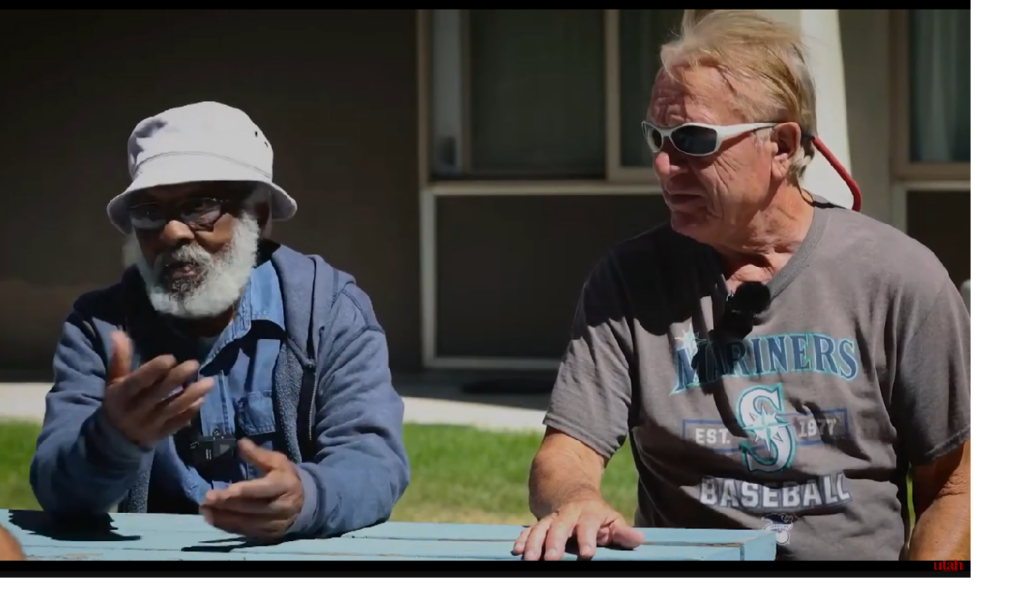
Phillips Plaza resident sspeak during a Utah Stories interview about security and living conditions at the Salt Lake City housing complex.

Utah stories spoke to residents at Philips Plaza about concerns they had over the building management three days prior to a murder of Ralph Hoffman that occured there.

According to sources, the Salt Lake Housing Authority manager was not conducting wellness checks and she was allowing for rotting bodies to be left for days. In addition, homeless drug addicts were getting into the building.

Ralph Hoffman was a senior with, “the mental capacity of a twelve-year-old” who was according to other residents taken advantage by a homeless drug addict.

The murder of Ralph Hoffman raises a number of questions that remain unanswered.

How were unauthorized individuals able to gain access to the building?

Were adequate security measures in place to protect residents?

Was Hoffman receiving the level of supervision and support his circumstances required?

Who was ultimately responsible for ensuring the safety and well-being of vulnerable residents?

Utah Stories contacted the Salt Lake Housing Authority seeking answers to these questions. As of publication, the agency had not responded to multiple requests for comment.

Watch the podcast below, which includes footage of Phillips Plaza residents discussing building conditions, security concerns, and the circumstances surrounding the death of Ralph Hoffman.

While many questions remain about conditions inside Phillips Plaza prior to Hoffman’s death, the facts surrounding the homicide itself have been reported by local news outlets.

According to the news reports, on the morning of May 25, 2026, Salt Lake City police responded to a report of a body found on a sidewalk near 1700 South and 300 East. Officers discovered a deceased man wrapped in garbage bags, plastic sheeting, a shower curtain, and duct tape lying beside a utility cart. Witnesses told investigators they had seen a man pushing the cart through the neighborhood before it tipped over, spilling its contents. The man reportedly fled the scene on foot.

The Utah State Medical Examiner later ruled the death a homicide caused by blunt force trauma and asphyxiation. Investigators identified the victim as Ralph Hoffman and traced the case to his apartment, where they found evidence of a violent struggle, including overturned furniture, an overturned mattress, missing household items, and possible bloodstains.

Police arrested 47-year-old Bentley Estelvin Scow, who had reportedly been living with Hoffman and was allegedly involved in a romantic relationship with him. According to local news reports, investigators allege that an argument between the two escalated into a deadly assault. News reports further state that investigators believe Scow attempted to dispose of Hoffman’s body after the killing. Authorities allege Hoffman suffered for an extended period before dying.

Scow has been charged with aggravated murder, obstruction of justice, and abuse or desecration of a human body. The case remains pending in Salt Lake County court.

Editor’s Note: This story is part of an ongoing Utah Stories investigation into conditions at Phillips Plaza. A forthcoming article will feature interviews with residents who describe life inside the building, concerns about security and oversight, and their experiences with Ralph Hoffman in the days and months before his death.


, , , ,


Join our newsletter.
Stay informed.


  • Why Most People Stay Stuck in Business and What It Takes to Move Forward

    Every so often, you meet an immigrant who came here with almost nothing and managed to build something exceptional.

    Prakash Shah is the kind of man who has spent enough time around risk that he no longer treats it like an interruption.

    Today, he works in business brokerage and advisory, helping owners sell companies, helping buyers decide whether they should step in, and, when the fit is right, helping connect those buyers with private equity. He works in a world of valuations, leverage, due diligence, and hard questions that most people would rather postpone. He also operates in Utah real estate and has built a career around seeing value before it is obvious to everyone else. That is who he is now. What makes him interesting is how early that instinct started to form, and how little his life resembles the way most Americans are raised to think about comfort, career, and security.

    He grew up in Nepal in a boarding school system that would feel severe to many Americans. He was an only child, yet he saw his parents only twice a year for twelve straight years, until high school graduation. He lived inside routine. He shared space with boys from different social classes and different family circumstances. The school was structured enough that money did not buy you any special standing once you were inside. Everyone followed the same rules. Everyone was subject to the same discipline. In his case, it was an army school. Everything was measured. Everything was scheduled. In that kind of environment, you do not build your life around preference. You build it around adaptation.

    That contrast matters.

    A lot of American children are raised to search for what fits them. What are you passionate about? What do you enjoy? What feels right? Those are not bad questions, but they can create a habit of waiting for life to align itself before action begins. Prakash learned something else much earlier. He learned that life often does not align itself first. You enter the room as it is, you deal with the people in it, and you figure out how to function without making your comfort the center of every decision. He said that one of the biggest lessons from those years was tolerance, the ability to live with people from all walks of life and genuinely learn to get along with them. That is not a soft value. In business, it turns into resilience. In negotiation, it turns into patience. In career terms, it turns into range.

    When he came to the United States over 25 years ago, he did not arrive with the kind of runway that allows for a prolonged identity search. He came with two suitcases and enough money for one semester. He went to Hunter College in New York City, then to NYIT near Central Park, studying media and then media and technology management. He also studied psychology. Those details matter because they show something about his mind. He was interested in people before he built a career around deals. Even then, what attracted him was not technical prestige. It was understanding motives, behavior, and how people reveal themselves.

    But New York is merciless toward vague ambition. It demands payment in rent, transit, food, and time.

    Prakash worked constantly. He took multiple jobs. He paid tuition, paid rent, and skipped most of what Americans imagine as college life. There were no romantic years of drifting from café to concert to self-discovery. He talked about not having the luxury of dates, travel, or finding himself. He was working. Even laundry was not a small detail. In New York, he pointed out, you do not just throw clothes in a machine at home. You haul them to the laundromat, count quarters, and measure what is necessary. He also described distraction in a way that most native-born Americans probably do not think about. For immigrants, distraction is not always pleasure. Sometimes distraction is the constant pressure of competing needs. Tuition or rent. Food or savings. A better coat or another month of making do. He was not romanticizing the struggle. He was describing the arithmetic of it.

    That arithmetic did not make him cautious. If anything, it did the opposite.

    While in college, he had the option of safer analytical work. Instead, he took a sales job with Time Warner Cable that sent him into the South Bronx from 6 p.m. to 10 p.m. to knock on doors. He is not a physically imposing man. He knew exactly what kind of neighborhoods he was walking into. He described apartment buildings where people kept pit bulls, where tension was normal, where one mistake in tone or timing could end a conversation immediately. For most people, that kind of job would have been something to survive and forget. For him, it became a school in human behavior. “It’s not about talking… it’s about listening,” he said.

    One story from that period says almost everything about how he operates. He knocked on a door one night around 8:45 and found himself facing a huge man with a gun on the table, pit bulls nearby, and a half-eaten pizza in front of him. It had all the ingredients of a very bad scene.

    Continue reading and support independent Utah journalism with a purchase of Utah Stories (Digital + Print) or 3 month free trial (Digital).


  • Left in a Box as a Baby: Trauma, Alcoholism, and Addiction

    A man abandoned as a baby builds a structured life in law enforcement, but unresolved trauma and alcoholism slowly begin to unravel it. His story raises a harder question about how change actually happens.


  • Utah Official’s $36K Travel Reimbursements Raise Questions About Use of Taxpayer Funds

    The trek into the office is a necessary evil for many employees; unpaid time that could be spent elsewhere. But some state employees are able to cash in on their commutes.

    That includes one member of Gov. Spencer Cox’s cabinet who heads the Utah Department of Cultural & Community Engagement. The department oversees a number of civic and social programs ranging from museums, libraries and the state historical society, to volunteerism efforts and multicultural affairs. 

    The employee’s in-state travel expenses made up a large chunk of the department’s employee reimbursements in recent years, according to documents obtained by The Utah Investigative Journalism Project obtained through a public records request. 

    The UIJP reviewed spreadsheets detailing the reimbursed expenses of the department’s 17-person leadership team over the 2024 and 2025 fiscal years. 

    The analysis showed one employee, Executive Director Donna Law, accounted for nearly a third of the team’s reimbursements in 2024 and 43% in 2025. Law, who lives in Cedar City, spent more than 11 times the average amount spent by all other employees included in the analysis. 

    The majority of Law’s expenses were categorized as in-state travel, which includes mileage and lodging. Between the two years, she spent $21,607.94 on lodging, $10,135.42  on auto mileage, and $1,455.00 in miscellaneous travel expenses and meals for a total of over $33,000. 

    The next highest amount spent on in-state travel was $3,385. Law’s overall spending far exceeded any other employee.

    The nearly $36,000 Law spent on travel and other items wasnearly three times that spent by the employee with the second highest amount in reimbursements. His expenses, in contrast, were largely out-of-state travel.

    Continue reading and support independent Utah journalism with a purchase of Utah Stories (Digital + Print) or 3 month free trial (Digital).


  • The $7 Million Recruit: How NIL Changed College Athletics Forever

    In 2012, Jabari Parker, a top high school prospect and member of the Church of Jesus Christ of Latter-day Saints, was facing his biggest decision to that point in his life: where to play college basketball. 

    Fans of BYU athletics hoped and perhaps prayed that Parker would pick the school owned by the church he was raised in. BYU was listed as one of his final choices. But he ultimately chose to spend his college years at Duke before attempting a career in the NBA. BYU fans were disappointed, but no one was truly surprised. Duke over BYU was the best choice for a young prospect in 2012. 

    A.J. Dybantsa.

    What changed between 2012 and 2024 when A.J. Dybantsa, the number one high school prospect, chose BYU over every other school? The answer is roughly $7 million dollars. That is what Dybantsa is reportedly making to play basketball at BYU. 

    The deal was supported by Utah Jazz owner Ryan Smith, who met multiple times with the Dybantsa family in multiple attempts to bring the young player to Provo. 

    According to Smith, he had no financial role in bringing Dybantsa to BYU, but the influence of Utah’s most famous billionaire acting as a “booster” or unofficial recruiter certainly swayed the decision.

    Prior to 2021, boosters acting as recruiters was taboo to the NCAA governing body. It was called improper recruiting. But in 2021, California began the modern era of NIL, or the ability of a college athlete to benefit from their name, image, or likeness, when they passed the “Fair Pay to Play Act.” 

    This new law gave college athletes in California the ability to benefit from their NIL, something that was banned in the rest of the country to that point. The NCAA saw that this law would create an unfair advantage for California schools that could now give young athletes the chance to make money off their talent and image while still in college. 

    The NCAA knew they needed to do something quickly, so they rushed through a policy that opened up NIL to all college athletes in the country, and it has been expanding and evolving over the last four years. 

    Grant Duff, who has coached at the University of Utah, Weber State University, and is now the defensive coordinator for Idaho State University, says, “The best part of NIL is that athletes have an opportunity to make good money. The downside comes with the free-for-all that money causes.”

    Dybantsa confers with BYU Head coach, Kevin Young.

    One of the biggest current examples of what a school can do when the boosters are willing to pay for success is Texas Tech University. From 2020-2024, Texas Tech had 34 wins, which works out to 6.8 wins per year with a low of 4 wins and high of 8. Then Texas Tech’s boosters got involved, led by Cody Campbell, an oil industry businessman and Chairman of the Texas Tech board. The football program was given 28 million dollars for NIL with a simple message attached to the large pile of money: Win. And win now. And win they did. 

    By signing NIL deals with athletes in the transfer portal, Texas Tech went from a middle-of-the-pack school in their conference to one of the top 12 teams in the country. They didn’t just win games in 2025, they made many of their opponents look like they didn’t belong on the same field, including the University of Utah and BYU twice. That is what money can buy.

    Continue reading and support independent Utah journalism with a purchase of Utah Stories (Digital + Print) or 3 month free trial (Digital).