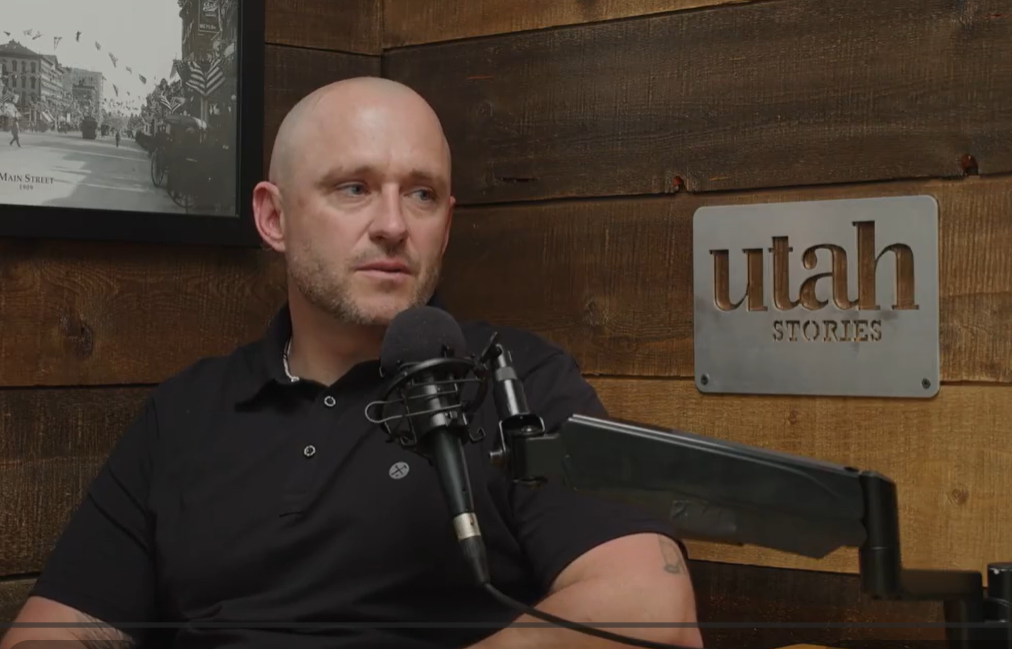
Every week, Joel Haddock meets people standing where he once stood.
Some are facing lengthy prison sentences. Others have spent years cycling through the criminal justice system, convinced that incarceration is simply part of who they are. As a member of the legal and admissions team at The Other Side Academy in Salt Lake City, Haddock helps them navigate the process of entering the long-term rehabilitation program that transformed his own life.
There was a time when he never imagined he would be helping others find a different path. He believed prison was his future because, for most of his life, it had been his reality.
After pleading guilty to nine felony charges, most of them second-degree felonies, Haddock faced what amounted to decades behind bars. A district court judge suspended those prison sentences on one condition: complete The Other Side Academy. If he failed, he would serve every one of those consecutive sentences.
At first, the Academy represented little more than a way to avoid prison.
“It was the deal of a lifetime,” Haddock says.
His motivation had nothing to do with personal growth. He simply wanted to stay out of prison. But about fifteen months into the Academy’s thirty-month program, something unexpected happened.
“I noticed the way I saw things was different,” he says. “How I reacted to situations was different. I liked who I’d become.”
For Haddock, that realization marked the first time he truly believed his life could be different.
His journey toward crime began long before adulthood. He grew up in a home where instability was the norm. Drugs, criminal behavior, neglect and physical abuse surrounded his childhood. His family moved frequently, leaving little consistency at school or at home. His mother struggled with addiction, while his father worked odd jobs whenever he could. Safe, dependable role models were scarce.
“I had nothing stable when I was younger,” he says.
Crime entered his life before hard drugs did. As a teenager he stole cars, sold marijuana at school and repeatedly encountered law enforcement. By the age of fourteen he was committed to California’s youth correctional system, where he remained until shortly before turning eighteen.
Instead of changing his life, the experience pushed him further into criminal culture.
Surrounded by older, more experienced offenders, he learned how to survive inside the system rather than outside it. Looking back, he believes the correctional system gave him plenty of time to become a better criminal but very little opportunity to become a better person.
After his release, methamphetamine entered the picture, followed by years of adult incarceration in Nevada and Utah. The cycle became painfully familiar. Prison. Release. A job. A brief attempt at rebuilding life. Then the inevitable collapse.
Haddock describes reaching what he now calls “the edge of my ability.”
He could find work. He could earn money. But he had never learned how to manage relationships, resolve conflict, make sound decisions or build a stable life. When those challenges appeared, crime was the only solution he knew.
That realization shaped the way he views rehabilitation today.
Haddock believes many treatment programs are designed for people whose lives are fundamentally intact—people who have families, careers and homes but need help overcoming substance abuse. His life looked very different. By the time he entered The Other Side Academy, addiction was only one piece of a much larger problem.
“I needed to completely change who I’d become,” he says. “It wasn’t going to take ninety days.”
He believes long-term accountability—not simply therapy or detox—made the difference. Day after day, residents learn to resolve conflict, communicate honestly, accept criticism, work consistently and take responsibility for one another. Over time, those habits become part of everyday life rather than lessons learned in a classroom.
For Haddock, the Academy taught something prison never did: how to live.
Equally important was discovering a sense of dignity.
The Other Side Academy supports itself through businesses operated by participants rather than government funding or insurance reimbursements. Contributing to his own recovery fundamentally changed how Haddock viewed himself.
“I found a lot of dignity,” he says. “I found a lot of self-respect.”
Instead of seeing himself as another burden on taxpayers or his family, he began taking ownership of the damage he had caused.
“I am the problem,” he says. “And I get to fix it.”
His perspective on addiction was shaped not only by his own experiences but also by tragedy within his family.
His sister struggled for years with schizophrenia, addiction and homelessness in Las Vegas. Haddock repeatedly encouraged her to enter treatment, and organizations working with the homeless tried to help her as well. She left treatment programs more than once before eventually dying from an overdose.
Haddock was able to travel to Las Vegas before she passed away and later arranged her cremation. The experience reinforced a painful lesson that continues to guide the advice he gives families.
No matter how much someone is loved, recovery cannot be forced.
Because of that, Haddock encourages families to avoid enabling addiction by providing money or temporary solutions that allow destructive behavior to continue. Instead, he believes they should offer treatment resources while leaving the responsibility for accepting help where it belongs.
“They really do have to want it,” he says.
Those same beliefs influence how he views Utah’s broader struggles with homelessness and recidivism.
Haddock does not believe housing alone changes lives. Without accountability and the skills necessary to maintain stability, he fears many people simply carry the same destructive behaviors into a different setting. Lasting change, he believes, comes from combining compassion with expectations, helping people develop the ability to support themselves rather than simply providing services.
“I think we need to meet this problem with more expectations,” he says.
Today, Haddock hopes Utah expands opportunities for incarcerated individuals to enter long-term rehabilitation before completing their prison sentences. He believes programs like The Other Side Academy can reduce recidivism by addressing the problems prison often leaves untouched—character, accountability and the practical skills required to live a productive life.
Looking back, Haddock no longer measures success by the prison sentence he avoided. He measures it by the person he became after accepting responsibility for the life he had created. For years he believed freedom meant getting out of prison. Today, he sees it differently. Freedom came only after learning how to live outside the walls that had defined him for so long.