As a native Salt Laker, I remember when I was one of the few who brought reusable bags to my local Smith’s. But in recent years, more and more Utahns have opted for reusable bags. Many grocers like Smith’s marketed off this trend, introducing their own reusables at checkout counters. It’s a step forward, but there is a catch: they are almost always made of plastic, plastic that will last just as long in landfills as their single-use counterparts.
Peter Murray decided to do something about it.
Murray founded Stardust Sustainables in 2017, a Park City-based business that sells one of the most sustainable reusable bags on the market.
Organic cotton, the leading natural material for reusable bags, takes months to break down in commercial composters. Stardust bags are made with 70% jute and 30% cotton to reduce fiber shedding, completely free of plastic-derived materials. Thanks to their plant-based materials, they break down in a matter of weeks.
Murray tested this out himself and buried a 100% cotton bag, 100% bamboo bag, and a Stardust prototype in his backyard to test the break down process. Sure enough, after only nine weeks buried under the soil, the Stardust bag was nearly entirely degraded, no anaerobic digester required. The bamboo bag took about three months, and the cotton took six.
“It’s the bag that lasts forever until you don’t want it to,” Murray said.
The jute fiber comes from flowering plants in India and Bangladesh. It grows alongside rice crops as a nitrogen-fixing cover crop and requires only rainfall to grow. Stardust bags are manufactured in India by a company that is Fair Trade, GOTS, Sedex, and amfori certified.
While the bags are intended to break down without leaving a trace at the end of their life, Stardust bags are designed to last for hundreds of grocery runs and market hauls. The sturdy fabric easily holds a case of wine and fits oddly shaped groceries.
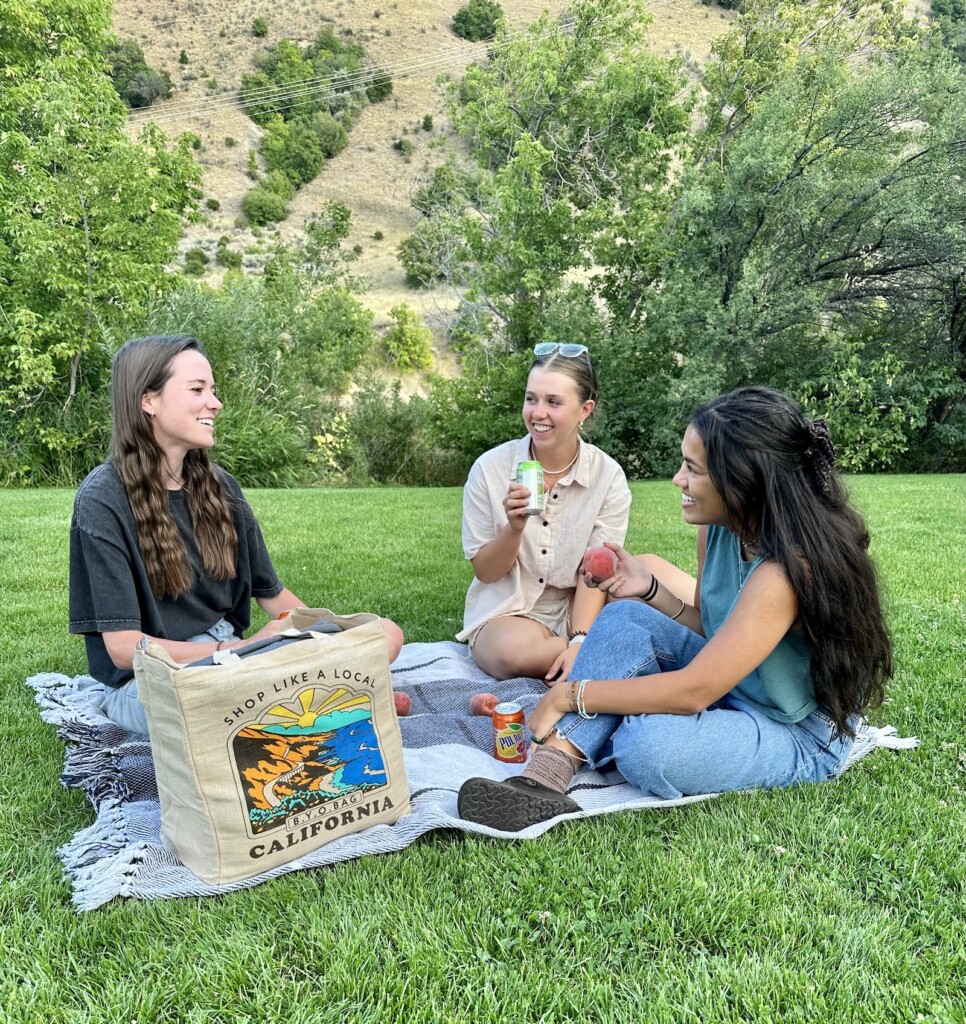
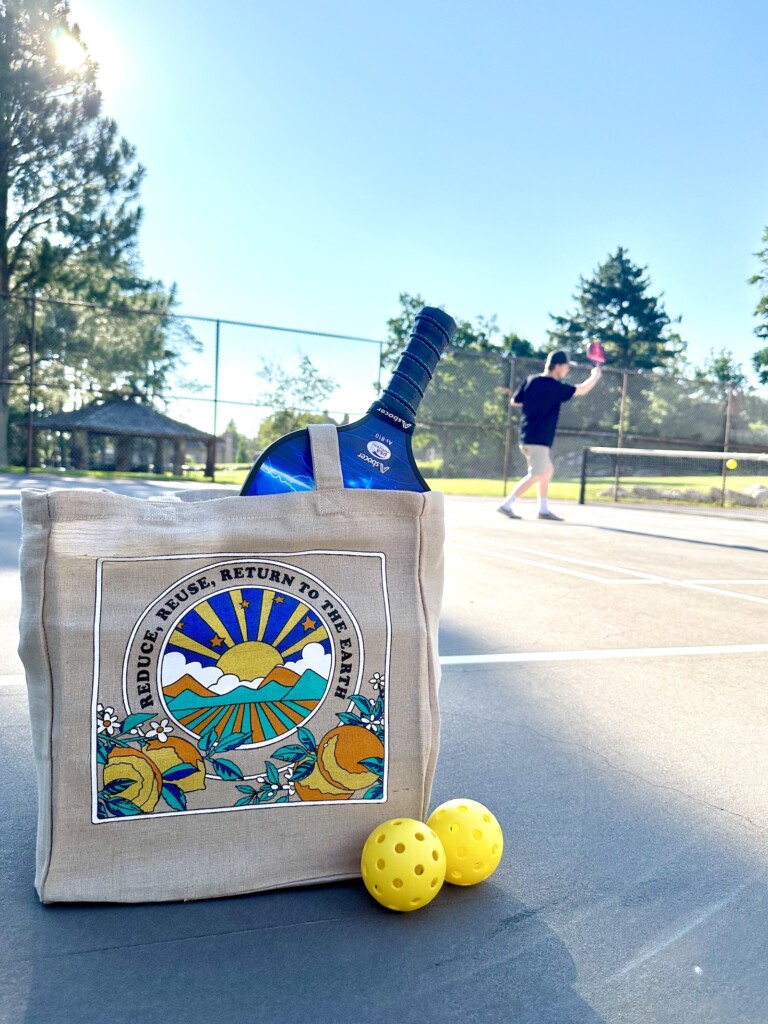
Designed locally, Stardust’s designs are contemporary, collectable, and some are even humorous, celebrating and even poking fun at the great state of Utah. The bags are also available throughout Colorado, California, Oregon, New Mexico and Washington.
Murray follows a circular economy business model, eliminating physical waste in every step of production, from the compostable product design to reusing and eventually recycling the cardboard boxes from shipments.
“We’ve made a product that’s literally just like the blossom or leaf from a tree that falls to the ground, goes back into the soil, regenerates the soil,” Murray said. “There’s no waste.”
Murray started Stardust as a one-man-band. Murray moved to Park City from Virginia in 2017 after a career in landscape architecture for 35 years. This is where the idea for Stardust bloomed. He invested his retirement savings into the passion project, unsure how it would go. He now employs an intern and has a business partner with experience in startups, manufacturing and distribution to cope with the growth of the company.

Steadily growing since 2017, Stardust now sells in 39 stores across Utah, Colorado, New Mexico, Washington, Oregon, and California from small grocers to REI locations. They also foster partnerships with other local Utah companies like TreeUtah and Snowbird Resort for branded bags.
The Market in Park City was the first company to gamble on Stardust. Although the bags were introduced at a slightly higher price point, store manager Rush Hotchkiss was confident the bags were going to sell well because they were made with longevity and durability in mind.
“They’re great bags,” Hotchkiss said. “People really like ‘em, and they do extremely well.”
Stardust tends to sell well year-round at The Market in Park City, averaging about 20 bags every week. The holidays only draw sales up more. Hotchkiss appreciates Murray’s easy-to-work-with demeanor and his passion for Stardust.
Murray is inspired by Dennis Hayes—the environmental advocate who worked with U.S. Senator Gaylord Nelson to establish Earth Day as a nationwide holiday in 1970—and Rachel Carson—the conservationist and author who alerted Americans of the dangers of chemical fertilizers in her book Silent Spring.
“Our brand has been successful because we have taken a basic commodity and turned it into something that makes people happy,” Murray said. “When I read the reviews that people send in, I realize we are connecting with people and enriching their lives because it empowers them to make the world a little cleaner and better.”
Stardust is just one company of many selling environmentally conscious products in a world that is still highly reliant on plastic. He hopes Stardust bags will help customers reduce their plastic waste and encourage them to adopt other sustainable habits.
“You never know who you’re gonna inspire,” Murray said.