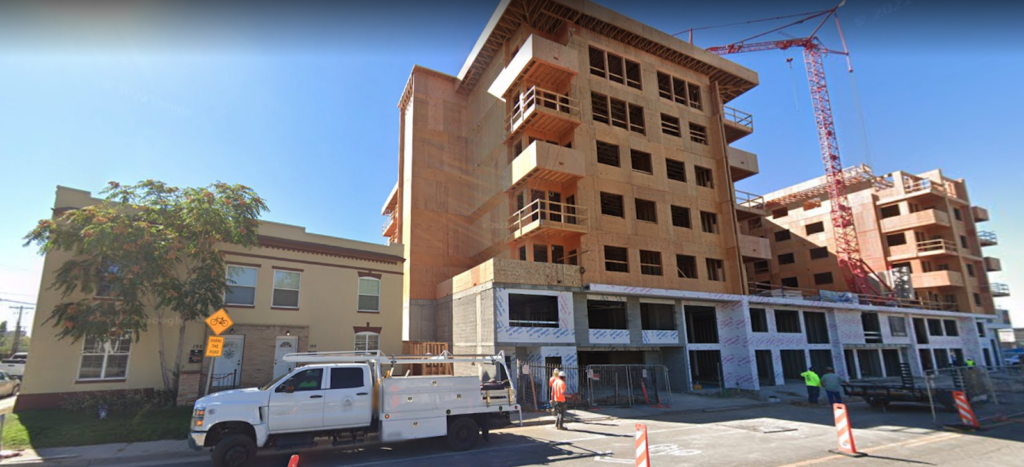
Drive down the stretch of State Street between 4800 South and Vine Street and you’ll wonder if you’ve gone back in time. Historic buildings listed on the National Register of Historic Places like the Desert Star Theatre and the Murray Theatre line the street. Take a detour through the neighboring Murray Downtown Residential Historic District where you’ll see rows of charming old houses and … a seven story high-rise of brand new condos.
The condos are going up on the site of the historic Murray 1st Chapel, built in 1907, and Carnegie Library built in 1915. The buildings were demolished in 2020. There’s a noticeable difference in the neighborhood. Murray City lost a landmark, and its residents lost their sense of place.
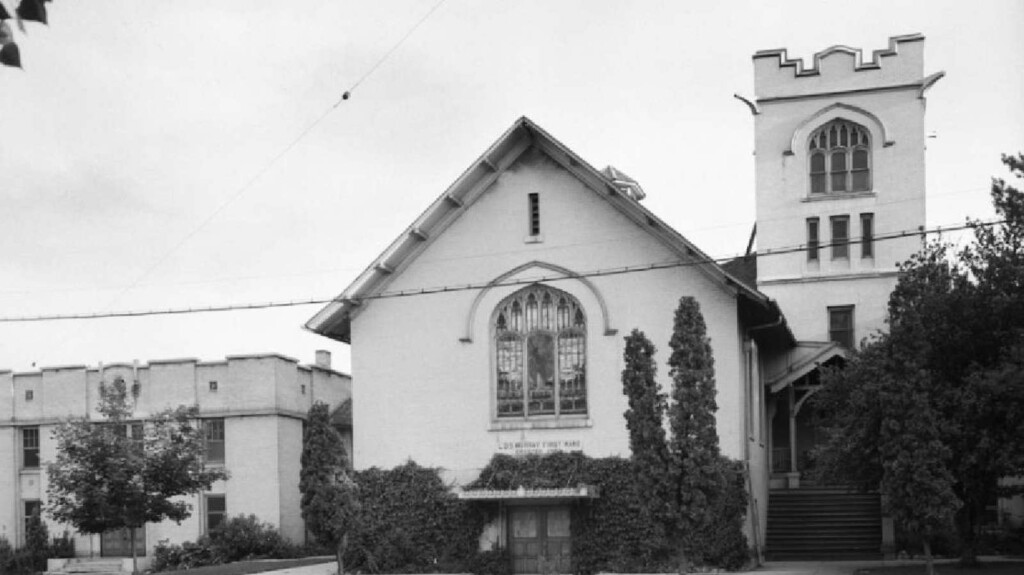
These buildings were saved from demolition once. The founder of Historic Murray First Foundation, Kathleen Stanford, filed a lawsuit against Murray City in 2017, according to an article on KSL.com. Stanford alleged the plan to demolish the historic buildings violated two city codes. The article states that Judge Keith Kelly said the city’s planning commission did not review or apply the codes related to historic buildings in their decision. Soon after losing the lawsuit, Murray City dismantled their ordinances to protect historic buildings.
“People are getting sick of losing things that make Murray feel like home,” says Rachel Morot, Vice President and founding member of Historic Murray First Foundation.
Historic Murray First Foundation is fighting to save Murray’s historic buildings. Meeting every two weeks at board members’ houses, the small nonprofit made up of seven friends, neighbors, and history-loving Murrayites, plans walking tours of historic homes, educational lectures, and campaigns to save their city’s historic buildings.
According to their website, their mission is: “… advocacy, education, and fundraising to preserve and repurpose the unique architecture of the historic downtown section of Murray City which is at immediate risk of demolition and redevelopment.”
Community advocacy is a lot of work, but this little group is making a difference. Historic Murray First Foundation was able to make preservation a key platform in the city’s last election. They’ve also kept preservation at the forefront of the city’s consciousness, says Morot. “If it weren’t for our efforts, the city would be able to ignore historic preservation entirely.”
The foundation has a vision for Murray City that includes preserving, restoring and repurposing historic buildings. On their website, they spell out what historic preservation means. Besides creating affordable housing and walkable neighborhoods, historic preservation means higher property values and saving money on new construction. Economic development doesn’t have to mean tearing down Murray’s history. Their website states, “A healthy and vibrant community needs a good balance of both the old and the new to continue thriving and serving its people.”
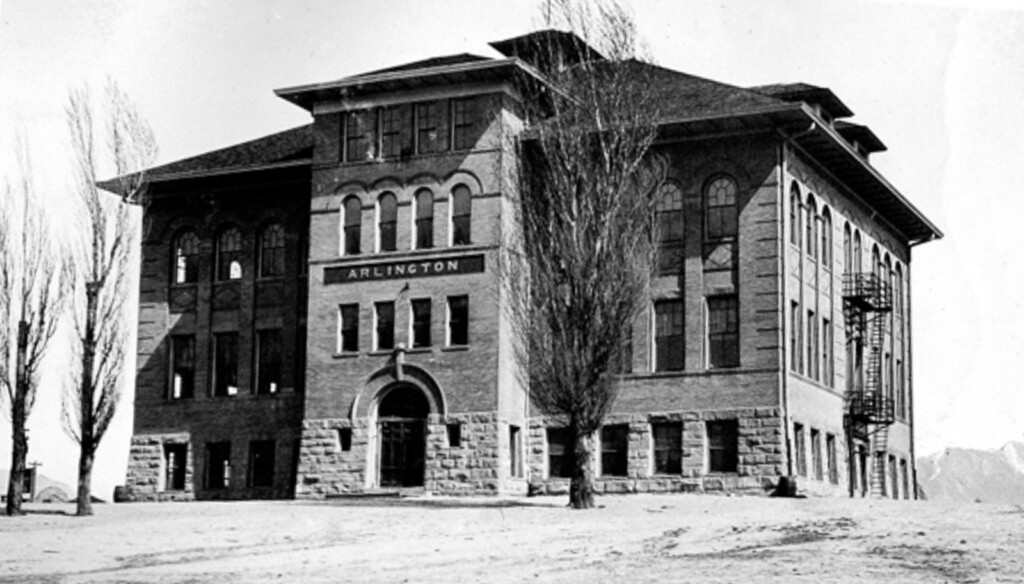
Their last campaign was an attempt to save the Arlington School at 5052 South State Street. This building had many incarnations, the latest of which was the home of Murray’s City Hall. On their website, Historic Murray First Foundation detailed the reasons why this historic building deserved to be saved. The Arlington was designed with a nod to the Art Deco style by Scott & Welch, which also designed the SLC Masonic Temple. This building was also a Works Progress Administration project to help the community after the Great Depression. The Arlington also has a unique park-like setting with a wide green open space, which is rare along State Street.
Murray City wants to sell the building to a developer who will likely tear it down for another high-rise apartment building. Despite their grassroots efforts to save and repurpose the building, it looks like the city will get its way, again. “There is a lot of ambivalence in Murray because so often things go the way of the developers and the city, rather than the voting taxpayers,” admits Morot, but she doesn’t sound defeated. She wants the real stakeholders to speak up. “When you talk about stakeholders, it’s the people who live in this community who have to be overshadowed by these giant highrises.”
With limited volunteers and funds, Historic Murray First Foundation is doing their best to preserve Murray’s historic buildings in a city determined to bring in more revenue by tearing them down. Without codes to protect the buildings, it’s going to be a challenge. If you’d like to help Historic Murray First Foundation, they are actively seeking volunteers, a volunteer coordinator, board members, and help with grant writing. They’re also seeking donations. Visit their website and follow them on Facebook and Instagram for updates and more information.