Utah Stories

Parley’s Trail — New Bicycle & Pedestrian Trail Near Completion

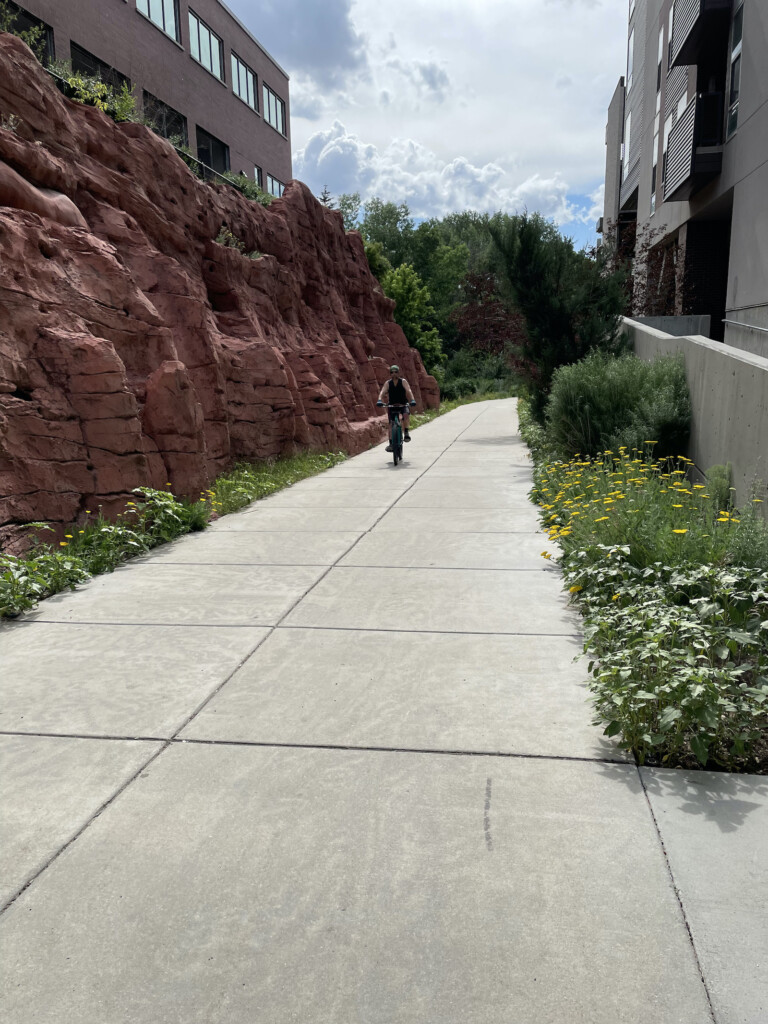
Parley’s Trail, named after famed pioneer and LDS missionary, Parley P. Pratt, is an 8-mile-long walking and biking path that begins at 900 W and continues in interrupted sections to Parley’s Canyon. This trail and the connections to each section have been underway for many years and should be completed by September.

|


Afton Holzer, a long-time cyclist and daily user of the trail, talked about her experiences with the sections that are open now. 

“I go on that trail every day. It’s awesome. I work right by it. I walk on it every day with my coworkers at lunch and then sometimes I run it. It’s really nice because it’s not all uphill or all downhill. It’s a good variety, so I think it’s especially fun for biking because there’s good stretches of it that are all downhill.”  

She does have one critique, however. 

“Some of it is right by the [I-80] freeway, so if you’re walking with other people, it’s sometimes hard to have a conversation because you’re right by the traffic and it’s kind of loud,” Afton explains.
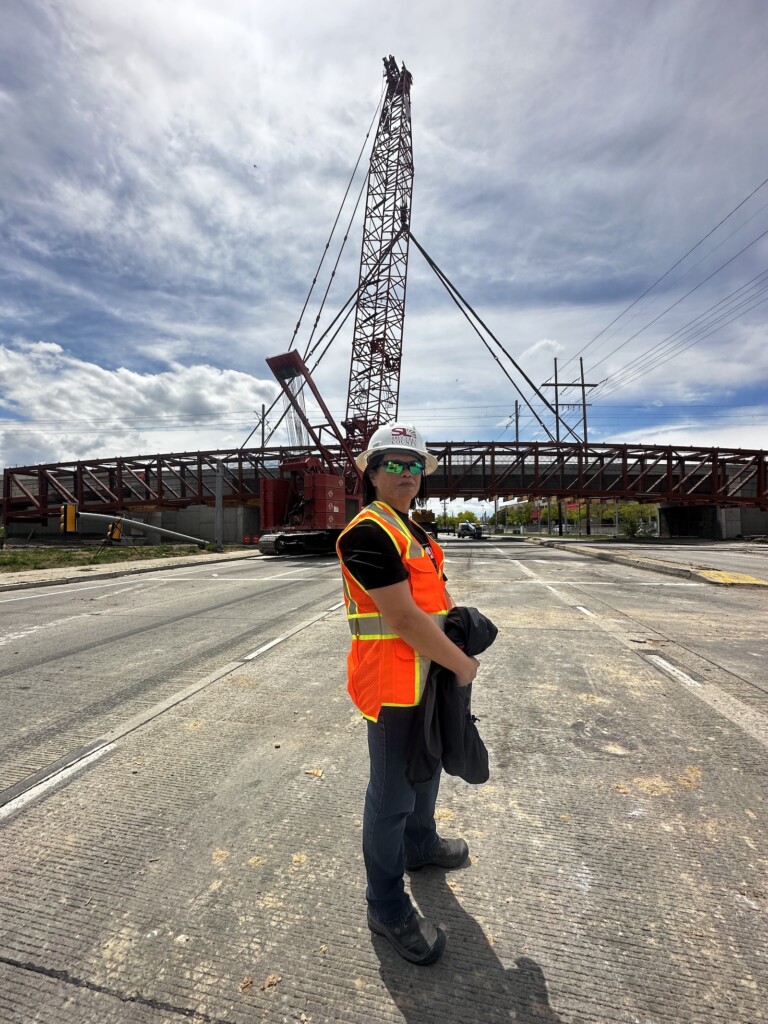
Madeline Francisco-Galang, a cvil engineer responsible for erecting bridges around 900 W.

Madeline, a civil engineer who has been in the industry for more than 28 years, joined the project with Salt Lake County Parks and Recreation in 2021. Her ambition is to provide alternative forms of transportation like transit, cycling, and walking to get people off the road. 

“Since COVID, I think trails have been given another life now that people have realized the importance of connection, being outside, and being able to get from one place to another without driving,” Madeline said.

Madeline’s job was to erect the bridges around 900 W.

“Crossing 900 W is challenging because we had to close it down in order to work on it and then we had to take down the crossing signal line arms, as well as just getting funding for the project. The project was originally started in 2017, and due to COVID and inflation, the price increased significantly.” 
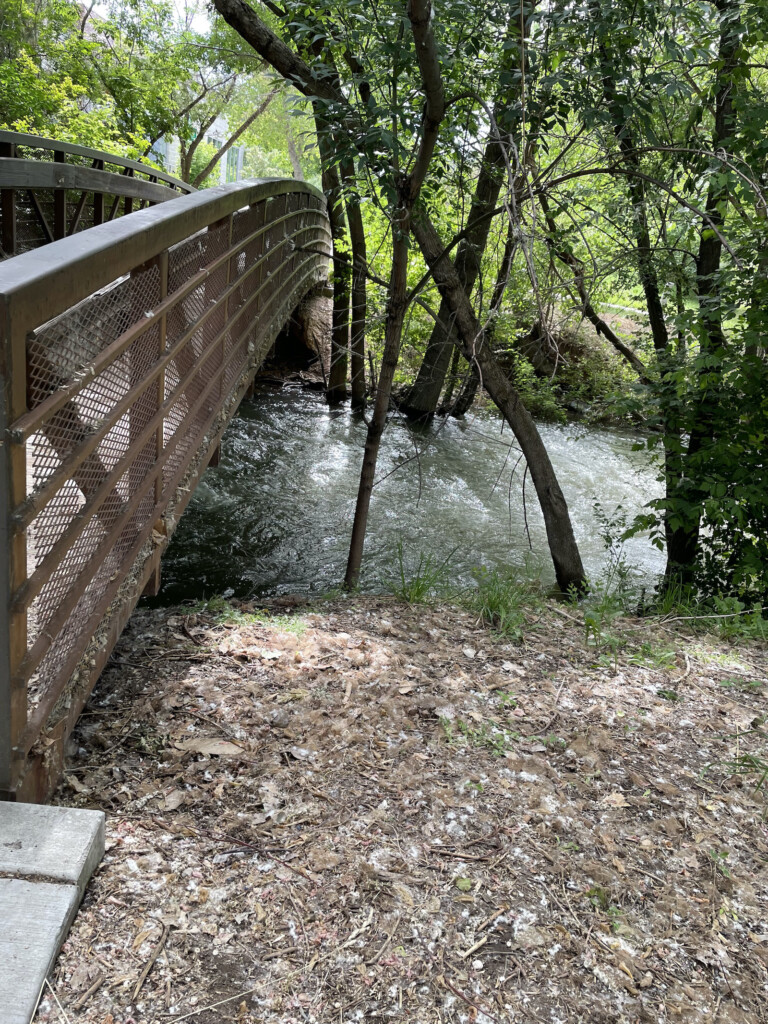
A grassroots group called PRATT mainly funded the project. PRATT stands for “Parley’s Rails, Trails, and Tunnels” whose focus is connecting the Jordan River Parkway with the Bonneville Shoreline Trail

Parley’s Trail is significant because of its historical beginnings and its longstanding supporters. 

Madeline weighs in: “Trails are really important, and now more people are using them. It is a really big deal because now there’s a direct connection all the way from the mouth of the canyon to the Jordan River without pedestrians and cyclists getting into busy traffic, and for people of all abilities, including those in wheelchairs.”

Making this trail accessible for those without cars or disabilities required the use of different designs and technologies for the space available. For Parley’s Trail to be usable and safe, the trail needed to be connected by a bridge which went over dangerous, fast-moving traffic. 
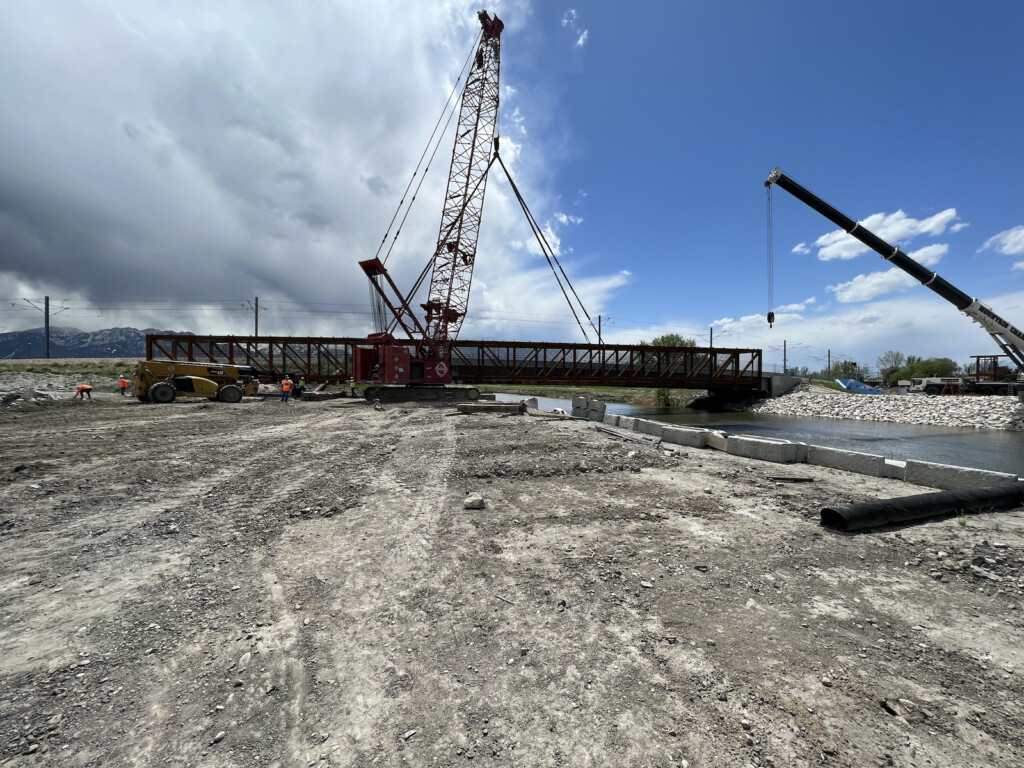
“There is an UTA bridge on the south side of the project that had to be taken into consideration,” and it was limited to what kind of equipment you could bring in there due to the construction,” Madeline explains. “The hardest thing about this project is that, design-wise, it’s very challenging for the structural engineers. Space is very tight, which required drilled shafts to be completed for the structure.”

And these drill shafts had to go deep. 

“Normally, bridges are built in a different way using different technologies, but in this case, what we did is build a shaft. We had to go into the ground 50 to 60 feet. That’s how deep the footings are for these structures.”

Another draw to the trail is the Sego Lily Plaza, which is a key area that mitigates floodwaters and contains many species of vegetation native to the area. Andrea, the planner overseeing the end of this project, worked with this section but was unavailable for comment. 

The entirety of this project goes back further into Utah’s history. 

“Part of this trail has been in the works for many years. It’s probably been out there for 20 to 25 years, and it all started with the master plan. But here we are with the final leg and with a direct connection to the Jordan river,” Madeline said. “Basically, PRATT has shepherded this project from beginning to end … they’ve been a very big part of making this project happen.” 

Madeline voiced her gratitude at the opportunity to be a part of that history. 

“I will always remember this project as the highlight of my career,” she exclaimed.

The grand-bike “ribbon cutting” for the trail will be September 28 at 10am at the Jordan River Trailhead Park, 1055 W 2320 S. Everyone is invited for an inaugural bike ride across the bridge.

Photos by Tani Leavitt and courtesy of Madeline Francisco-Galang.

, , ,

Join our newsletter.
Stay informed.


  • Highway 6 and the Midland Trail: Utah’s Transcontinental Highway History

    From Price Canyon to Delta’s desert stretch, Utah played a central role in building the Midland Trail, one of America’s earliest transcontinental highways and the foundation of today’s Highway 6.


  • Utah Acquires US Magnesium Assets in $30M Deal to Protect the Great Salt Lake

    Utah leaders announced the state has successfully won the bid to acquire key assets of the defunct US Magnesium facility on the Great Salt Lake, including its associated water rights and property.


  • Whiskey, Bullets & a Buried Town: Archaeologists Reveal Alta’s Wild Past

    Before Alta was known for powder days and lift lines, it was a silver mining town clinging to the side of a narrow canyon. In the late 1800s, men lived at 8,000 feet, went underground each day, and endured winters that regularly buried buildings in snow. This past summer, that mining town resurfaced — literally — during construction at the Alta Ski Area.

    To understand what Alta really looked like, you don’t begin with legend. You begin with its trash — and this time, that happened almost by accident.

    Alta Ski Area was installing underground water reservoirs to support snowmaking. Because the project sits on Uinta-Wasatch-Cache National Forest land, an archaeologist was required to monitor the excavation. No one expected the trench to produce much.

    But, It did.

    Artifacts began surfacing almost immediately. Enough that the Forest Service contacted the Utah State Historic Preservation Office for help. Lexi Little, who coordinates the Utah Cultural Site Stewardship Program, helped mobilize nearly 30 volunteers to assist with what quickly became a focused two-week excavation.

    Winter deadlines were approaching. The pipes for the reservoirs had to go in the ground. There wasn’t time for a slow, extended dig.

    “It was two weeks of digging in the dirt and helping figure out exactly what we were looking at,” Little said.

    Most of the people screening soil weren’t professional archaeologists. They were trained stewards from around Utah — part of a statewide volunteer network that now approaches 500 people. They poured dirt through shaker screens, scanning for fragments that could piece together a town long buried.

    “Archaeology is human trash,” Little explained. “Archaeologists are very into trash.”

    Alta had left plenty behind.

    https://youtu.be/hzIHzx3OGoo?si=dKcl2CEz-t6FZzYw

    Victorian-style ceramics appeared first — the kind typically used in hotels. Medicine bottles followed. Ink bottles. Hand-blown glass. A porcelain doll’s foot surfaced from the soil, a small detail that shifted the mental image of the town. Families were here. Children were here. This wasn’t only a camp of miners.

    The bottles helped establish time. Manufacturing details — whether glass was hand-blown or mold-made, whether a maker’s mark appeared on the base — allowed archaeologists to date many of the artifacts to the 1870s through the 1890s, when Alta was booming as a silver mining town.

    “That gives you that range of dates for when Alta was really booming,” Little said.

    One reusable soda bottle clearly stamped “Salt Lake City” connected the canyon to the valley economy below.

    Then something unusual rolled out of a dirt pile.

    A corked bottle. Intact. Liquid still inside.

    To access this post, you must purchase Utah Stories (Digital + Print) or 3 month free trial (Digital).


  • The Only Full Bottle of Alcohol Ever Found in Utah Was Unearthed in Alta

    When a backhoe rolled a corked bottle out of the dirt at Alta this summer, no one immediately grasped what they were holding. It wasn’t empty. It wasn’t shattered. It was full. “The bottle that was discovered up at Alta is the only bottle of alcohol ever discovered in an archaeological excavation in the state…