I hate to break it to all young people, but the answer is no. We cannot trust the people who are paid to be our “public servants” because, unfortunately, they don’t have the best track record for keeping their own private interests out of their decisions, especially in an era of such dramatic decline in local media scrutinizing their actions.
Those we elect are largely accessible, they can be coerced to a degree, and they actually will listen to the public from time to time. But not Mayor Mendenhall, whom I have requested a short interview with. But the growing number of unelected, highly-paid, very powerful leaders – they apparently answer to no one.
In this year’s Hidden Utah issue, we are examining examples of ways in which farmers are working with nature to produce apples and hemp, and we are examining developers who want to destroy nature in the interest of “progress”.
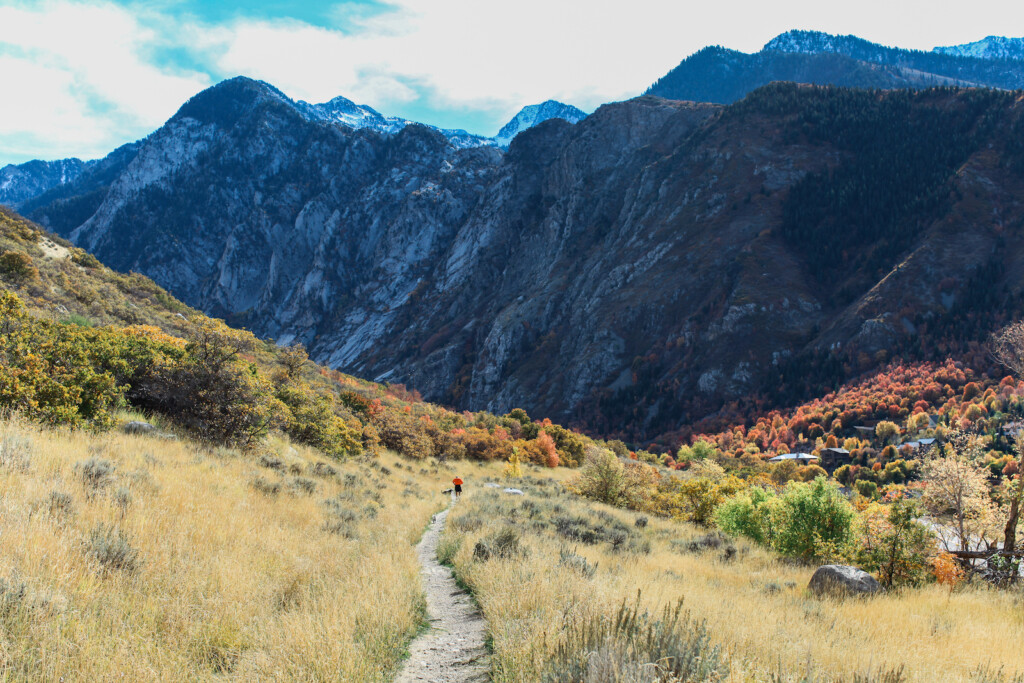
Why is a canyon that required eons of dramatic geological activity to create, that features some of the most stunning scenery in all of Utah, now going to be gutted with 23 thirty-foot base towers to suspend gondolas? How is this “moving forward” according to UDOT, despite the fact that 89% of residents who have commented on the plan say they don’t want it?
In this issue, Farmer Scott Smith said it concisely: “You have a lot of respect for the land, and a lot of respect for the environment. You take advantage of what nature has given you,” he explains. Smith gets it.
Sadly, the gondola plan is moving forward because those at UDOT have allegedly “listened” to the public comments at the Wasatch Front Regional Council meetings and they have decided to move forward anyway. I went to these meetings where dozens spoke out against the gondolas and just two men spoke in favor. Just two: Dave Fields, CEO of Snowbird, and Nathan Rafferty of Ski Utah.
Their motives appear to be profit driven. Their aim? To make a profit, obviously. To drive tourism? To make Utah even more appealing? Your guess is as good as mine, because unelected leaders don’t need to discuss their aims, and they don’t want to be interviewed. But one (Chris McCandless) did agree to a brief interview, and even though I disagree with him, I praise his courage to talk openly.
On another note, greater Salt Lake County is on a massive building binge. High rise residential towers continue to sprout upward, and the cries of those who are making attempts to preserve history are falling on deaf ears. Developers and city leaders want to raze old buildings to make way for progress. Historic Murray is disappearing. Why should that matter? Why not go to the movies to see historic films? Because a city should be a tapestry; a city should embrace the old and the new, and kids need to learn about the old. Learning about the old puts the new into perspective.
When kids are inundated with Tik Tok videos, stimulation, entertainment, and very little down time, how, where and when is their imagination going to be stimulated? Where will free-thinking and discerning opinions based on logic and reasoning take place?
Witnessing a canyon that is an incredible example of the forces of geology, such as Little Cottonwood Canyon, or Desolation Canyon which was carved by the Green River, heightens our consciousness. Experiencing a building that was constructed more than 100 years ago, as was the Murray Carnegie library, and examining its historic architecture, makes one curious about the ways in which our ancestors lived, and it provides meaning, purpose, and most importantly, direction to our own lives. It provides cues as to why we need to turn off our distractionary devices and experience the world the way our grandparents enjoyed it. Then we might stop and ask ourselves, “Are we on the right path?”
Enjoy Utah, enjoy the hidden, and find some freedom away from the noise.
Photo of Little Cottonwood Canyon by Dung Hoang.