Development Projects

The Untold Story of Downtown Salt Lake City’s Main Street

Downtown Salt Lake City’s population will more than double in the next two years. Are residents and SLC planners prepared for this growth?

|


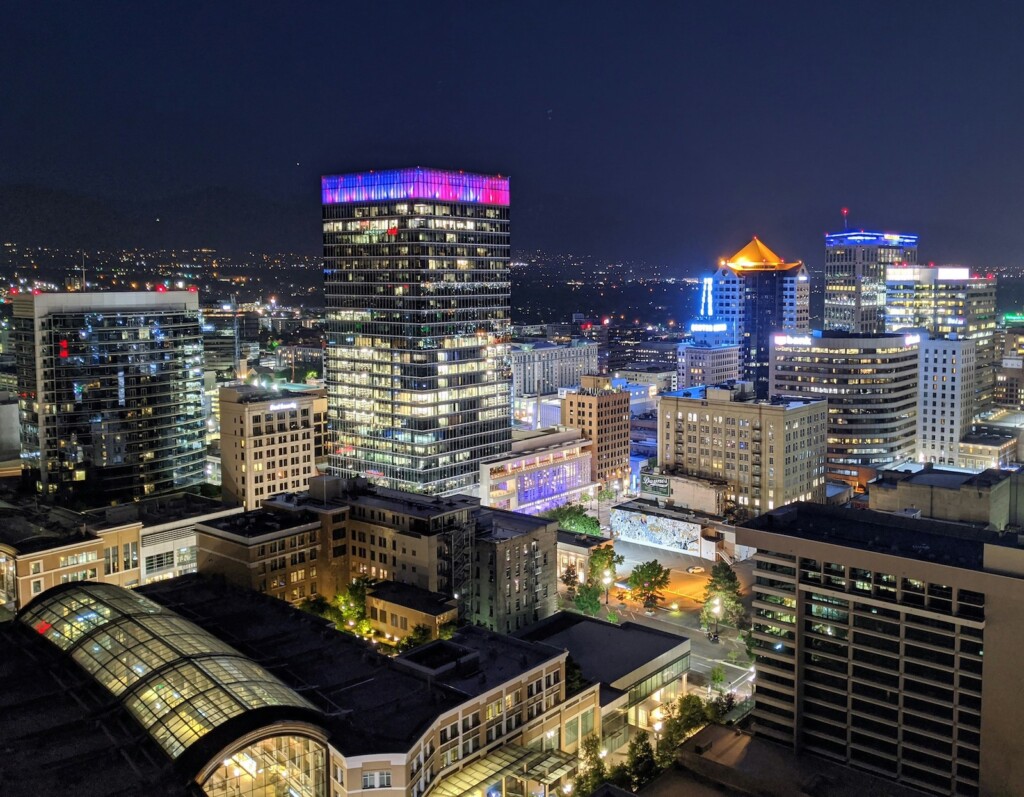
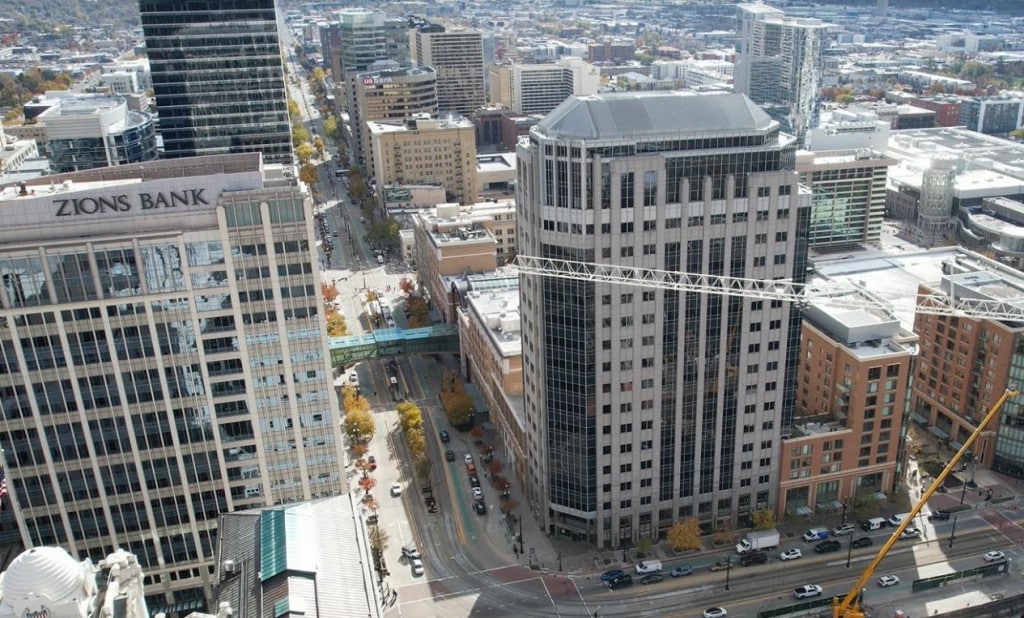
According to Dee Brewer of the Salt Lake City Downtown Alliance, Downtown Salt Lake City’s population will more than double in the next two years. This is based upon the timeline for completion of all of the apartments currently under construction.

Are residents and SLC planners prepared for this growth? What are they doing to accommodate the huge influx of residents? What do residents think about the growth as well as the best and worst of downtown?

Asking Salt Lake City Residents About Downtown

We asked residents what they love about downtown SLC as well as what they don’t love. We received interesting answers, which we reported on in an earlier story.

Utah Stories has also been examining the greater economy of Main Street in Salt Lake City for the past 15 years and we have found some interesting history and trends.

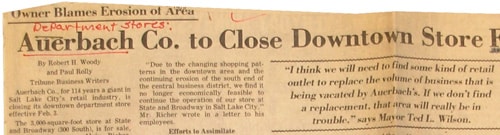
Salt Lake City’s Main Street once had dozens of locally-owned businesses on Main including Auerbach’s Department store, Broadway Music, Baker Shoes, Wolf’s sporting goods, and a dozen jewelry stores and restaurants. So what happened?

in 1978 there was a “beautification project” which resulted in a loss of parking and a two-year construction project on Main Street that local businesses had to contend with. At the same time, The Crossroads Mall was being constructed enticing dozens of corporate chain stores to locate there on the North-end of Main Street, just across the street from the ZCMI Center. This was a big hand-up for corporate chains and a pile of dirt and construction for locally-owned businesses.

In the two years, these construction projects were underway nearly a dozen locally-owned businesses shuttered. Main Street’s economic vitality, historic buildings, and social fabric in restaurants and retail were in essence traded for Wall Street traded corporations. Instead of Auerbach’s Department store, started by two pioneer brothers in the 19th century, the Crossroads Mall offered Nordstrom, J.C. Pennys, Burger King, and others. Lost forever from downtown were Broadway Music, Wolf’s Sporting Goods, Keith Warshaw and Paris Company.
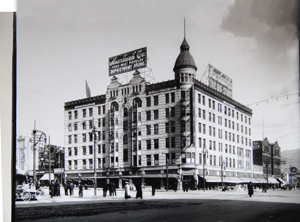
Was this intentional? Likely not. But this is what happened in the interest of “smart city planning”, in hopes to help local businesses by widening sidewalks. But there were other factors at play.

All over the United States in the late seventies and early eighties, urban centers were in decline. “White flight” was underway, and city residents on a mass scale moved to the suburbs.

Beautification efforts and malls on Main Street were efforts to keep residents and shoppers downtown.  The greater economic impact was not considered because city leaders ignored the voices of the local business community. “You are killing us with kindness,” said Richard Schubach, the second-generation owner of Standard Optical. But city leaders didn’t listen. It will all be worth it when shoppers return downtown. But after three years of construction; piles of dirt in from of businesses entryways; and no remediation or compensation to local businesses for the years that Main Street was a mess, a dozen businesses had to close their doors.

We believe this story of Main Street’s history needs to be told concurrently with telling the story of the massive growth that downtown Salt Lake City is currently experiencing.
Utah Stories aims to produce a documentary film on Salt Lake City’s Main Street in 2023. Our effort is to interview business owners, residents, and some of the new people who are coming here. Will Salt Lake City become unrecognizable and a great home for more chain stores and giant corporations? Or will local character, local businesses, and local control continue? Who holds the keys to our future?

We aim to find out. To Support this project and our efforts subscribe to Utah Stories. In a few months, we will be offering a membership portal, where you can upgrade your subscription and receive tickets to the premiere screening of Downtown The Untold Story of Salt Lake City’s Main Street.

, ,


Join our newsletter.
Stay informed.


  • A Ski Village or a Tipping Point? Nordic Valley Expansion Divides Ogden Valley

    The project, known as Nordic Village, is expected to roll out over the next decade and represents one of the largest tourism developments in the valley’s history.


  • Ogden Utah: Boomtown, Bargain, or Utah’s Next Unaffordable City?

    With its reinvigorated downtown and close proximity to mountains and river pathways, this northern Utah city is enjoying a renaissance. Ogden’s stock of affordable housing — compared to other metros along the Wasatch Front — currently draws people in for a closer look. 


  • The End of an Era? FanX and the Salt Palace Closure

    For more than a decade, FanX has called the Salt Palace home. With the convention center set to close for a massive renovation, founder Dan Farr is preparing for a new chapter while planning one final celebration in its longtime venue.


  • The Stratos Project and Corporate Power: Who Controls Utah’s Future?

    If we were all just consumers, Governor Cox, Mike Lee, Speaker Schultz, and Kevin O’Leary would have it easy. If we were just more concerned about money, jobs, and tech, and less concerned about raising our kids in communities (not in front of screens), culture, the environment, and water, those smart dudes would get exactly what they want — Stratos: a city of the future, buzzing with processors and transistors, making all of our AI dreams come true! 

    The world we could live in would be a dazzling, Mr. Wonderful kind of place. We would beat those pesky Chinese in the AI war; our AI robots could do all of our farming and ostensibly harvest the water we need for the Great Salt Lake out of thin air. But apparently, we just don’t get it. We haven’t yet reached the point predicted by Aldous Huxley’s vision in Brave New World, where we are completely distracted, dopamine-driven consumers who only need sex, drugs, and stuff to remain happy.

    Maybe Stratos will be an amazing marvel, and somehow, as Governor Cox claims, “. . . add more water to the Great Salt Lake.” But we aren’t sold. While this Stratos project has received considerable attention, it’s worth taking a step back to attempt to understand how corporate power appears to have usurped civic power.

    Civics is the practice of shaping our society through our collective voices and community involvement. Ask the residents in Tremonton, Utah how well that is working out for them. Can we still shape our world through our elected leaders? Does it matter who we vote for at the ballot box if organizations like UDOT, UTA, and MIDA can supersede our local government authority and citizen backlash? 

    The corporatization of our communities and the interests that impact our political leaders’ decision making processes are seen as far more of a concern than the average Utah resident’s concerns. Special interests and corporate power are shaping Utah’s future more than ever. 

    It’s worth asking: ‘How can we regain control over shaping Utah’s future in light of the growing power and billions that the technocrats now wield in shaping our world today?’ Amazon’s market cap exceeds the GDP of Canada. The “Magnificent Seven” tech stocks now have a greater market cap than the entire GDP of Europe ($23.6 trillion. EU countries have $19.3 trillion GDP). Will tech companies become their own nation-states and dominate their own chunks of various states? Will we become their subjects?

    There are two sides to this coin: We love Utah not just because we have the most outdoor wilderness playgrounds, but also because of Utah’s prosperity and job market. This is because Utah has become a tech hub. Our tech leadership has minted several billionaires and billion-dollar businesses. Utah offers a market and an educated workforce that more businesses and giant corporations want to be a part of. This is a benefit for even non-tech Utahns.

    The problem with this success is that as we dole out more money to attract more tech businesses, data centers, fulfillment centers, and big corporate retailers, it becomes more difficult to carve out our “sense of community.” As corporate sovereignty replaces local business sovereignty, we see that our voices and our votes matter less.

    Ask who our politicians work for, and nearly every Utahn believes they work far more for their corporate donors than they work for the average Utah citizen. So how do we best regain control over our communities?

    Continue reading and support independent Utah journalism with a purchase of Utah Stories (Digital + Print) or 3 month free trial (Digital).