Debate

Utah’s Scary Housing Market

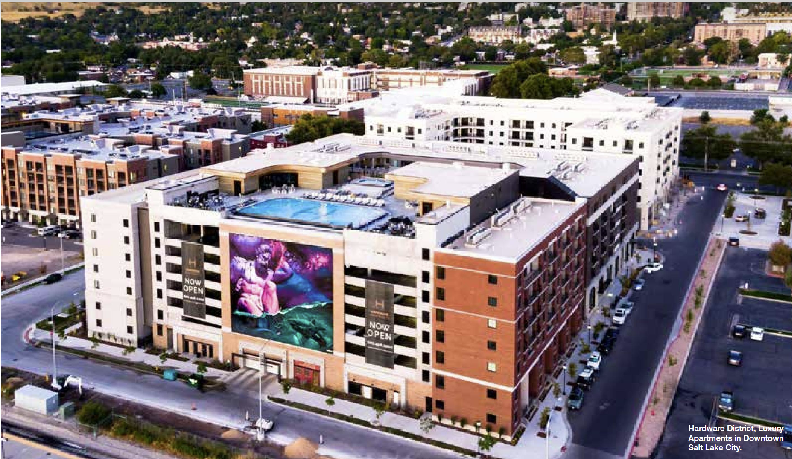
With $2,950 per month to own a very small home, young couples have no chance of finding any affordable housing than young couples in Utah.

|


Ghosts and goblins have a better chance of finding affordable housing than young couples in Utah. 

Today, when developers in Utah claim to build “affordable housing”, they are now talking about two-bedroom townhomes that can sell for around $400,000. So homeless advocates had to come up with a new term: “deeply-affordable housing”, which is housing for around $200,000- $300,000. The only problem is that even housing in this price range is now an impossible goal (without subsidies) under current market conditions.

What this means for the average first-time home buyer in Utah in real terms is that including HOA fees, property taxes, and insurance, it’s now $2,950 per month to own even a very small home in Utah. Even with dual incomes over $50K per year, nearly half of earnings are going to pay a mortgage. 

With the Federal Reserve currently combating inflation via increases in interest rates, home prices are falling. They dropped by nearly $10K on average in Utah already. So should buyers wait? “Don’t be afraid to buy a home, but just plan on holding it for at least five to seven years,” said Eric Gardner, a local Utah real estate agent on the Utah Stories show.

Utah Stories has been extensively covering housing and homelessness for the past eight months on our Utah Stories Show. We believe that these are the most important issues receiving little coverage by local mainstream media. In the nearly nine months of covering this topic, we have reached a few salient conclusions:

  1. Housing affordability is no longer a function of free-market principles of supply and demand but it is moreover a function of NIMBYISM. Fewer politicians and homeowners are willing to adapt to projects that might impact property values: affordable-housing projects, such as manufactured-home or tiny-home communities are not getting green-lighted anywhere where it’s truly needed. This fear and protectionism that the wrong type of neighbors might move into their backyard is the main driver of housing in Utah (as well as every major city in the West) becoming unaffordable.
  2. Housing in Utah could become affordable virtually overnight if government leaders began working for service-sector, working-class residents. They could work for their interests by insisting on the relaxation of zoning laws in every city and county along the Wasatch Front calling for tiny home communities and manufactured-home communities. Zoning laws in the United States are some of the strictest in the world. They are elitist, classist, and racist in nature. (Search the Supreme Court Case “VILLAGE OF EUCLID V. AMBLER REALTY CO). Zoning laws are written to keep the poor out of rich neighborhoods and to monopolize and lock-down land under the auspices of “protection”. The reality is that zoning laws are designed to maintain elevated property values for those who have enjoyed the upward trajectory of home and land prices for decades.
  3. A good supply of affordable housing is a much better option than government-sponsored, tax-payer financed “housing projects”, vouchers or “Housing First: Long-Term Supportive Care”. Why? Because when recent college graduates, working-class professionals, and seniors can purchase homes (and not depend on the government), they enjoy greater freedom through ownership. Acquiring home equity is the greatest form of non-taxable wealth-creation Americans can enjoy, but those who have it shouldn’t prevent others from getting their share, too. Every decent MLM in Utah knows this!
  4. Former President George W. Bush famously promoted the “Ownership Society” by pressuring banks to reduce interest rates and introduce more options for first-time homebuyers. Banks realized this was an opportunity for them to get wildly rich. The subprime loan fiasco didn’t end well in 2008, with the housing bubble bursting and the collapse of the financial sector. This collapse led to fewer homes being built over the subsequent decade. Certainly, a big part of the American Dream includes home ownership. But since the housing bubble, monopolizing housing units for the rich, and elite investment firms have become the new normal. If this continues, it will only lead to economic stagnation, as fewer people will be able to become financially independent and be able to start businesses, and retire comfortably.
  5. “Millennials” and GenY and iGen (those who are in their early forties to early twenties) are often the butt of jokes by GenXers and Boomers, but they are facing a serious disadvantage compared to prior generations when homeownership is out of reach. With home prices becoming so astronomically expensive, it becomes much more difficult for them to enjoy vacations; afford raising children, and have disposable income to set aside for savings.  
  6. Housing unaffordability is in part by design. I’m not a big conspiracy theorist, but there is indeed a mountain of evidence that suggests that big banks and the financial elites as well as the Good ‘Ol Boys Club here in Utah love limiting the supply of affordable housing so that a huge population of cash-strapped renters will continue making them rich. The sentiment is displayed via the elites in Davos: “The pandemic represents a rare but narrow window of opportunity to reflect, reimagine, and reset our world.” 

Professor Klaus Schwab, Founder, and Executive Chairman, World Economic Forum. 

Banking and corporate overlords can much more easily get a handle on ensuring your money, and labor is under their control when fewer people are able to afford their own homes. Is the Great Reset Coming? If we don’t take control, things will certainly become worse.


Do Your Part

Stop taking “No” for an answer. We can develop affordable housing in Utah if zoning laws are relaxed. If we insist that more farmers practice even minimal conservation efforts, there is plenty of water to go around. We just need to insist that our political leaders start working for our interests rather than the special interests the home builders, developers and banks who finance their campaigns. We call on you to attend your City Council meetings, write to your representatives in the State Legislature, and help end these dismal trends. But you need to become involved.

Watch a recent episode of the Utah Stories Show where we present Logan Moffett, a Utah investor who attempted to develop a park full of manufactured homes in Centerfield, Utah for $100,000 each, and how and why he was shut down by the city leadership.

And to our fellow Millennials, let’s enjoy our $15 cocktails while renting one-bedroom studio apartments for outrageous amounts. At least we can have our cocktails and drink them too. But let’s not lose sight of the fact that our world just might be taken over by corporate ghouls collecting rent, and zombies who have no other options than working their entire lives for the man.


RELATED STORIES

Five Things in Utah That Need To Go

Despite Utah’s Affordable Housing Crisis, the City of Centerfield Places Moratorium on an Affordable Housing Project

City of Centerfield Responds to NIMBYISM Claim Against Affordable Housing

Rampant Crime is Forcing Residents to Leave Ballpark Neighborhood in Salt Lake City

Homeless Population in Utah Increases Due to Seniors Being Priced out of the Rental Market

Why “Deeply Affordable” Housing Is Not Being Built in Utah and it Won’t be Built Anytime Soon

Could Tiny Homes Be the Answer to Utah’s Affordable Housing Shortage?

SUPPORT LOCAL JOURNALISM AND SUBSCRIBE TO PRINT MAGAZINE


Subscribe to Utah Stories weekly newsletter and get our stories directly to your inbox

* indicates required


, , ,


Join our newsletter.
Stay informed.


  • A Ski Village or a Tipping Point? Nordic Valley Expansion Divides Ogden Valley

    The project, known as Nordic Village, is expected to roll out over the next decade and represents one of the largest tourism developments in the valley’s history.


  • Utah Homelessness Crisis: Tyler Clancy Challenges ‘Housing First’ Failures

    “It’s not normal to see someone sleeping on the sidewalk in a sleeping bag with a needle sticking out of their arm.”

    That sentence should not be controversial. In a sane society, it would barely need saying. But in Utah — where politicians, nonprofits, consultants, and bureaucrats have spent more than a decade congratulating themselves for “addressing homelessness” while the streets of Salt Lake have become more dangerous, more drug-soaked, and more morally disorienting — it lands like an indictment. And it came not from a crank, a talk-radio host, or a downtown business owner at the end of his rope, but from Tyler Clancy, Utah’s newly appointed homeless coordinator.

    That matters because if Clancy is serious — and after sitting down with him, he appears to be — then he represents something Utah’s homelessness system has not had in a very long time: someone willing to say the obvious out loud. The old script is dead. Everybody knows it, but almost nobody in power has wanted to admit it. 

    For years, Utah’s homelessness policy has been built on a polite fiction — that if we build enough units, distribute enough funding, and avoid being too “judgmental,” the crisis will gradually resolve itself. That story was easier to maintain when Utah was receiving national praise for “solving chronic homelessness.” It is much harder to sustain now, when the conditions on the ground tell a very different story.

    Magnolia Apartments opened to help alleviate homelessness, but the results were not all positive.

    Part of that failure became painfully clear over the last four years. By most accounts, former homelessness coordinator Wayne Niederhauser was a decent man and a very nice guy. But one person close to him described his tenure as that of “a tiger without stripes”— someone with the title, but not the appetite to challenge the sprawling network of nonprofits and service providers receiving millions in taxpayer dollars. That lack of accountability has had real consequences. Multiple former and current residents have told Utah Stories that of the roughly 60 original tenants who moved into Magnolia when it opened, about 20 have since died — most, they say, from accidental drug overdoses. 

    If those accounts are even close to accurate, they should have triggered a public reckoning. Instead, the system kept moving, protected by good intentions, insulated from scrutiny, and largely unbothered by outcomes that would be considered a scandal in almost any other context.

    That is the machine Clancy is stepping into, and unless he is willing to confront it directly — not just coordinate around it — his role risks becoming one more layer of management over the same failures. The reality he inherits is not complicated in the way policymakers like to suggest. It is visible, immediate, and increasingly impossible to explain away. 

    Open drug use, fentanyl addiction, untreated mental illness, rising disorder, and a growing sense among both the public and the homeless themselves all indicate that the system is not working. Complexity exists, but it has also become a convenient shield for cowardice. It is the language people use when they want to avoid saying what is plainly in front of them: Utah has spent years managing visible human collapse while calling it compassion.

    The Lie Utah Told Itself

    For years, Utah’s approach to homelessness rested on a narrative few in power were willing to question. It sounded compassionate. It polled well. And it avoided uncomfortable truths.

    Continue reading with a Utah Stories subscription. Start your 3-month free trial.

    Continue reading and support independent Utah journalism with a purchase of Utah Stories (Digital + Print) or 3 month free trial (Digital).


  • Utah Official’s $36K Travel Reimbursements Raise Questions About Use of Taxpayer Funds

    The trek into the office is a necessary evil for many employees; unpaid time that could be spent elsewhere. But some state employees are able to cash in on their commutes.

    That includes one member of Gov. Spencer Cox’s cabinet who heads the Utah Department of Cultural & Community Engagement. The department oversees a number of civic and social programs ranging from museums, libraries and the state historical society, to volunteerism efforts and multicultural affairs. 

    The employee’s in-state travel expenses made up a large chunk of the department’s employee reimbursements in recent years, according to documents obtained by The Utah Investigative Journalism Project obtained through a public records request. 

    The UIJP reviewed spreadsheets detailing the reimbursed expenses of the department’s 17-person leadership team over the 2024 and 2025 fiscal years. 

    The analysis showed one employee, Executive Director Donna Law, accounted for nearly a third of the team’s reimbursements in 2024 and 43% in 2025. Law, who lives in Cedar City, spent more than 11 times the average amount spent by all other employees included in the analysis. 

    The majority of Law’s expenses were categorized as in-state travel, which includes mileage and lodging. Between the two years, she spent $21,607.94 on lodging, $10,135.42  on auto mileage, and $1,455.00 in miscellaneous travel expenses and meals for a total of over $33,000. 

    The next highest amount spent on in-state travel was $3,385. Law’s overall spending far exceeded any other employee.

    The nearly $36,000 Law spent on travel and other items wasnearly three times that spent by the employee with the second highest amount in reimbursements. His expenses, in contrast, were largely out-of-state travel.

    Continue reading and support independent Utah journalism with a purchase of Utah Stories (Digital + Print) or 3 month free trial (Digital).


  • The $7 Million Recruit: How NIL Changed College Athletics Forever

    In 2012, Jabari Parker, a top high school prospect and member of the Church of Jesus Christ of Latter-day Saints, was facing his biggest decision to that point in his life: where to play college basketball. 

    Fans of BYU athletics hoped and perhaps prayed that Parker would pick the school owned by the church he was raised in. BYU was listed as one of his final choices. But he ultimately chose to spend his college years at Duke before attempting a career in the NBA. BYU fans were disappointed, but no one was truly surprised. Duke over BYU was the best choice for a young prospect in 2012. 

    A.J. Dybantsa.

    What changed between 2012 and 2024 when A.J. Dybantsa, the number one high school prospect, chose BYU over every other school? The answer is roughly $7 million dollars. That is what Dybantsa is reportedly making to play basketball at BYU. 

    The deal was supported by Utah Jazz owner Ryan Smith, who met multiple times with the Dybantsa family in multiple attempts to bring the young player to Provo. 

    According to Smith, he had no financial role in bringing Dybantsa to BYU, but the influence of Utah’s most famous billionaire acting as a “booster” or unofficial recruiter certainly swayed the decision.

    Prior to 2021, boosters acting as recruiters was taboo to the NCAA governing body. It was called improper recruiting. But in 2021, California began the modern era of NIL, or the ability of a college athlete to benefit from their name, image, or likeness, when they passed the “Fair Pay to Play Act.” 

    This new law gave college athletes in California the ability to benefit from their NIL, something that was banned in the rest of the country to that point. The NCAA saw that this law would create an unfair advantage for California schools that could now give young athletes the chance to make money off their talent and image while still in college. 

    The NCAA knew they needed to do something quickly, so they rushed through a policy that opened up NIL to all college athletes in the country, and it has been expanding and evolving over the last four years. 

    Grant Duff, who has coached at the University of Utah, Weber State University, and is now the defensive coordinator for Idaho State University, says, “The best part of NIL is that athletes have an opportunity to make good money. The downside comes with the free-for-all that money causes.”

    Dybantsa confers with BYU Head coach, Kevin Young.

    One of the biggest current examples of what a school can do when the boosters are willing to pay for success is Texas Tech University. From 2020-2024, Texas Tech had 34 wins, which works out to 6.8 wins per year with a low of 4 wins and high of 8. Then Texas Tech’s boosters got involved, led by Cody Campbell, an oil industry businessman and Chairman of the Texas Tech board. The football program was given 28 million dollars for NIL with a simple message attached to the large pile of money: Win. And win now. And win they did. 

    By signing NIL deals with athletes in the transfer portal, Texas Tech went from a middle-of-the-pack school in their conference to one of the top 12 teams in the country. They didn’t just win games in 2025, they made many of their opponents look like they didn’t belong on the same field, including the University of Utah and BYU twice. That is what money can buy.

    Continue reading and support independent Utah journalism with a purchase of Utah Stories (Digital + Print) or 3 month free trial (Digital).