Community Relations

The Legacy of The Man Who Photographed Women Wearing Body Paint in the Utah Desert

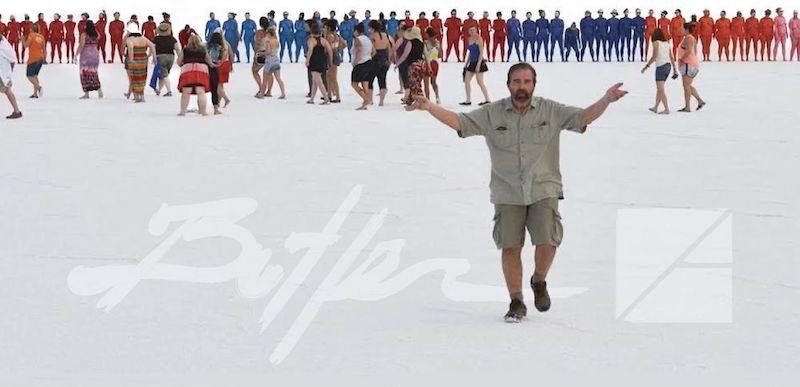
Paul Butler, became famous for his remarkable nude figure drawings and photos of women wearing body paint.  

|


The human body has always been the most popular subject in contemporary art, and Utah artist, architect and photographer, Paul Butler, became famous for his remarkable nude figure drawings and photos of women wearing body paint.  

During photography and painting  sessions, his female models often shared with him their insecurities and discomfort regarding their own bodies. He told People Magazine in 2017, “I always responded, ‘If you realized what you look like to others, you wouldn’t be saying that. You should be celebrating every part of you.’”  

For 25 years of his life, before his passing in early 2022, Butler changed the lives of hundreds of women with an annual photography project that will live on for generations to come. It was known as The Wendover Project.

The first time Butler photographed a painted nude woman was in 1997. He took her to the Salt Flats, covered her nude body with paint, then photographed her utilizing the desolate desert background for contrast. The following year, six more women went with him to have their own naked bodies painted and photographed. Any body type or size was acceptable for the project.

Participants reported feeling empowered by the experience. No matter how nervous they were in the beginning, they all left feeling confident and comfortable about their bodies. 

The Wendover Project grew every year, including more than 100 models per shoot by the final years of the series, and the feedback was often the same: This project was helping women love their bodies. Each photo set carried a different theme, and each one was unique and equally powerful.

One model shared her experience with The Wendover Project in 2015. “I had never been involved in a large scale photo shoot and project like this before. I had no idea what to expect. There was a lot of standing around, getting lost, not being able to hear (That is a personal issue as I have slight hearing loss in one of my ears), being hungry and thirsty, sweating from places I literally had never felt sweat drip from before, laughing, chatting, and being naked. It was a long day and I would do it again in a heartbeat. Why? The lessons I learned about myself and human bodies in general changed my life forever.” 

She went on to share realizations and reflections she had as a result of the experience. She says, “I caught glimpses of all kinds of bodies. Cellulite, scars, insulin pumps, bruises, bones, skinny bodies, fat bodies, short bodies, tall bodies. Bodies. That’s all they were. Bodies. And then, they became more. They became people. As I talked to the women around me, they became nurses, teachers, students, bankers, people. They were people. Simple, complex, people. By taking away the messages of their clothing people were able to tell me who they were without as many preconceived notions.”

Butler’s Wendover Project was intentional, important and impactful. His son, Paul Butler Jr., expresses that body-centric photography was what he feels his father “had the most passion for throughout his life because he was able to provide a safe space for people to be comfortable with their bodies as they were transformed into works of art.”

Butler empowered women by proving that beauty is abundant in bodies of all shapes and sizes. His work will continue to change the world as the ripple effect of his project continues to make waves.

Join the celebration of Paul Butler’s life and art at Eccles Art Center (2580 Jefferson Avenue, Ogden, Utah) on October 8th, 2022 from 1:00 pm to 6 pm.

RELATED CONTENT

Studio Artistic: An Immigrant Story That Will Make You Believe In The American Dream Again

Artist Havoc Hendricks: Making a Living by Drawing on Walls

Artist Samantha Long: Love of Whimsy

All Aboard! Idyllic Worlds Recreated by Utah Model Trains Artist Lee Witten

Artist Chris Bodily’s Expectations Surpassed in Successful Crowdfunded Graphic Novel Campaign

SUPPORT LOCAL JOURNALISM AND SUBSCRIBE TO PRINT MAGAZINE


Subscribe to Utah Stories weekly newsletter and get our stories directly to your inbox

* indicates required


, , ,

Join our newsletter.
Stay informed.


  • Salt Lake City Newcomers Club: Finding Friendship and Belonging Since 1948

    Moving away from your hometown can come with many blessings. But for some, it also comes with just as many bouts of loneliness. That ache of not knowing where to meet people, or grieving the friends you left behind, comes in waves. Workplaces and churches can sometimes provide ready-made communities, but what happens when they don’t? Where do you go to find true belonging?


  • Highway 6 and the Midland Trail: Utah’s Transcontinental Highway History

    From Price Canyon to Delta’s desert stretch, Utah played a central role in building the Midland Trail, one of America’s earliest transcontinental highways and the foundation of today’s Highway 6.


  • A Stand-Up Wheelchair Gives Paralysis Patients Greater Independence

    After a cycling accident left him paralyzed, Bill Winchester had to relearn how to navigate daily life from a wheelchair. A stand-up wheelchair later gave him the ability to rise, move more independently, and regain parts of the active life he once knew.


  • Whiskey, Bullets & a Buried Town: Archaeologists Reveal Alta’s Wild Past

    Before Alta was known for powder days and lift lines, it was a silver mining town clinging to the side of a narrow canyon. In the late 1800s, men lived at 8,000 feet, went underground each day, and endured winters that regularly buried buildings in snow. This past summer, that mining town resurfaced — literally — during construction at the Alta Ski Area.

    To understand what Alta really looked like, you don’t begin with legend. You begin with its trash — and this time, that happened almost by accident.

    Alta Ski Area was installing underground water reservoirs to support snowmaking. Because the project sits on Uinta-Wasatch-Cache National Forest land, an archaeologist was required to monitor the excavation. No one expected the trench to produce much.

    But, It did.

    Artifacts began surfacing almost immediately. Enough that the Forest Service contacted the Utah State Historic Preservation Office for help. Lexi Little, who coordinates the Utah Cultural Site Stewardship Program, helped mobilize nearly 30 volunteers to assist with what quickly became a focused two-week excavation.

    Winter deadlines were approaching. The pipes for the reservoirs had to go in the ground. There wasn’t time for a slow, extended dig.

    “It was two weeks of digging in the dirt and helping figure out exactly what we were looking at,” Little said.

    Most of the people screening soil weren’t professional archaeologists. They were trained stewards from around Utah — part of a statewide volunteer network that now approaches 500 people. They poured dirt through shaker screens, scanning for fragments that could piece together a town long buried.

    “Archaeology is human trash,” Little explained. “Archaeologists are very into trash.”

    Alta had left plenty behind.

    https://youtu.be/hzIHzx3OGoo?si=dKcl2CEz-t6FZzYw

    Victorian-style ceramics appeared first — the kind typically used in hotels. Medicine bottles followed. Ink bottles. Hand-blown glass. A porcelain doll’s foot surfaced from the soil, a small detail that shifted the mental image of the town. Families were here. Children were here. This wasn’t only a camp of miners.

    The bottles helped establish time. Manufacturing details — whether glass was hand-blown or mold-made, whether a maker’s mark appeared on the base — allowed archaeologists to date many of the artifacts to the 1870s through the 1890s, when Alta was booming as a silver mining town.

    “That gives you that range of dates for when Alta was really booming,” Little said.

    One reusable soda bottle clearly stamped “Salt Lake City” connected the canyon to the valley economy below.

    Then something unusual rolled out of a dirt pile.

    A corked bottle. Intact. Liquid still inside.

    Continue reading and support independent Utah journalism with a purchase of Utah Stories (Digital + Print) or 3 month free trial (Digital).