Online Exclusives

Homeless Families Braving the Cold Rather Than Stay in Shelters in Salt Lake City

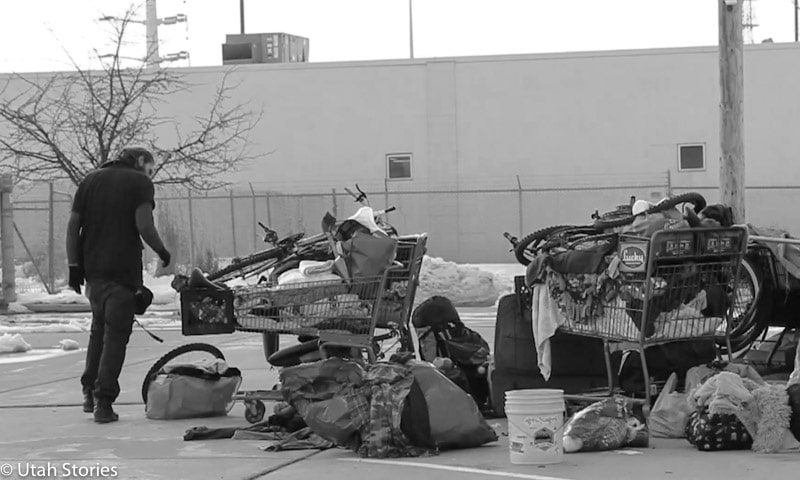
On North Temple, near 15th West, I find a family who is choosing to camp in an empty parking lot under tarps rather than stay in a shelter.

|


On North Temple, near 15th West, I find a family who is choosing to camp in an empty parking lot under tarps rather than stay in a shelter. A woman and her two adult sons are taking extreme measures to survive in the frigid temperatures. They use candle wax as well as hand sanitizer to burn small fires under their tarps and blankets to stay warm. Why are they taking such extreme measures instead of finding a warm place in the overflow shelter?

A young homeless man shares his story about getting MRSA in a shelter in SLC, UT

The twenty-something son of the woman I was speaking with was keeping to himself until I mentioned how I had found that a severe MRSA outbreak was happening just prior to the closure of the Road Home in 2017. The young man says, “I almost died in the shelters. I’ll never go back there if I can help it.” He then rolls up his sleeves and shows me a series of skin grafts on his arms as well as two half missing fingers which was a result of his contracting the staff infection at a shelter. “You never really get rid of MRSA, you just need to live with it the rest of your life.” He tells me. 
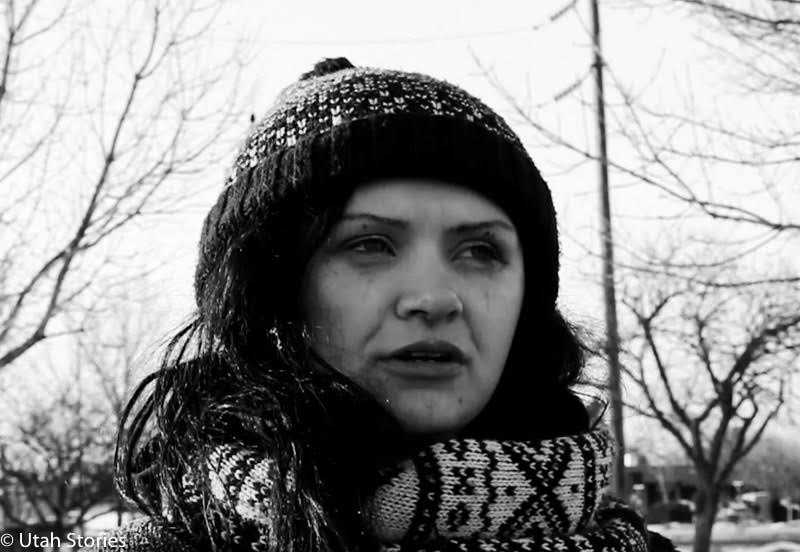
22-year-old Madison recently found a home but was homeless for the past 3 years.

In the same parking lot, I find a young 22-year old woman named Madison who says that she recently found a place to live in, but she has been on and off the streets for the past three years. She says her grandfather died of a heroin overdose. In addition, her father and mother are also homeless. Her father just got out of prison but within the first week, his car was impounded for parking in one place for too long.  

“People think that it could never happen to them, and they think it’s easy to get off the streets. But just try to survive this and somehow save up enough money for the first and last month’s rent and a deposit. It’s much harder than you can imagine.” Maddison says that drugs are everywhere and, “nearly everyone is on drugs.” But she adds it’s what people need to do to survive. 
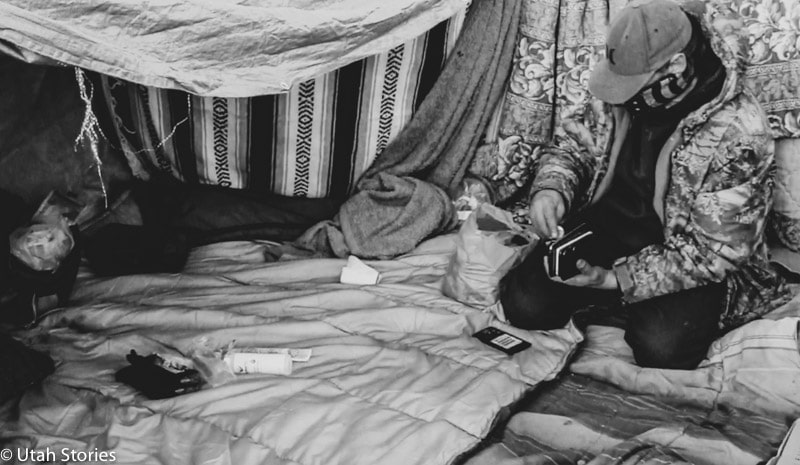
A homeless man sheltering from a cold under tarps.

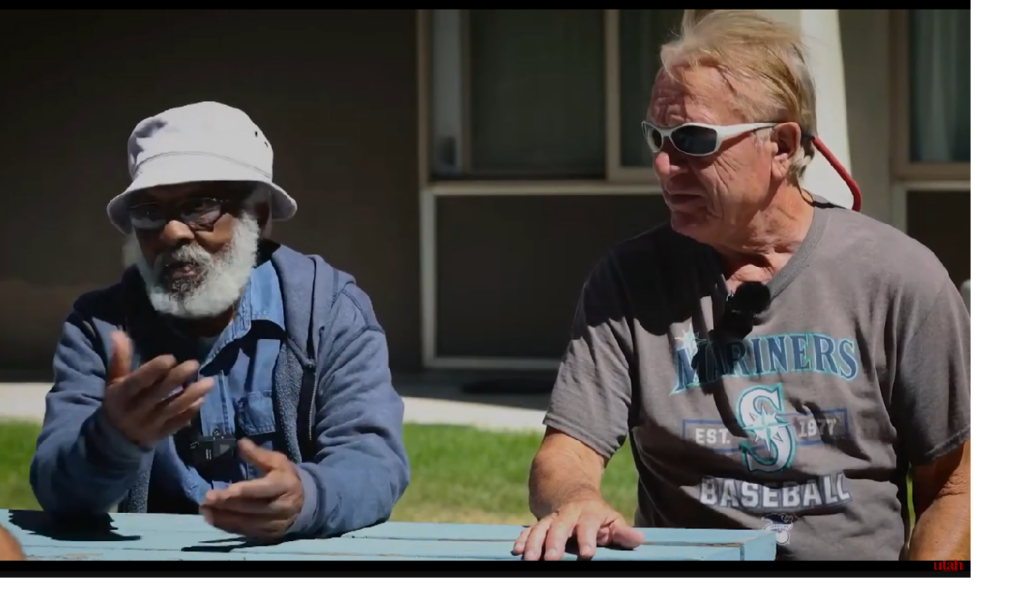
I asked several people about the State’s voucher program, which is designed to assist homeless people with their rent as well as help them find rooms at motels and hotels. The mother of the young man who had MRSA tells me, “The vouchers don’t work. What good is a voucher if nobody will take it?” She says there is no affordable housing and as a result, nobody is getting off the streets.

WATCH THE VIDEO

,


Join our newsletter.
Stay informed.


  • The Armenian DNA Mystery No One Can Explain

    Joulhayan described ancient remains discovered near the Aras River, near Mount Ararat, where researchers reportedly compared ancient genetic samples with modern Armenians and found remarkable continuity stretching back thousands of years.
    “How could that be?” he asked. “Mongolians attacked. Turks. Persians. Romans. Greeks. Armenian DNA should have changed.”


  • Utah Wants Affordable Homes. So Why Did It Kill the Starter Home Bill?

    Utah leaders have spent years talking about affordable housing.

    Governor Spencer Cox has repeatedly emphasized the need for more attainable housing, with a goal of creating tens of thousands of starter homes priced below $300,000. Yet despite broad agreement that housing affordability remains one of the state’s biggest challenges, one proposal designed specifically to encourage the construction of smaller, more affordable single-family homes failed to advance during the most recent legislative session.

    The question raises an uncomfortable issue: if Utah agrees there is a shortage of starter homes, why are those homes still so difficult to build?

    According to attorney and real estate professional Asha Klarich, much of the debate comes down to how communities want to grow and who gets to make those decisions.

    House Bill 184, known as the Small Lots and Starter Homes Amendment, was intended to reduce regulatory barriers and allow smaller homes to be built on smaller lots. The proposal would have created a process for builders and homeowners to seek exceptions to local zoning requirements and construct homes on lots as small as roughly 5,400 square feet.

    The idea was straightforward. Smaller lots generally mean lower land costs. Lower land costs can translate into lower home prices.

    For many first-time buyers, that sounds far more appealing than another apartment building or densely packed townhome development.

    “I think most people would prefer a smaller home on a smaller lot than apartment-style living in a high-rise,” Klarich said during a recent discussion about housing legislation.

    The bill ultimately failed.

    Continue reading and support independent Utah journalism with a purchase of Utah Stories (Digital + Print) or 3 month free trial (Digital).


  • Fogo de Chão Salt Lake City Review: When Friendly Service Isn’t Enough

    The restaurant itself felt polished in that distinctly corporate way, where every detail seems carefully planned. We sat outside near a large fire feature on the patio while dance music drifted through the speakers and shoppers passed by. It felt lively, upscale, and relaxing for someone who had spent most of the day feeling unappreciated. 


  • What Was Happening Inside Phillips Plaza Before the Murder in Salt Lake?

    Three days before Ralph Hoffman was killed, Utah Stories interviewed Phillips Plaza residents who described security concerns, unauthorized visitors, and questions about how vulnerable tenants were being supervised. After the murder, many of those concerns remain unanswered.