Utah Stories

Why Does BlackRock Want to Buy Your Home?

The largest institutional investors and wealthiest Americans want to buy your home. Is this a nefarious plot to create a Neo-feudal corporate empire for the elite?

|


The largest institutional investors and wealthiest Americans want to buy your home. Is this a nefarious plot to create a neo-feudal corporate empire for the elite?

BlackRock manages $9 trillion in assets for pension funds and ETFs. 

Institutional investors manage $30 trillion (50% larger than the U.S. GDP). 

These firms essentially own Wall Street. Don’t believe me. Let’s examine their holdings:

10 Largest Investment Management Companies

  1. BlackRock. AUM: $7.318 trillion. …
  2. The Vanguard Group. AUM: $6.1 trillion. …
  3. UBS Group. AUM: $3.518 trillion. …
  4. Fidelity. AUM: $3.319 trillion. …
  5. State Street Global Advisors. AUM: $3.054 trillion. …
  6. Allianz. AUM: $2.530 trillion. …
  7. JPMorgan Chase. AUM: $2.511 trillion. …
  8. Goldman Sachs.

According to this OECD report, Institutional investors hold 41% of the entire market capitalization of global markets. Why does this matter?  (Source: https://www.oecd.org/corporate/Owners-of-the-Worlds-Listed-Companies.pdf)

Because they have the influence, money, and capital to completely control our markets, to write our laws and to essentially own our politicians. Why does this matter to you?

Because the bigger these behemoths become, the less power you have as an individual consumer or small business owner. Small businesses make up half of the GDP in the United States, and the market cap and profitability of small businesses compared to giant corporations in the United States is shrinking, according to Harvard Business Review. They make up more than half of all jobs, yet small businesses have very little influence or power over how our laws are made and the political leaders who make our laws?

Why? Because institutional investors donate millions to our political leaders. Small businesses donate little or nothing to political leaders. The only thing that our political leaders pay attention to is how they are getting reelected. And the massive corporations want to own our political leaders so they can fall into a new category of business called “too big to fail.”

What “Too Big to Fail” status means:

  • The mote around their profits and revenue streams is protected by the federal government against competition.
  • Any business that might come and jeopardize their profits will be regulated out of existence.
  • The free market begins to become a mirage as small businesses have no chance of competing. 
  • It becomes increasingly impossible to join the group of the too big to fail organizations as they use our politicians as puppets to protect themselves.

$30 trillion is managed by large financial institutions or “Institutional Investors.”

What does this mean for small businesses?

The government and corporations are working together to systematically remove businesses that could compete against the “too big to fail” from the marketplace. The Federal Government under the auspices of the Federal Reserve has deemed that GM, Ford, and Chrysler were too big to fail in 2008. During the Pandemic, they have essentially determined that every major U.S. corporation on the Nasdaq and S&P 500 are also too large to fail. The Fed has pumped money into “toxic assets” of the businesses that nobody wanted to buy when the pandemic hit. The Fed partnered with BlackRock investments to [[[[[create investment vehicles??]] to eliminate this toxic dept (aka junk bonds), that investors didn’t want to purchase. This allowed corporations to keep investors happy so that there wasn’t a way in which smaller corporations failed, which could have lead to a domino effect and a massive sell-off.

What We Can Do As Consumers to Reverse These Trends?

More than ever right now we need to go out of our way to buy local and buy small. We need to try to examine our food budgets and find ways to support local farmers, local restaurants and the local economy. When we see Walmart getting tax abatements by our municipal governments (as they do all of the time). When we see Amazon receiving massive amounts of corporate welfare because our local leaders are happy to give that to them for the jobs they provide — we need to call them out on this. We are witnessing our economies become less decentralized. We are witnessing big corporate power getting more in bed with our political leaders and we need to stop supporting this.

WALL STREET-BACKED LANDLORDS NOW OWN MORE THAN 11,000 SINGLE-FAMILY HOMES IN CHARLOTTE

What Does This Mean For Potential Homeowners?

If 25% of all homes bought in your market are purchased by large financial companies then certainly this will have a deleterious impact on housing costs and supply. This will drive prices up and as more neighborhoods are managed by corporations, we will see fewer tenants who want to do the improvements and upkeep that we have traditionally seen. Luckily, Utah is lower than the national average: 15% of all home purchases are made by investors, but this figure doesn’t track individual investors, which in Utah’s market is significant.

Other Examples:

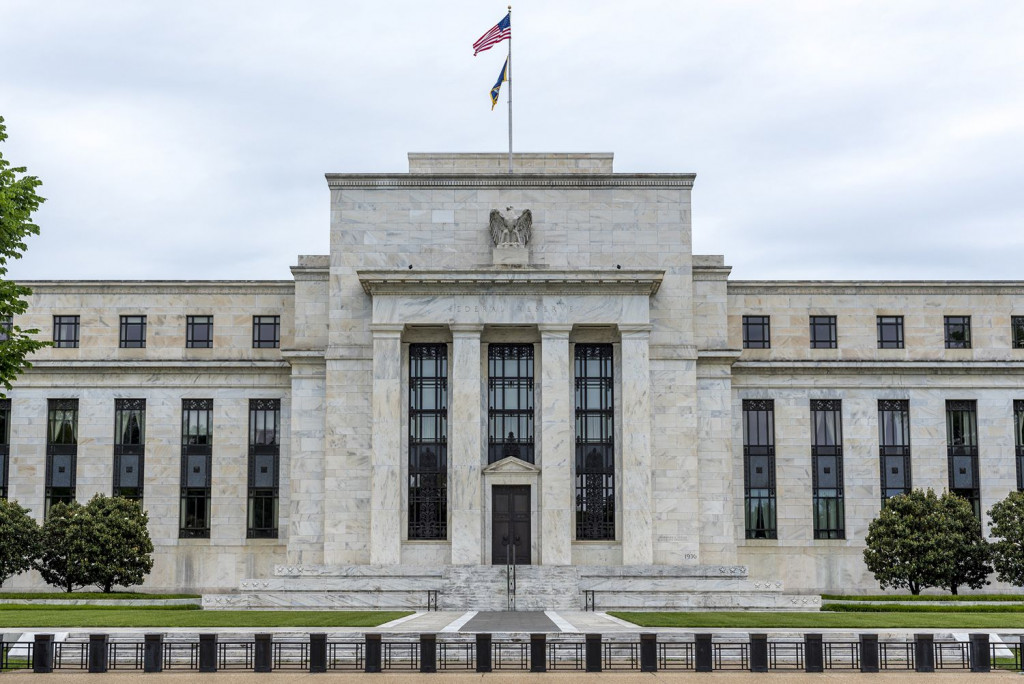
BlackRock is the largest institutional investment company in the United States. They manage mutual funds and pensions totaling $9 trillion. When corporate bonds prices were tanking back in March 2020, BlackRock worked with the fed to find a way to prop up the corporate bond market so that we didn’t see a collapse of the economy. Their solution? To have the Fed start buying shares of BlackRock. The Federal Reserve Bank, the independent entity that is in charge of printing our money supply and ensuring our money is secure, is now the owner of a huge amount of shares of BlacRock. 
What does this Mean to the value of our currency?

The value of our money is essentially backed by the value of the biggest and largest corporations in the United States. Is this good or bad? Well if you believe “too big to fail” status is a good thing; that airlines, that giant tech companies; that giant automotive companies shouldn’t ever be allowed to go out of business, then it’s a good thing. 

But, on the other hand, if you believe that our Federal Government has an increasingly cozy relationship with giant corporations is a bad thing; or if you believe that our federal government (via the Fed)—shouldn’t be owning giant corporations –then this is a really bad thing. Because there is a name for governments owning parts of giant corporations, where these giant corporations are also controlling interest in writing government policy, this is by definition an oligarchy or plutocracy. This is by basic definition not a free-market democracy. China practices something similar to this model. Honestly, in examining the upper echelon of what is happening with our monetary policy, I’m not sure I’m qualified to offer a proper examination. But it’s troubling because it’s unprecedented before 2007. 

If you remember, in 2007 when our housing market was collapsing, Hank Paulson was the Treasury Secretary. He was the former CEO of Goldman Sachs. And essentially he and Goldman Sachs wrote the bailout plan for the U.S. Government to prevent the complete collapse of our financial markets. They bailed out AIG, Lehman Brothers, Bear Sterns as well as automakers GM, Ford and Chevrolet. They worked directly with the government to figure out how to prevent a collapse of the giant financial institutions who had allowed too many subprime mortgages. Why did they bail out the automakers? 

In March 2020 BlackRock’s CEO Lary Fink was the chief author of the bailout plan when our economy began to collapse in March 2020. Big oligarchs are controlling our monetary policy in the United States via the Treasury Department and the Fed. 

Where will this Lead? More Centralized Power or Decentralization?

There will be a day of reckoning. If decentralization wins, then we will live in a world where we spend money using our favorite blockchain. We will make blockchain loans based on the equity we have in all of our major assets. If de-centralization wins, the large financial markets will lose the ability to pick winners and losers (via the Fed and Government). The question is will we move to decentralization of our money, currency, financial systems and government or will corporate power centralize with bureaucratic power to prevent this from happening? There is talk of a “great reset” where “you will own nothing and be happy.” This is what the large financial institutions and elites would like to see happen. A massive confiscation of wealth and property. A neo-feudalistic society where we are all renters. Where we all indeed own nothing, but we live in a world similar to Aldus Huxley’s depiction in A Brave New World. 

We need to eliminate the distraction that this is a battle of Right vs. Left. Conservative politics vs. Liberal ideals. Certainly, there are differences in political parties and their agendas. But the real battle is whether power, currency, government and equity become more centralized or decentralized. 

What Can You Do?

If you prefer the notion of owning equity in the home where you live; If you prefer the idea of building wealth independently and not relying on major institutions funding your retirement and your well-being; If you prefer freedom to tyranny, then the best way we can prevent the centralization of power by the elite is to choose purchases that economically decentralize our economy. These are the best choices we have as consumers. We need to stop funding the power elite revenue streams to the levels where they currently are at. Today they are able to essentially own all of our politicians. When we buy from the elite, we make them richer and stronger, when we choose instead to buy from local producers and smaller competitors, we give them power and energy. When we choose to buy local goods we are helping to maintain local sovereignty.

Shifting our spending to both local producers and local shops ensures that our local communities continue to live outside of Wall Street investors and investment banker’s control. 

Subscribe to Utah Stories weekly newsletter and get our stories directly to your inbox

 

* indicates required


, ,


Join our newsletter.
Stay informed.


  • Utah Homelessness Crisis: Tyler Clancy Challenges ‘Housing First’ Failures

    “It’s not normal to see someone sleeping on the sidewalk in a sleeping bag with a needle sticking out of their arm.”

    That sentence should not be controversial. In a sane society, it would barely need saying. But in Utah — where politicians, nonprofits, consultants, and bureaucrats have spent more than a decade congratulating themselves for “addressing homelessness” while the streets of Salt Lake have become more dangerous, more drug-soaked, and more morally disorienting — it lands like an indictment. And it came not from a crank, a talk-radio host, or a downtown business owner at the end of his rope, but from Tyler Clancy, Utah’s newly appointed homeless coordinator.

    That matters because if Clancy is serious — and after sitting down with him, he appears to be — then he represents something Utah’s homelessness system has not had in a very long time: someone willing to say the obvious out loud. The old script is dead. Everybody knows it, but almost nobody in power has wanted to admit it. 

    For years, Utah’s homelessness policy has been built on a polite fiction — that if we build enough units, distribute enough funding, and avoid being too “judgmental,” the crisis will gradually resolve itself. That story was easier to maintain when Utah was receiving national praise for “solving chronic homelessness.” It is much harder to sustain now, when the conditions on the ground tell a very different story.

    Magnolia Apartments opened to help alleviate homelessness, but the results were not all positive.

    Part of that failure became painfully clear over the last four years. By most accounts, former homelessness coordinator Wayne Niederhauser was a decent man and a very nice guy. But one person close to him described his tenure as that of “a tiger without stripes”— someone with the title, but not the appetite to challenge the sprawling network of nonprofits and service providers receiving millions in taxpayer dollars. That lack of accountability has had real consequences. Multiple former and current residents have told Utah Stories that of the roughly 60 original tenants who moved into Magnolia when it opened, about 20 have since died — most, they say, from accidental drug overdoses. 

    If those accounts are even close to accurate, they should have triggered a public reckoning. Instead, the system kept moving, protected by good intentions, insulated from scrutiny, and largely unbothered by outcomes that would be considered a scandal in almost any other context.

    That is the machine Clancy is stepping into, and unless he is willing to confront it directly — not just coordinate around it — his role risks becoming one more layer of management over the same failures. The reality he inherits is not complicated in the way policymakers like to suggest. It is visible, immediate, and increasingly impossible to explain away. 

    Open drug use, fentanyl addiction, untreated mental illness, rising disorder, and a growing sense among both the public and the homeless themselves all indicate that the system is not working. Complexity exists, but it has also become a convenient shield for cowardice. It is the language people use when they want to avoid saying what is plainly in front of them: Utah has spent years managing visible human collapse while calling it compassion.

    The Lie Utah Told Itself

    For years, Utah’s approach to homelessness rested on a narrative few in power were willing to question. It sounded compassionate. It polled well. And it avoided uncomfortable truths.

    Continue reading with a Utah Stories subscription. Start your 3-month free trial.

    Continue reading and support independent Utah journalism with a purchase of Utah Stories (Digital + Print) or 3 month free trial (Digital).


  • Left in a Box as a Baby: Trauma, Alcoholism, and Addiction

    A man abandoned as a baby builds a structured life in law enforcement, but unresolved trauma and alcoholism slowly begin to unravel it. His story raises a harder question about how change actually happens.


  • The $7 Million Recruit: How NIL Changed College Athletics Forever

    In 2012, Jabari Parker, a top high school prospect and member of the Church of Jesus Christ of Latter-day Saints, was facing his biggest decision to that point in his life: where to play college basketball. 

    Fans of BYU athletics hoped and perhaps prayed that Parker would pick the school owned by the church he was raised in. BYU was listed as one of his final choices. But he ultimately chose to spend his college years at Duke before attempting a career in the NBA. BYU fans were disappointed, but no one was truly surprised. Duke over BYU was the best choice for a young prospect in 2012. 

    A.J. Dybantsa.

    What changed between 2012 and 2024 when A.J. Dybantsa, the number one high school prospect, chose BYU over every other school? The answer is roughly $7 million dollars. That is what Dybantsa is reportedly making to play basketball at BYU. 

    The deal was supported by Utah Jazz owner Ryan Smith, who met multiple times with the Dybantsa family in multiple attempts to bring the young player to Provo. 

    According to Smith, he had no financial role in bringing Dybantsa to BYU, but the influence of Utah’s most famous billionaire acting as a “booster” or unofficial recruiter certainly swayed the decision.

    Prior to 2021, boosters acting as recruiters was taboo to the NCAA governing body. It was called improper recruiting. But in 2021, California began the modern era of NIL, or the ability of a college athlete to benefit from their name, image, or likeness, when they passed the “Fair Pay to Play Act.” 

    This new law gave college athletes in California the ability to benefit from their NIL, something that was banned in the rest of the country to that point. The NCAA saw that this law would create an unfair advantage for California schools that could now give young athletes the chance to make money off their talent and image while still in college. 

    The NCAA knew they needed to do something quickly, so they rushed through a policy that opened up NIL to all college athletes in the country, and it has been expanding and evolving over the last four years. 

    Grant Duff, who has coached at the University of Utah, Weber State University, and is now the defensive coordinator for Idaho State University, says, “The best part of NIL is that athletes have an opportunity to make good money. The downside comes with the free-for-all that money causes.”

    Dybantsa confers with BYU Head coach, Kevin Young.

    One of the biggest current examples of what a school can do when the boosters are willing to pay for success is Texas Tech University. From 2020-2024, Texas Tech had 34 wins, which works out to 6.8 wins per year with a low of 4 wins and high of 8. Then Texas Tech’s boosters got involved, led by Cody Campbell, an oil industry businessman and Chairman of the Texas Tech board. The football program was given 28 million dollars for NIL with a simple message attached to the large pile of money: Win. And win now. And win they did. 

    By signing NIL deals with athletes in the transfer portal, Texas Tech went from a middle-of-the-pack school in their conference to one of the top 12 teams in the country. They didn’t just win games in 2025, they made many of their opponents look like they didn’t belong on the same field, including the University of Utah and BYU twice. That is what money can buy.

    Continue reading and support independent Utah journalism with a purchase of Utah Stories (Digital + Print) or 3 month free trial (Digital).


  • Cottonwood Heights Corruption Allegations: A Case That Never Reached a Courtroom

    A year ago, we here at Utah Stories recorded a podcast episode that we never published. We were revisiting corruption allegations from ten years ago. We decided not to publish the video, so it sat there on YouTube for nearly 12 months.

    Then somehow the video was published. How? We are not sure, but once it got out there, the comments came pouring in.

    Dozens of viewers, then hundreds, supported the video with their comments on our examination of allegations of police misconduct in Cottonwood Heights. The video recounts how the Police Department was reported by business owners as focusing enforcement on customers of the former Canyon Inn bar. These allegations did not result in a publicly documented, full investigation by Utah’s Justice Department nor the FBI (at least to our knowledge). So why rehash the past?

    We believe the story of The Canyon Inn (and other area business owners) vs. CHPD and Cottonwood Heights Mayor Kelvin Cullimore raises questions about what can happen when allegations surface and do not move forward through a formal legal process with state or federal oversight.

    In 2012, Cottonwood Heights business owners at the mouth of the canyons began publicly objecting to police activity whereby up to seven cruisers were pulling over 711 and Canyon Inn bar customers on their busiest evenings.

    According to those accounts, drivers leaving the bar were frequently pulled over by police and were given DUI tickets, sometimes even after passing a sobriety examination. The volume and concentration of those stops led residents and business owners to complain about the “heavy-handed treatment” of CHPD toward motorists, especially in and around the Canyon Inn and neighboring 711, and eventually the Porcupine Pub.

    Customers responded in predictable ways. Some chose not to return and avoid the area. Others went to different establishments. Over time, the owner of the Canyon Inn, Jim Stojack, stated that his revenue declined by 70% and that he believed police activity near his business was the main contributing factor.

    Utah Stories reported on these concerns by conducting interviews; gathering video documentation provided by those involved; and making public records requests. Through our GRAMA requests, we reviewed DUI citations issued by the Cottonwood Heights Police Department and examined how those cases were resolved in Holladay Justice Court. During that period, we observed a higher number based on our review of DUI cases dismissed in court due to lack of evidence compared to other jurisdictions. One DUI attorney, Tyler Ayers, went on record saying that CHPD was issuing a high volume of DUI citations that were later dismissed.

    That observation raised questions about how cases were being documented and prosecuted. It did not, on its own, establish intent or misconduct, but it became part of a broader set of concerns raised by multiple sources.

    Continue reading and support independent Utah journalism with a purchase of Utah Stories (Digital + Print) or 3 month free trial (Digital).