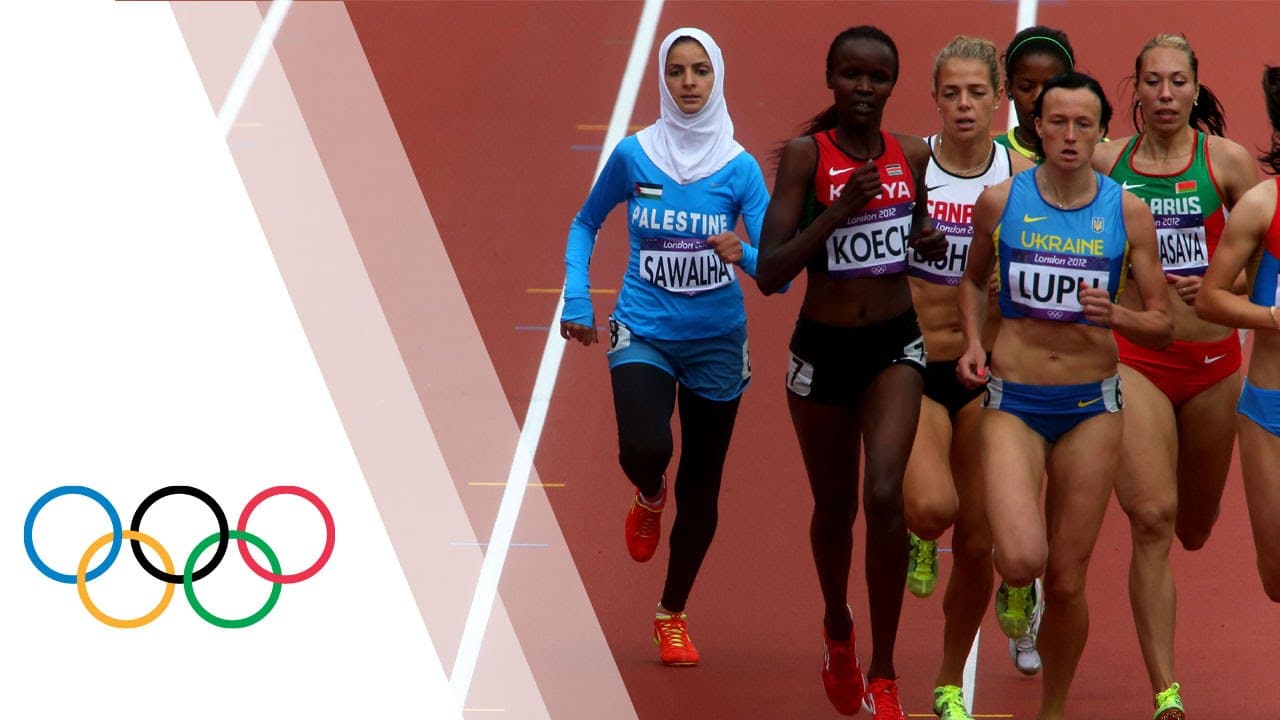
Olympic athletes getting prepared to compete for the Summer games in Tokyo are required to put their bodies through the most intense rigorous exercises to achieve top performance.
But what happens when bodies just don’t recover? When tendons and ligaments aren’t attaining to the performance levels that allow top athletes to compete? Should they just give up and retire?
Sports medicine and exercise physiology expert, Dr. Jim Stray-Gunderson, has tried to answer that question for 40 years. He’s spent most of his career overseeing the training regimens of Olympic and World-Class athletes from his training facility based in Park City, but he believes that everyone can safely and effectively achieve their fitness goals.
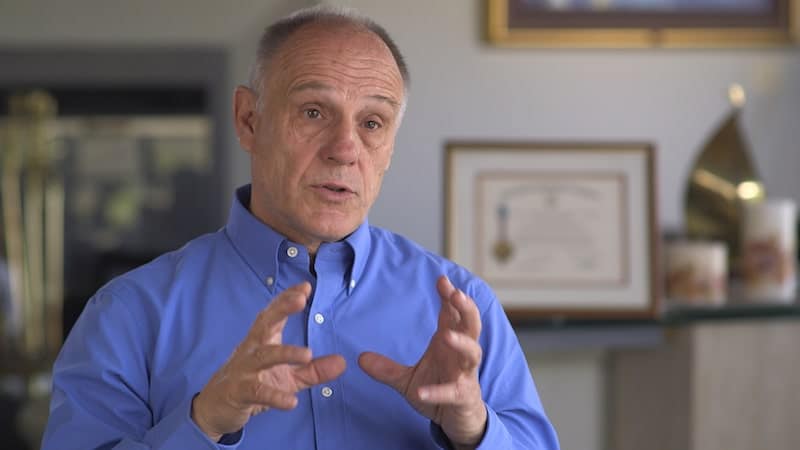
Once a track runner and competitive cross country skier in college, Gunderson said he enjoyed discovering the science behind athletic performance as much as he did the sports themselves. His colleagues in competitive athletics noticed. “People who I was competing against wanted me to be their doctor,” he said.
Athletes are under tremendous pressure to perform, Stray-Gunderson explained. He started to recognize that illegal performance-enhancing techniques like blood doping present a challenge and an opportunity. How could he help athletes achieve the same effects legally?
It’s a two-step process, he says, and it’s pretty simple.
First, understand the problem: what does it take to perform? Various blood doping techniques, for instance, increase the amount of hemoglobin in the bloodstream. Hemoglobin carries oxygen in the blood, so increasing it allows higher amounts of oxygen to reach and fuel muscles.
Second, try to get to the same place naturally: what natural processes have the same effect? For example, doctors have known for a long time that people returning from trips to high altitude mountaineering destinations like the Himalayas and the Andes have increased blood cell counts.
Stray Gunderson and his colleagues started looking into altitude training, and after ten years of studies, the answer turned out to be living at high altitude and training at low altitude. Blood cells are created at high altitudes, but physical activity is harder so it’s better to build muscle and cardio capacity at low altitudes. Now “live high, train low” is used by elite athletes all over the world, and it’s set the stage for record-breaking performance gains in all sports.
Trying to figure out how to achieve training gains at high altitude, Stray-Gunderson found another body hack: temporarily decreasing blood flow to the muscles during training.
First used by Japanese bodybuilders, the kaatsu technique has gained a following in the US as “blood flow restriction” or BFR. Stray-Gunderson studied the technique in Japan with its original developer, Dr. Yoshiaki Sato. BFR manipulates the body’s circulatory system, and when combined with exercise, the technique produces rapid gains in strength and fitness using light weights, and in a very short period of time.
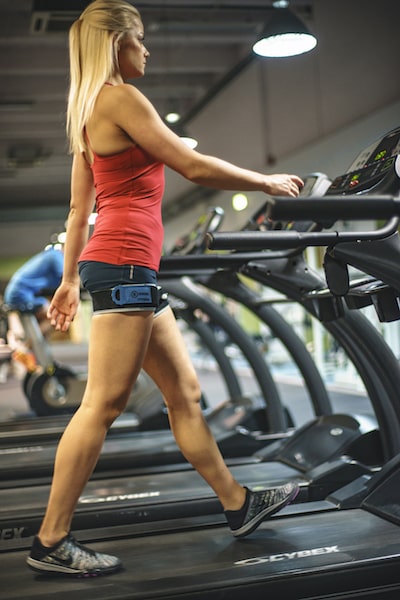
Stray-Gunderson developed pressure bands designed for anyone to safely wear on the upper parts of their arms or legs to create BFR while training by themselves. Professional athletes including the BYU football team and even celebrity fitness experts like Kathy Smith and Mark Wahlburg have adopted BFR using Stray-Gunderson’s B Strong bands.
Of course, helping athletes improve peak performance is always a fun goal. What excites Stray-Gunderson the most about BFR, though, is its effect on people who are rehabilitating after an injury or illness or even just seeking to increase their quality of life through better physical fitness.
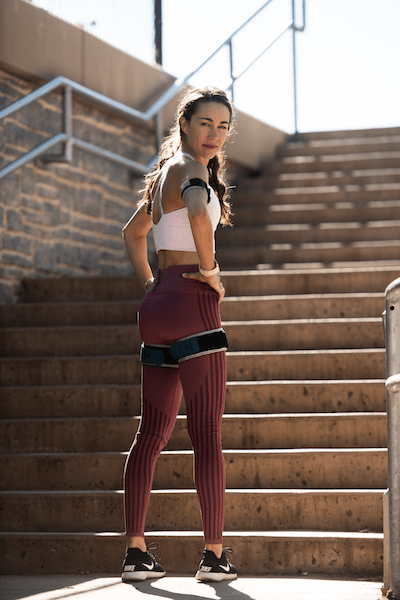
When a serious knee injury threatened to sideline world champion ski jumper Sarah Hendrickson just before her first Olympics in 2014, Stray-Gunderson helped her rehabilitate with an Ultra-G machine, which relieves weight, allowing the exercise of an injured limb. Hendrickson qualified for the 2014 Winter Olympics in Sochi, and became the first female ever to jump in an Olympic ski jumping event.
But her surgically-repaired knee ligament tore again in 2015, and she knew she had to find a new way to train and strengthen or she’d be sidelined permanently. Stray-Gunderson introduced her to the B Strong bands, and she hasn’t looked back.
“I love these bands,” she says. “You’re still doing similar exercises ― your muscles are screaming and you feel the burn ― but there’s no risk of, you know, dropping a weight on your foot or throwing your back out.”
Now retired at 26, Hendrickson is a certified personal trainer and uses the B-Strong bands with her own clients. She shares Stray-Gunderson’s enthusiasm for the wide adoption of BFR training by everyone from physical therapists, to the elderly, or anyone with limited time for exercise.
Since the bands are designed for independent use anywhere, BFR is one of Stray-Gunderson’s favorite body hacks. He said he’s encouraged that 15 thousand people have purchased the bands in the last 5 years. That’s a lot of people working toward their greatest potential, naturally.
Subscribe to Utah Stories weekly newsletter and get our stories directly to your inbox
eakest winter and darkest night, with little or no remuneration, she attended to the people of Ogden Valley with a faithfulness unexcelled.”